Department of Psychology, Faculty of Humanities and Social Sciences, University of Zagreb, Zagreb, Croatia.
PLoS One. 2020 Dec 17;15(12):e0243704. doi: 10.1371/journal.pone.0243704. eCollection 2020.
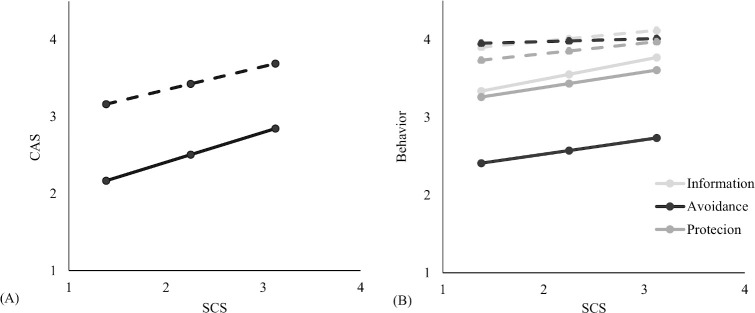
The global epidemic of (mis)information, spreading rapidly via social media platforms and other outlets, can be a risk factor for the development of anxiety disorders among vulnerable individuals. Cyberchondria can be a vulnerability factor for developing anxiety in a pandemic situation, particularly when the Internet is flooded with (mis)information. The aim of our study was to examine how cyberchondria is related to changes in levels of COVID-19 concern and safety behaviours among persons living in Croatia during the period in which the first COVID-19 case was identified and when the country recorded its first fatality. Repeated cross-sectional data collection was conducted during two waves over a period of three weeks (N1 = 888; N2 = 966). The first began on the day of the first confirmed case of COVID-19 in Croatia (February 24th, 2020) and the second wave began three weeks later, on the day the first COVID-19 fatality was recorded in Croatia (March 19th, 2020). Participants completed an online questionnaire regarding various COVID-19 concerns and safety behaviours aimed at disease prevention (information seeking, avoidance and hygiene) and a measure of cyberchondria (Short Cyberchondria Scale, SCS). We analysed whether changes to the epidemiological situation during the period between the two waves of data collection led to an increase in COVID-19 related behaviour directly and indirectly via an increase in COVID-19 concerns. The results indicated that, between the two waves of research, there was a pronounced increase in concerns regarding COVID-19 (b = 1.11, p < .001) as well as significant behavioural changes (b = 1.18-2.34, p < .001). Also, results demonstrated that cyberchondria plays a moderating role in these changes. In the first wave, persons with severe cyberchondria were already intensely concerned with safety behaviours. High cyberchondria and high levels of concern about the COVID-19 are associated with intense avoidance behaviours, R2 = .63, p < .001. A moderated partial mediation model was confirmed, in which the effect of the epidemiological situation was weaker for those with higher results on the SCS (as indicated by index of moderated mediation between -.10 and -.15, p < .05). As such, cyberchondria is a contributing factor to long-term anxiety and its impact during pandemic on the general mental health burden should therefore be further investigated.
全球范围内(错误)信息的传播迅速,通过社交媒体平台和其他渠道传播,可能成为易患焦虑症个体发展为焦虑症的一个风险因素。在大流行期间,当互联网上充斥着(错误)信息时,网络疑病症可能成为发展为焦虑症的一个脆弱因素。我们的研究目的是检验网络疑病症与克罗地亚个人在首次发现 COVID-19 病例期间和该国记录首例死亡病例期间对 COVID-19 关注程度和安全行为变化之间的关系。在三周内进行了两次重复横断面数据收集(N1=888;N2=966)。第一次始于克罗地亚首例 COVID-19 确诊病例之日(2020 年 2 月 24 日),第二次始于三周后,即克罗地亚首例 COVID-19 死亡病例之日(2020 年 3 月 19 日)。参与者完成了一份在线问卷,内容涉及各种 COVID-19 关注和旨在预防疾病的安全行为(信息搜索、避免和卫生)以及网络疑病症的衡量标准(短网络疑病症量表,SCS)。我们分析了在两次数据收集之间的流行病学情况变化是否直接导致 COVID-19 相关行为的增加,以及是否通过 COVID-19 关注的增加间接导致这种增加。结果表明,在两次研究波次之间,对 COVID-19 的担忧明显增加(b=1.11,p<.001),行为也发生了显著变化(b=1.18-2.34,p<.001)。此外,结果表明网络疑病症在这些变化中起调节作用。在第一波中,严重网络疑病症的人已经对安全行为高度关注。高网络疑病症和对 COVID-19 的高关注与强烈的回避行为相关,R2=0.63,p<.001。一个被调节的部分中介模型得到了证实,在该模型中,SCS 得分较高的个体(表明调节中介指数在-.10 到-.15 之间,p<.05)的流行病学情况的影响较弱。因此,网络疑病症是长期焦虑的一个促成因素,其在大流行期间对一般心理健康负担的影响应进一步研究。