Department of General Surgery, Tianjin Medical University General Hospital, Tianjin, China.
Tianjin General Surgery Institute, Tianjin Medical University General Hospital, Tianjin, China.
Front Immunol. 2021 Apr 29;12:672849. doi: 10.3389/fimmu.2021.672849. eCollection 2021.
Chronic rejection characterized by chronic allograft vasculopathy (CAV) remains a major obstacle to long-term graft survival. Due to multiple complicated mechanisms involved, a novel therapy for CAV remains exploration. Although mesenchymal stromal cells (MSCs) have been ubiquitously applied to various refractory immune-related diseases, rare research makes a thorough inquiry in CAV. Meanwhile, melatonin (MT), a wide spectrum of immunomodulator, plays a non-negligible role in transplantation immunity. Here, we have investigated the synergistic effects of MT in combination with MSCs in attenuation of CAV.
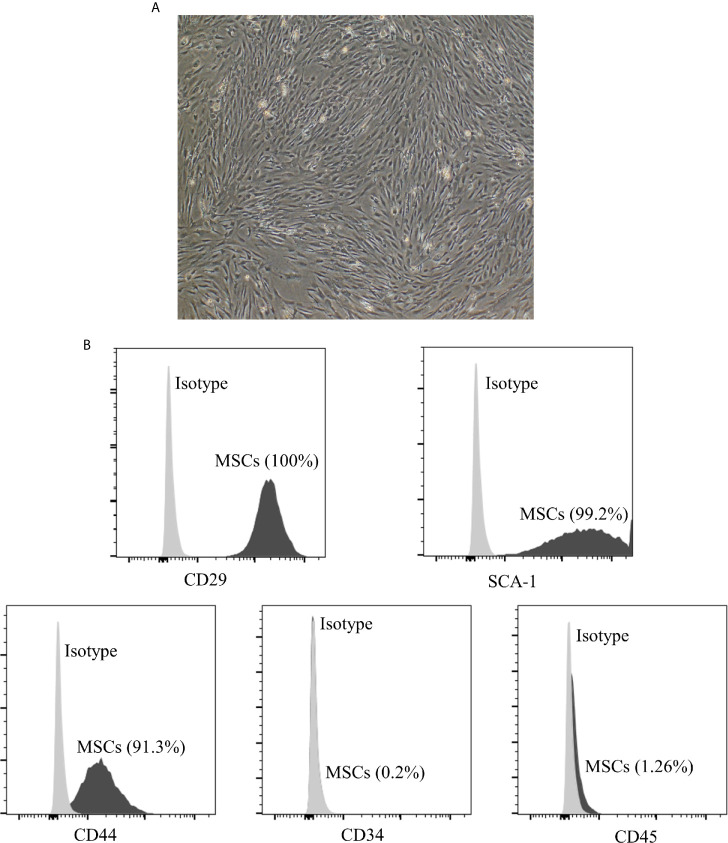
C57BL/6 (B6) mouse recipients receiving BALB/c mouse donor aorta transplantation have been treated with MT and/or adipose-derived MSCs. Graft pathological changes, intragraft immunocyte infiltration, splenic immune cell populations, circulating donor-specific antibodies levels, cytokine profiles were detected on post-operative day 40. The proliferation capacity of CD4 and CD8 T cells, populations of Th1, Th17, and Tregs were also assessed .
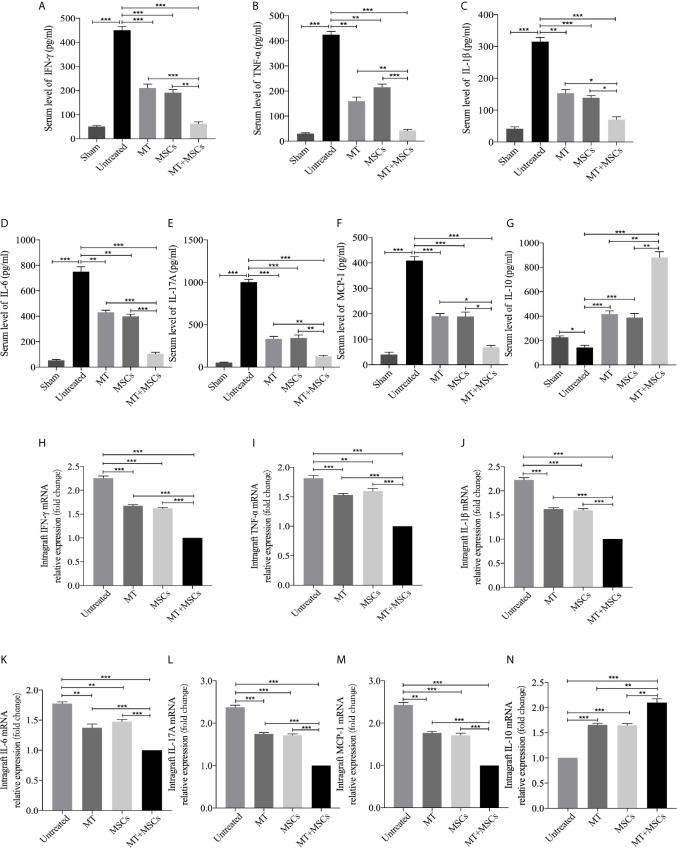
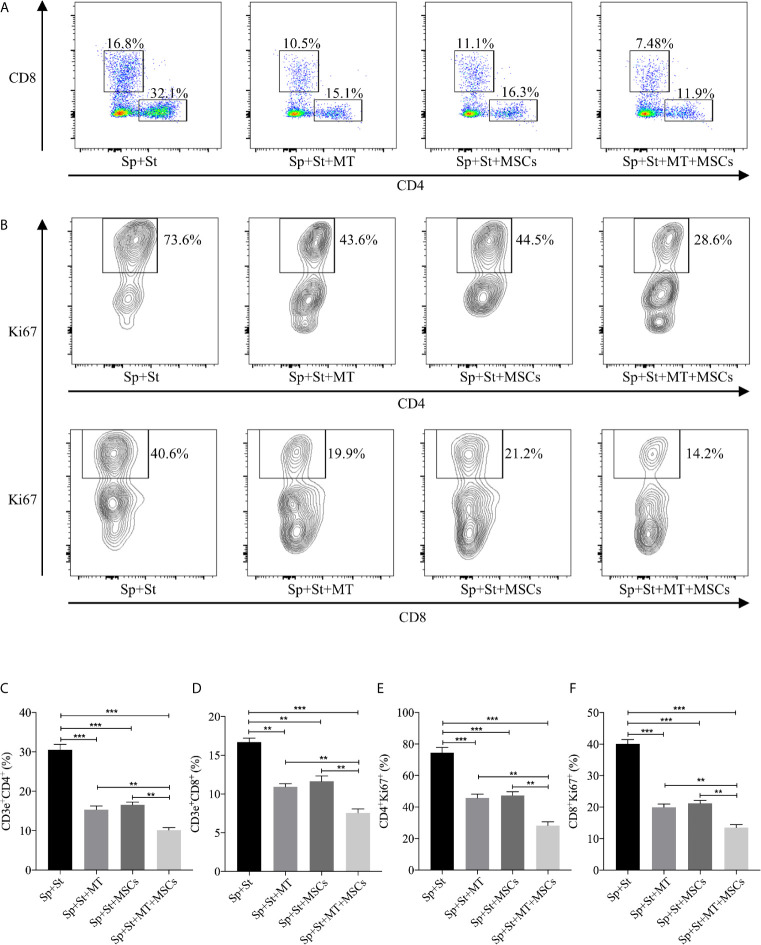
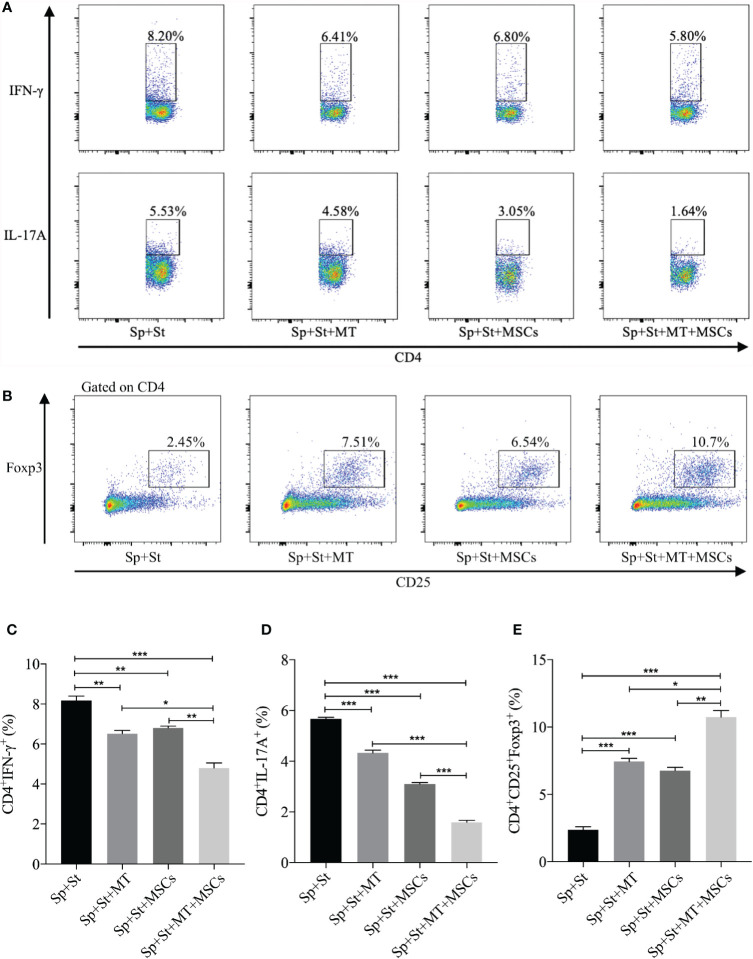
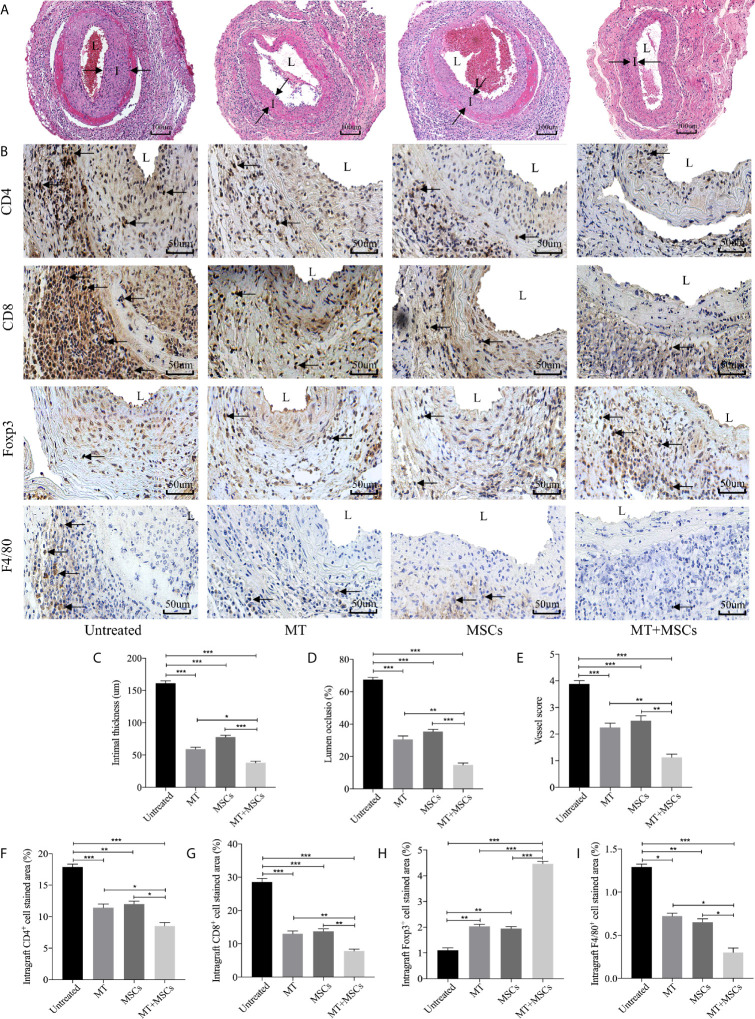
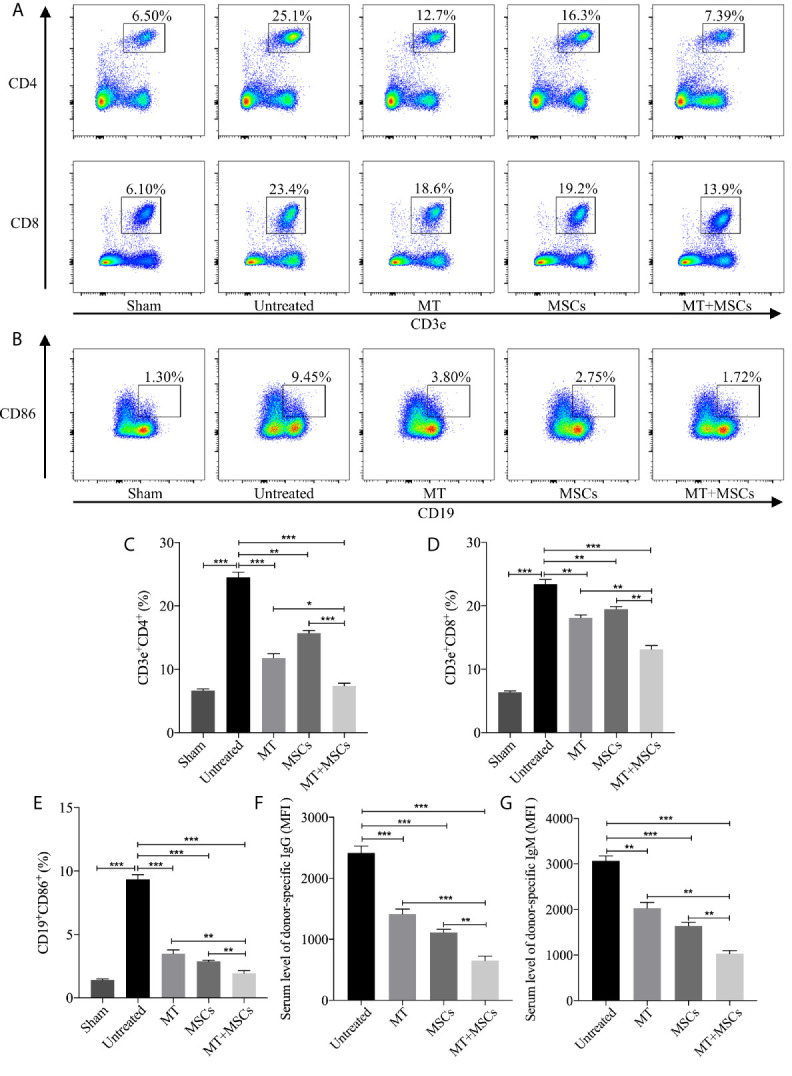
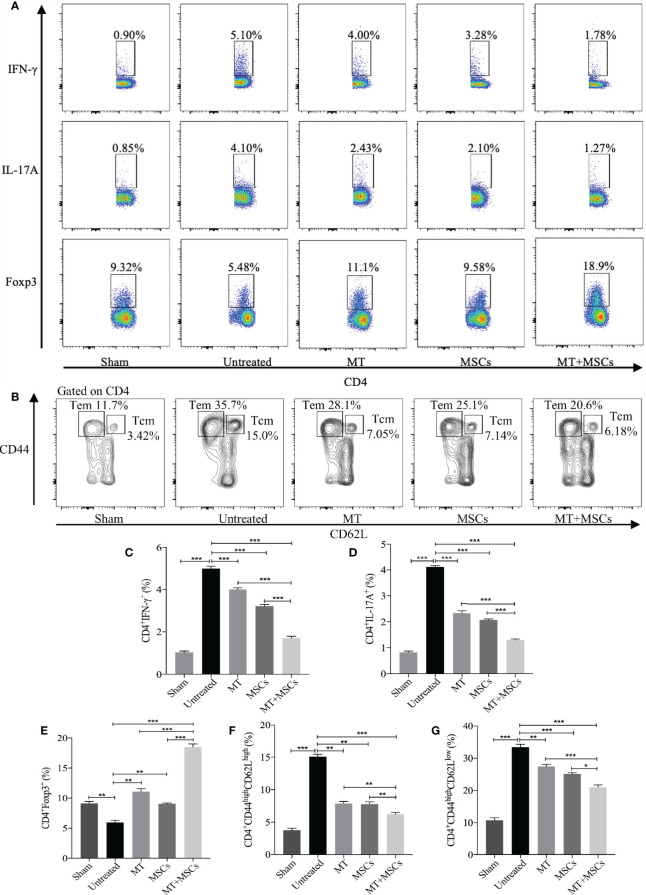
Grafts in untreated recipients developed a typical pathological feature of CAV characterized by intimal thickening 40 days after transplantation. Compared to untreated and monotherapy groups, MT in combination with MSCs effectively ameliorated pathological changes of aorta grafts indicated by markedly decreased levels of intimal hyperplasia and the infiltration of CD4 cells, CD8 cells, and macrophages, but elevated infiltration of Foxp3 cells. MT either alone or in combination with MSCs effectively inhibited the proliferation of T cells, decreased populations of Th1 and Th17 cells, but increased the proportion of Tregs . MT synergized with MSCs displayed much fewer splenic populations of CD4 and CD8 T cells, Th1 cells, Th17 cells, CD4 central memory T cells (Tcm), as well as effector memory T cells (Tem) in aorta transplant recipients. In addition, the percentage of splenic Tregs was substantially increased in the combination therapy group. Furthermore, MT combined with MSCs markedly reduced serum levels of circulating allospecific IgG and IgM, as well as decreased the levels of pro-inflammatory IFN-γ, TNF-α, IL-1β, IL-6, IL-17A, and MCP-1, but increased the level of IL-10 in the recipients.
These data suggest that MT has synergy with MSCs to markedly attenuate CAV and provide a novel therapeutic strategy to improve the long-term allograft acceptance in transplant recipients.
以慢性移植物血管病(CAV)为特征的慢性排斥反应仍然是长期移植物存活的主要障碍。由于涉及多种复杂机制,CAV 的新型治疗方法仍在探索中。尽管间充质基质细胞(MSCs)已广泛应用于各种难治性免疫相关疾病,但很少有研究对 CAV 进行全面研究。同时,褪黑素(MT)作为一种广谱免疫调节剂,在移植免疫中发挥着不可忽视的作用。在这里,我们研究了 MT 联合 MSCs 对减轻 CAV 的协同作用。
接受 BALB/c 小鼠供体主动脉移植的 C57BL/6(B6)小鼠受体接受 MT 和/或脂肪来源的 MSC 治疗。在术后第 40 天检测移植物病理变化、移植内免疫细胞浸润、脾免疫细胞群、循环供体特异性抗体水平、细胞因子谱。还评估了 CD4 和 CD8 T 细胞的增殖能力、Th1、Th17 和 Treg 细胞的群体。
未治疗的受者在移植后 40 天发生了典型的 CAV 病理特征,表现为内膜增厚。与未治疗和单药治疗组相比,MT 联合 MSC 可有效改善主动脉移植物的病理变化,表现为内膜增生水平明显降低,CD4 细胞、CD8 细胞和巨噬细胞浸润减少,但 Foxp3 细胞浸润增加。MT 单独或联合 MSC 均可有效抑制 T 细胞增殖,减少 Th1 和 Th17 细胞群体,但增加 Treg 细胞比例。MT 与 MSC 联合显示,接受主动脉移植的受体脾脏中 CD4 和 CD8 T 细胞、Th1 细胞、Th17 细胞、CD4 中央记忆 T 细胞(Tcm)和效应记忆 T 细胞(Tem)的群体明显减少。此外,联合治疗组脾脏 Treg 细胞的比例显著增加。此外,MT 联合 MSC 可显著降低循环同种异体 IgG 和 IgM 的血清水平,并降低促炎细胞因子 IFN-γ、TNF-α、IL-1β、IL-6、IL-17A 和 MCP-1 的水平,同时增加受体中的 IL-10 水平。
这些数据表明,MT 与 MSC 具有协同作用,可显著减轻 CAV,并为改善移植受者的长期移植物接受提供新的治疗策略。