Laboratorio de Inmunología Celular y Molecular, Centro de Investigación Biomédica, Facultad de Medicina, Universidad de los Andes, Santiago, Chile.
IRMB, Univ Montpellier, INSERM, Hôpital Saint-Eloi, 80 avenue Augustin Fliche, 34295, Montpellier CEDEX 5, France.
Stem Cell Res Ther. 2019 Aug 1;10(1):232. doi: 10.1186/s13287-019-1307-9.
Mesenchymal stem cells (MSCs) are multipotent cells with broad immunosuppressive capacities. Recently, it has been reported that MSCs can transfer mitochondria to various cell types, including fibroblast, cancer, and endothelial cells. It has been suggested that mitochondrial transfer is associated with a physiological response to cues released by damaged cells to restore and regenerate damaged tissue. However, the role of mitochondrial transfer to immune competent cells has been poorly investigated.
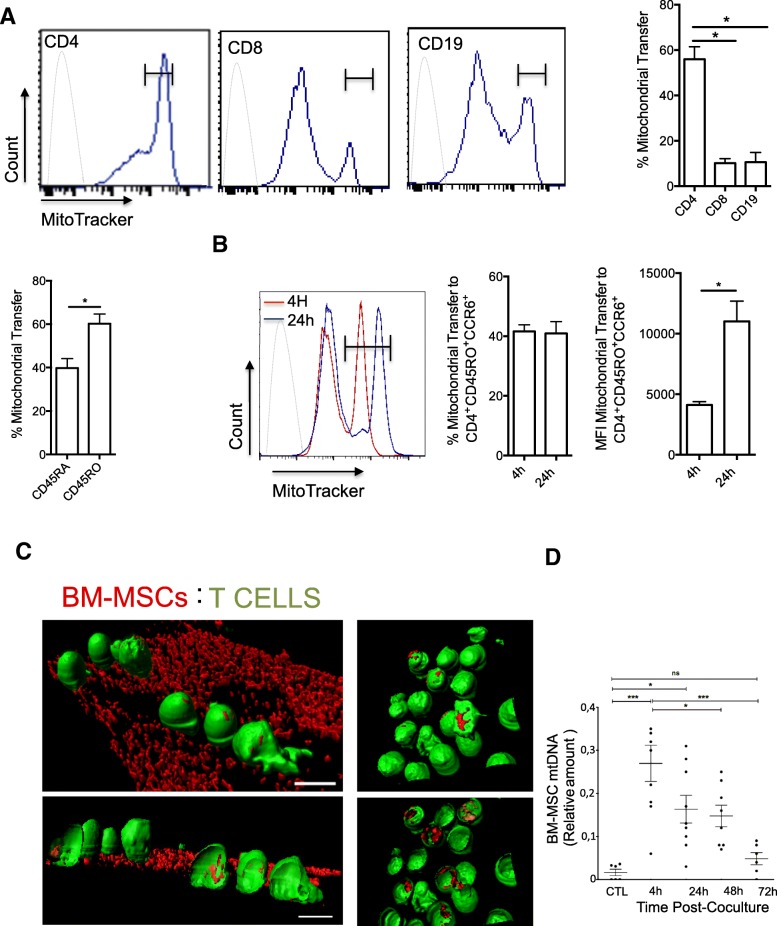
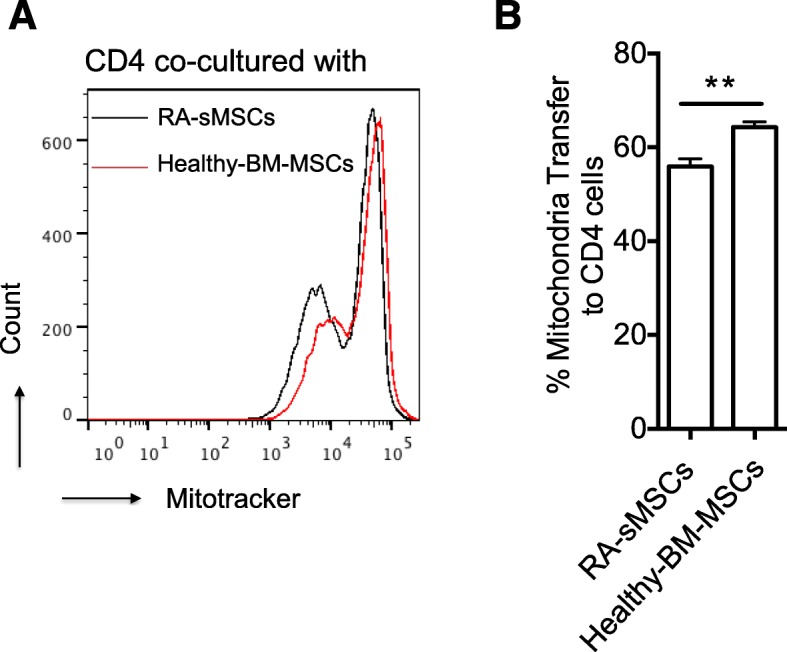
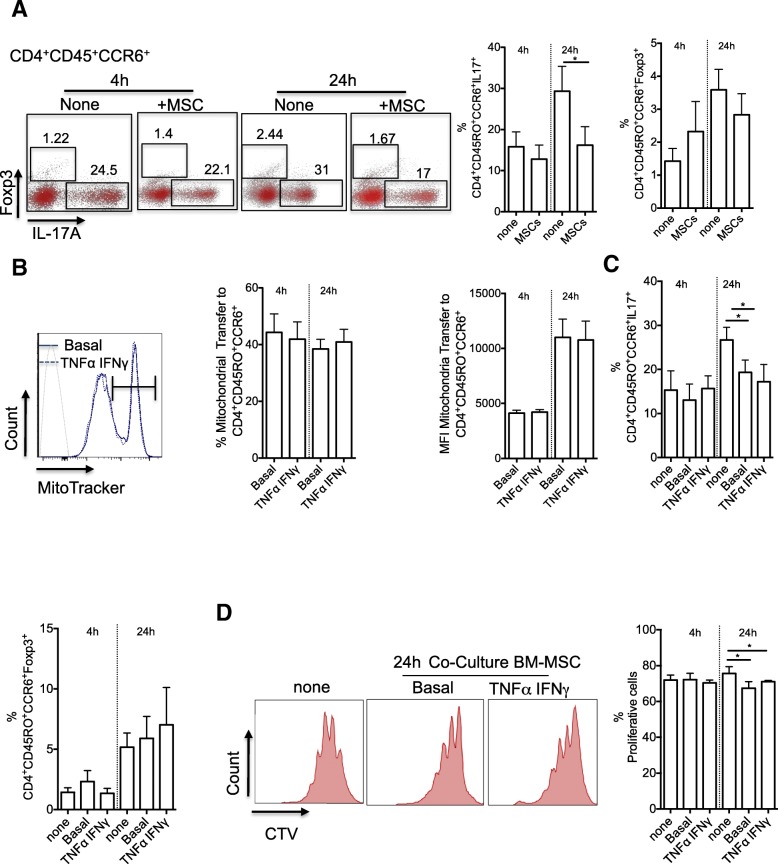
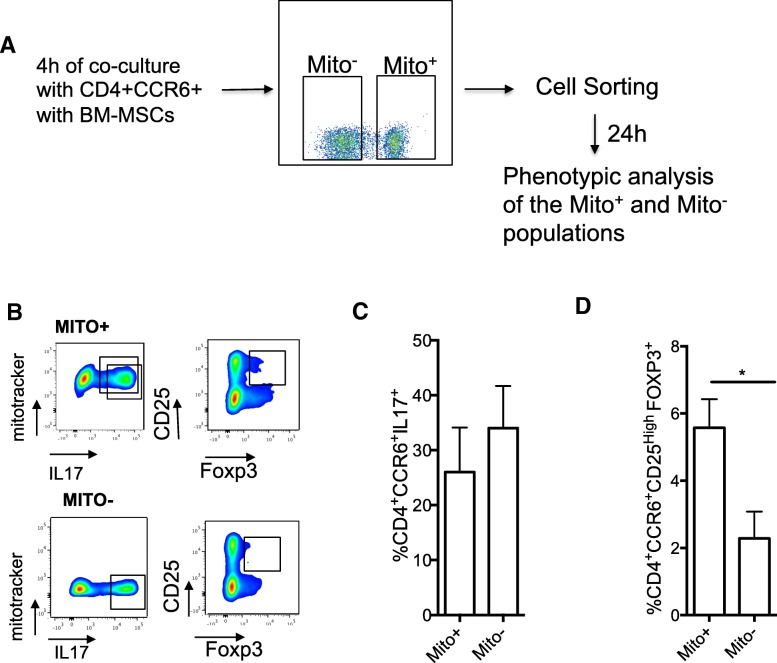
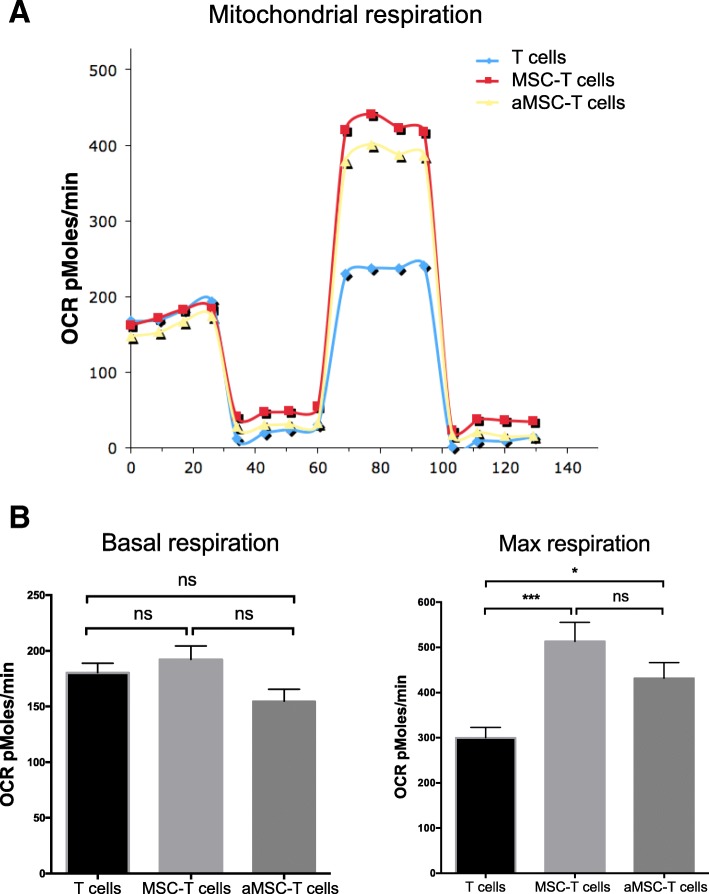
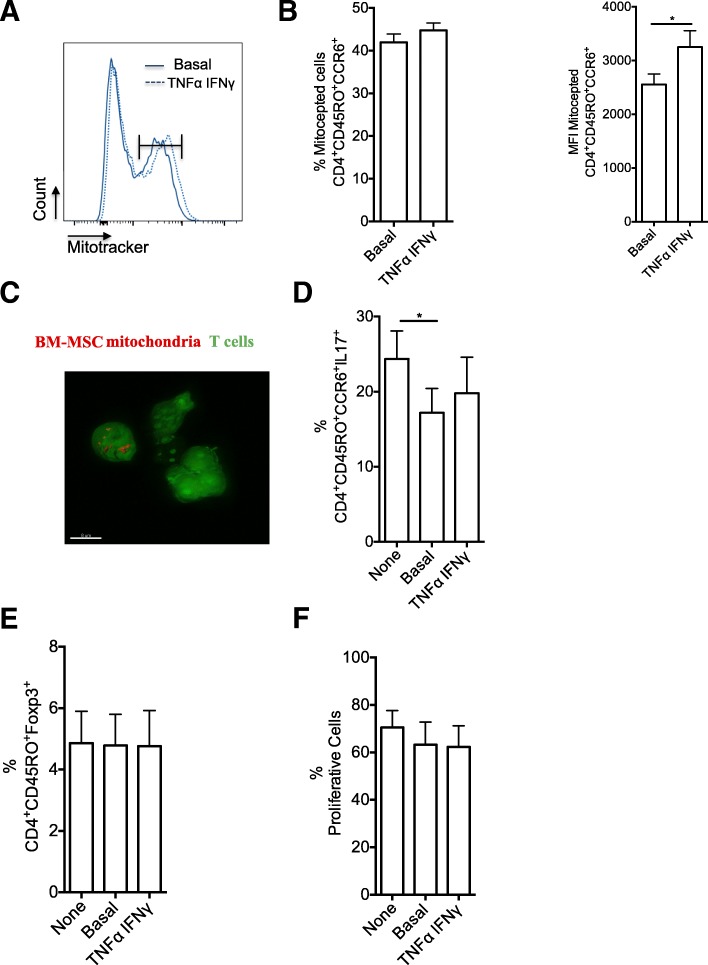
Here, we analyzed the capacity of MSCs from the bone marrow (BM) of healthy donors (BM-MSCs) to transfer mitochondria to primary CD4CCR6CD45RO T helper 17 (Th17) cells by confocal microscopy and fluorescent-activated cell sorting (FACS). We then evaluated the Th17 cell inflammatory phenotype and bioenergetics at 4 h and 24 h of co-culture with BM-MSCs. We found that Th17 cells can take up mitochondria from BM-MSCs already after 4 h of co-culture. Moreover, IL-17 production by Th17 cells co-cultured with BM-MSCs was significantly impaired in a contact-dependent manner. This inhibition was associated with oxygen consumption increase by Th17 cells and interconversion into T regulatory cells. Finally, by co-culturing human synovial MSCs (sMSCs) from patients with rheumatoid arthritis (RA) with Th17 cells, we found that compared with healthy BM-MSCs, mitochondrial transfer to Th17 cells was impaired in RA-sMSCs. Moreover, artificial mitochondrial transfer also significantly reduced IL-17 production by Th17 cells.
The present study brings some insights into a novel mechanism of T cell function regulation through mitochondrial transfer from stromal stem cells. The reduced mitochondrial transfer by RA-sMSCs might contribute to the persistence of chronic inflammation in RA synovitis.
间充质干细胞(MSCs)是具有广泛免疫抑制能力的多能细胞。最近,有报道称 MSCs 可以将线粒体转移到各种细胞类型,包括成纤维细胞、癌细胞和内皮细胞。有人认为,线粒体转移与受损细胞释放的信号引发的生理反应有关,这种反应旨在恢复和再生受损组织。然而,线粒体向免疫活性细胞的转移作用尚未得到充分研究。
在这里,我们通过共聚焦显微镜和荧光激活细胞分选(FACS)分析了来自健康供体骨髓(BM)的间充质干细胞(BM-MSCs)将线粒体转移到原代 CD4CCR6CD45RO T 辅助 17(Th17)细胞的能力。然后,我们在与 BM-MSCs 共培养 4 小时和 24 小时后评估了 Th17 细胞的炎症表型和生物能量学。我们发现,Th17 细胞在与 BM-MSCs 共培养 4 小时后即可摄取 BM-MSCs 的线粒体。此外,与 BM-MSCs 共培养的 Th17 细胞的 IL-17 产生以依赖接触的方式显著受损。这种抑制与 Th17 细胞耗氧量增加和转化为 T 调节细胞有关。最后,通过与类风湿关节炎(RA)患者的滑膜间充质干细胞(sMSCs)共培养 Th17 细胞,我们发现与健康 BM-MSCs 相比,RA-sMSCs 向 Th17 细胞的线粒体转移受损。此外,人工线粒体转移也显著降低了 Th17 细胞的 IL-17 产生。
本研究为基质干细胞通过从基质干细胞转移线粒体来调节 T 细胞功能提供了一些新的见解。RA-sMSCs 中线粒体转移减少可能导致 RA 滑膜炎中的慢性炎症持续存在。