Qiu Xue, Lin Jinyan, Liang Bixiao, Chen Yanbing, Liu Guoqun, Zheng Jing
Department of Cardiology, The First Affiliated Hospital of Guangxi Medical University, Nanning, China.
The First Clinical Medical School, Guangxi Medical University, Nanning, China.
Front Genet. 2021 Apr 29;12:667406. doi: 10.3389/fgene.2021.636934. eCollection 2021.
The aim of this study is the identification of hub genes associated with idiopathic pulmonary arterial hypertension (IPAH).
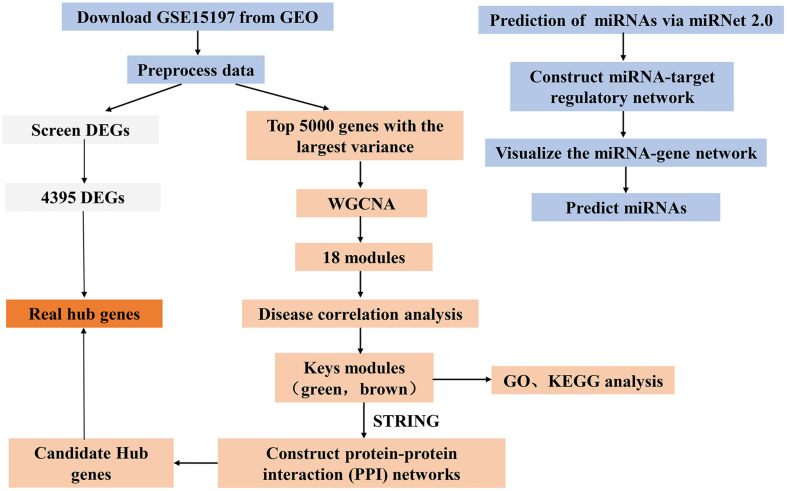
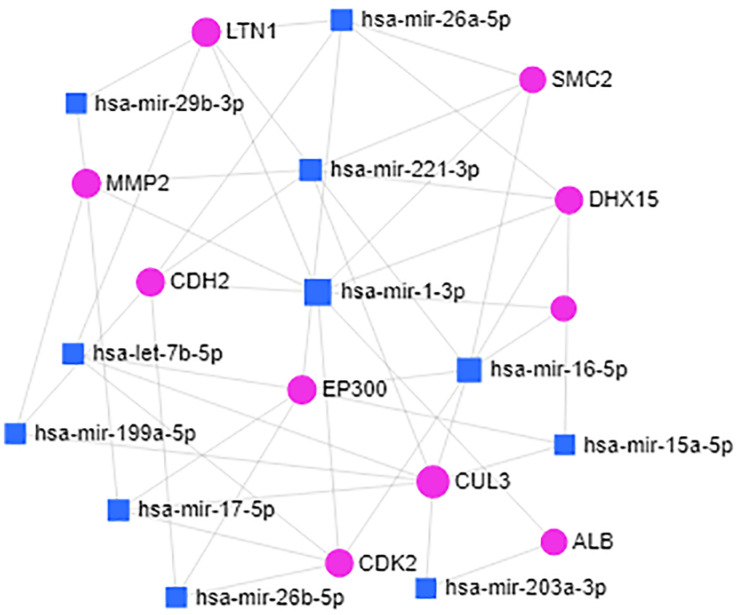
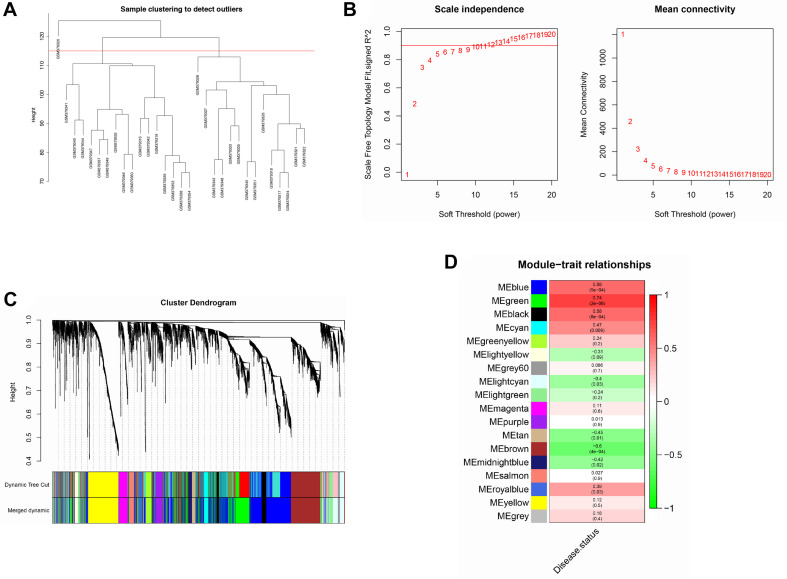
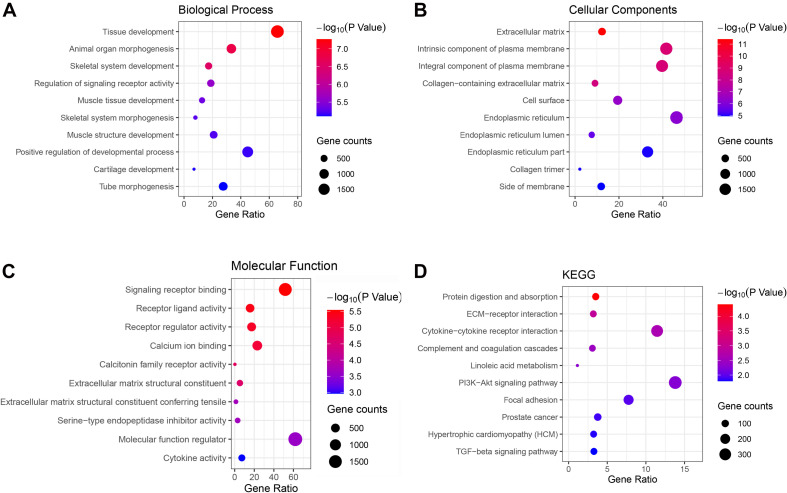
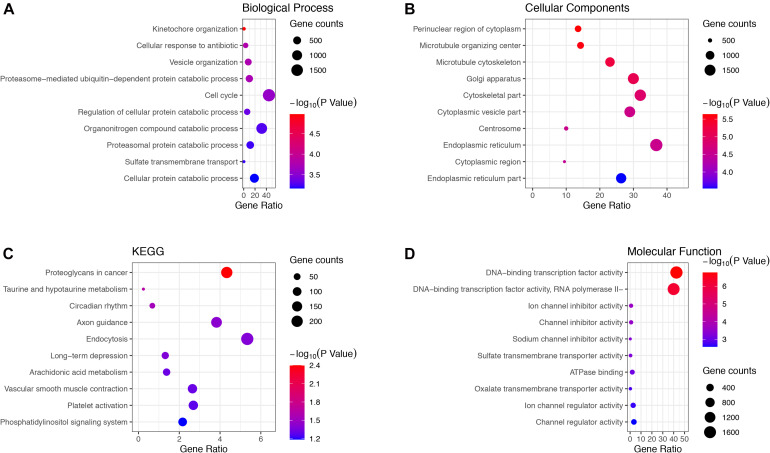
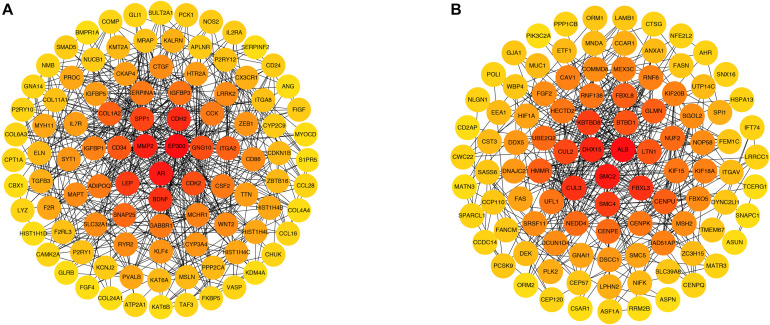
GSE15197 gene expression data was downloaded from the Gene Expression Omnibus (GEO) database. Differentially expressed genes (DEGs) were identified by screening IPAH patients and controls. The 5,000 genes with the greatest variances were analyzed using a weighted gene co-expression network analysis (WGCNA). Modules with the strongest correlation with IPAH were chosen, followed by a functional enrichment analysis. Protein-protein interaction (PPI) networks were constructed to identify hub gene candidates using calculated degrees. Real hub genes were found from the overlap of DEGs and candidate hub genes. microRNAs (miRNAs) targeting real hub genes were found by screening miRNet 2.0. The most important IPAH miRNAs were identified.
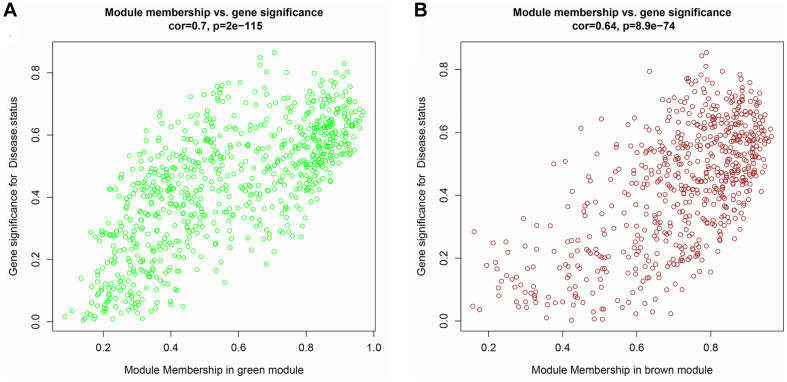
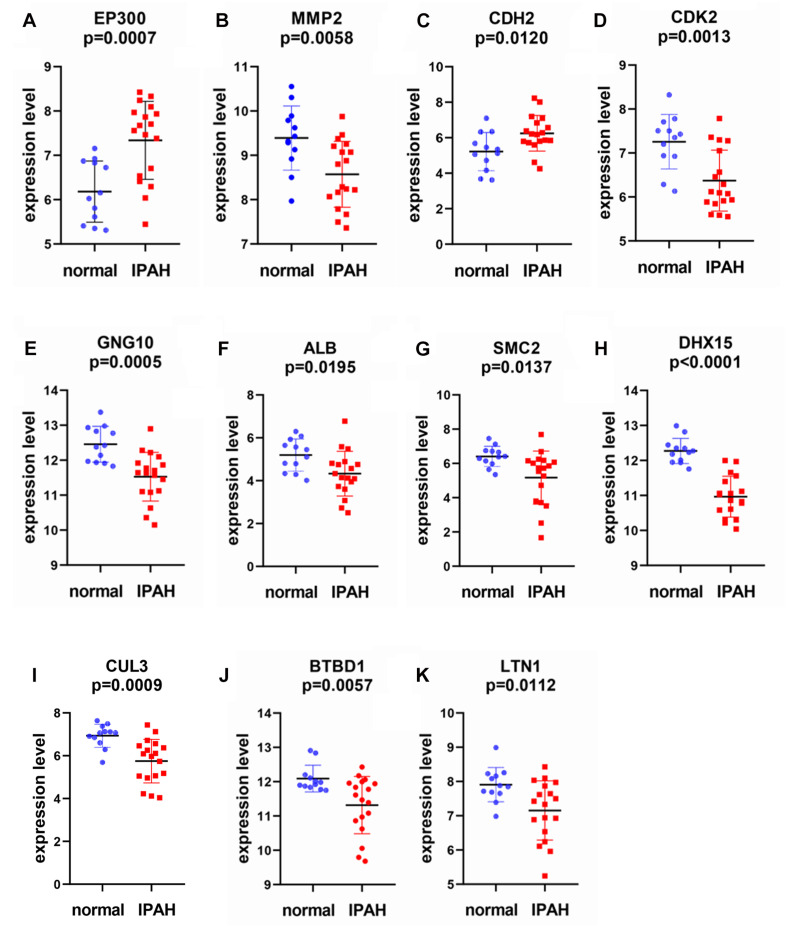
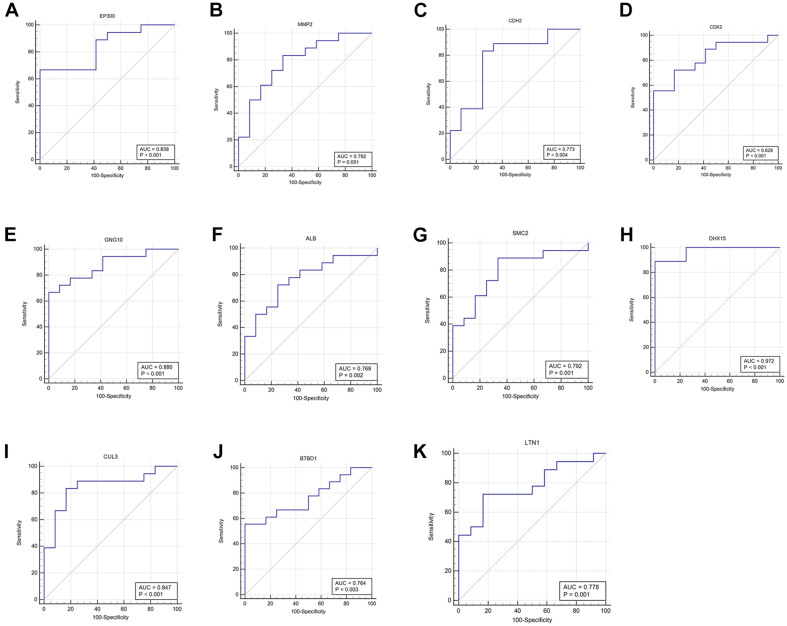
There were 4,395 DEGs identified. WGCNA indicated that green and brown modules associated most strongly with IPAH. Functional enrichment analysis showed that green and brown module genes were mainly involved in protein digestion and absorption and proteoglycans in cancer, respectively. The top ten candidate hub genes in green and brown modules were identified, respectively. After overlapping with DEGs, 11 real hub genes were identified: , , , , , , , , , , and . These genes were expressed with significant differences in IPAH versus controls, indicating a high diagnostic ability. The miRNA-gene network showed that hsa-mir-1-3p could associate with IPAH.
, , , , , , , , , , and may play essential roles in IPAH. Predicted miRNA hsa-mir-1-3p could regulate gene expression in IPAH. Such hub genes may contribute to the pathology and progression in IPAH, providing potential diagnostic and therapeutic opportunities for IPAH patients.
本研究旨在鉴定与特发性肺动脉高压(IPAH)相关的枢纽基因。
从基因表达综合数据库(GEO)下载GSE15197基因表达数据。通过筛选IPAH患者和对照组来鉴定差异表达基因(DEG)。使用加权基因共表达网络分析(WGCNA)对5000个方差最大的基因进行分析。选择与IPAH相关性最强的模块,随后进行功能富集分析。构建蛋白质-蛋白质相互作用(PPI)网络,利用计算出的度数来鉴定枢纽基因候选物。从DEG和候选枢纽基因的重叠中找到真正的枢纽基因。通过筛选miRNet 2.0找到靶向真正枢纽基因的微小RNA(miRNA)。鉴定出最重要的IPAH相关miRNA。
共鉴定出4395个DEG。WGCNA表明绿色和棕色模块与IPAH的相关性最强。功能富集分析表明,绿色和棕色模块基因分别主要参与蛋白质消化吸收和癌症中的蛋白聚糖。分别鉴定出绿色和棕色模块中的前十个候选枢纽基因。与DEG重叠后,鉴定出11个真正的枢纽基因:[此处原文缺失具体基因名称]。这些基因在IPAH患者与对照组中的表达存在显著差异,表明具有较高的诊断能力。miRNA-基因网络显示hsa-mir-1-3p可能与IPAH相关。
[此处原文缺失具体基因名称]可能在IPAH中发挥重要作用。预测的miRNA hsa-mir-1-3p可能调节IPAH中的基因表达。此类枢纽基因可能有助于IPAH的病理过程和进展,为IPAH患者提供潜在的诊断和治疗机会。