Zhang Cong, Yang Zhuowen, Zhou Peng, Yu Muxin, Li Baorong, Liu Yingmiao, Jin Jiaqi, Liu Wenhui, Jing Haijiao, Du Jingwen, Tian Jie, Zhao Zhiyu, Wang Jianxin, Chu Yinzhu, Zhang ChunMei, Novakovic Valerie A, Shi Jialan, Wu Changjun
Department of Ultrasound, The First Hospital, Harbin Medical University, Harbin, China.
Department of Gerontology, The First Hospital, Harbin Medical University, Harbin, China.
Theranostics. 2021 Apr 19;11(13):6445-6460. doi: 10.7150/thno.53637. eCollection 2021.
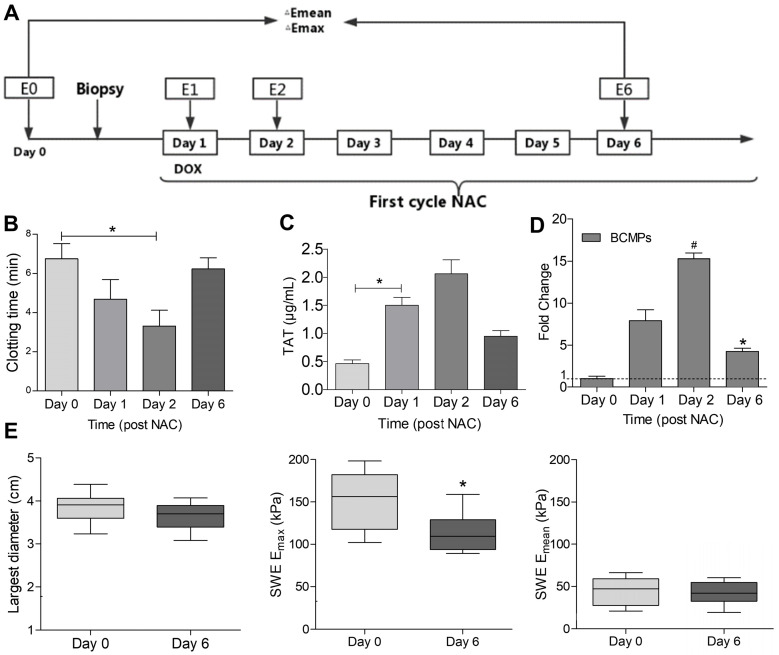
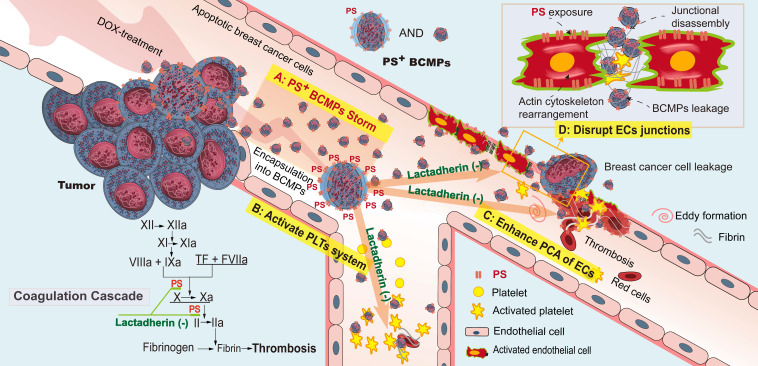
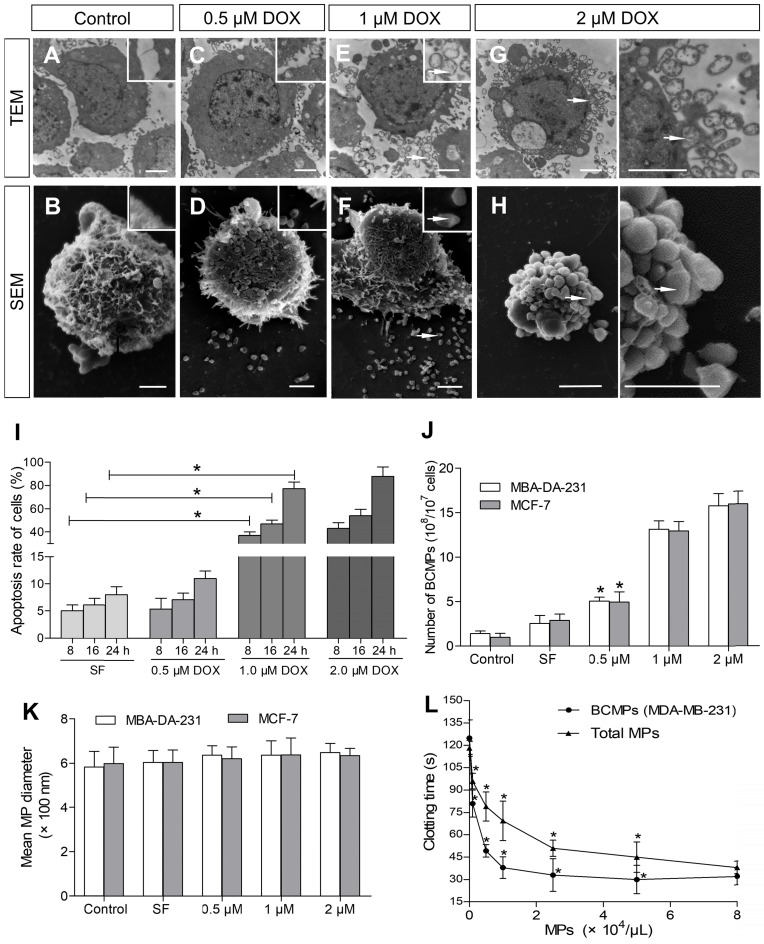
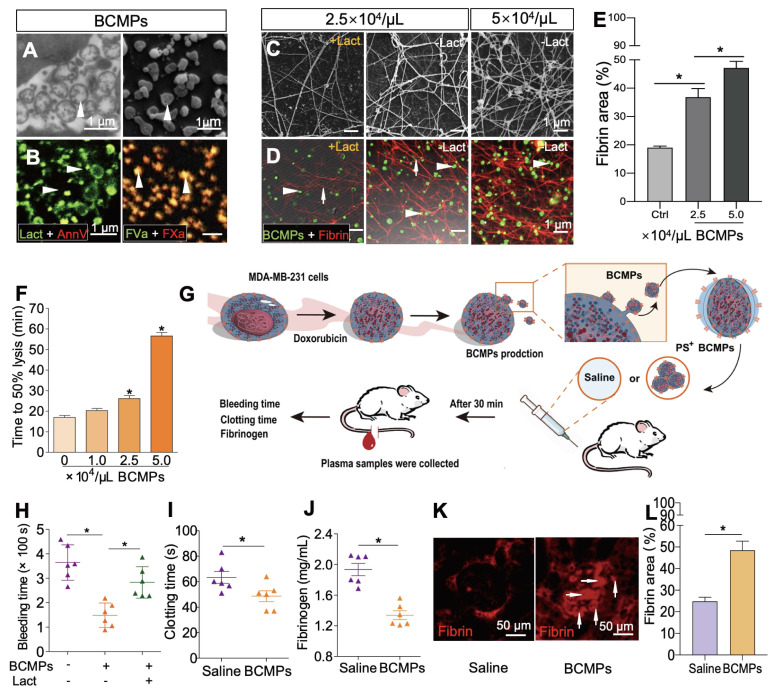
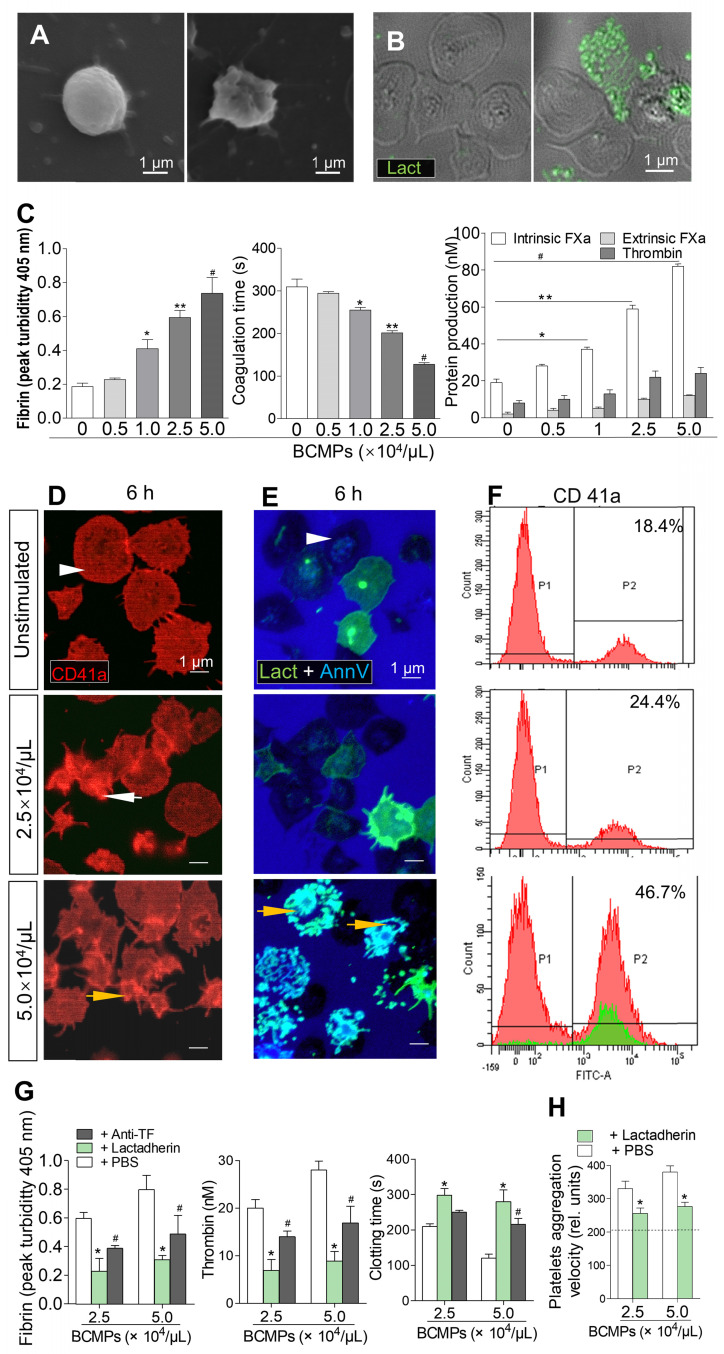
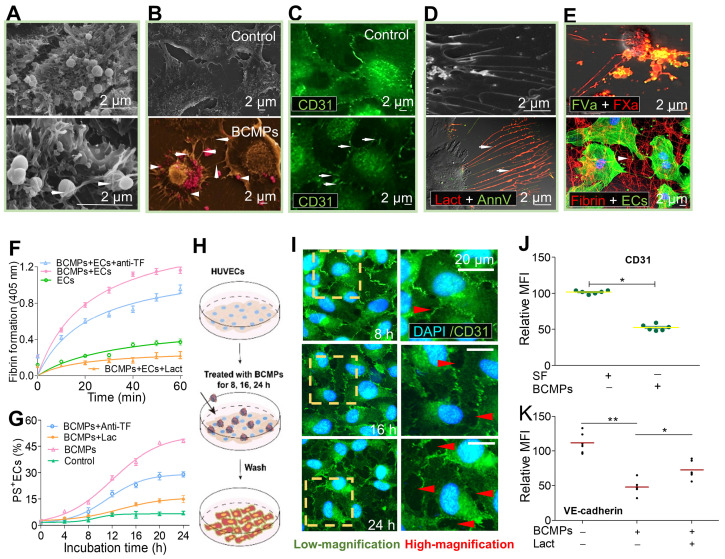
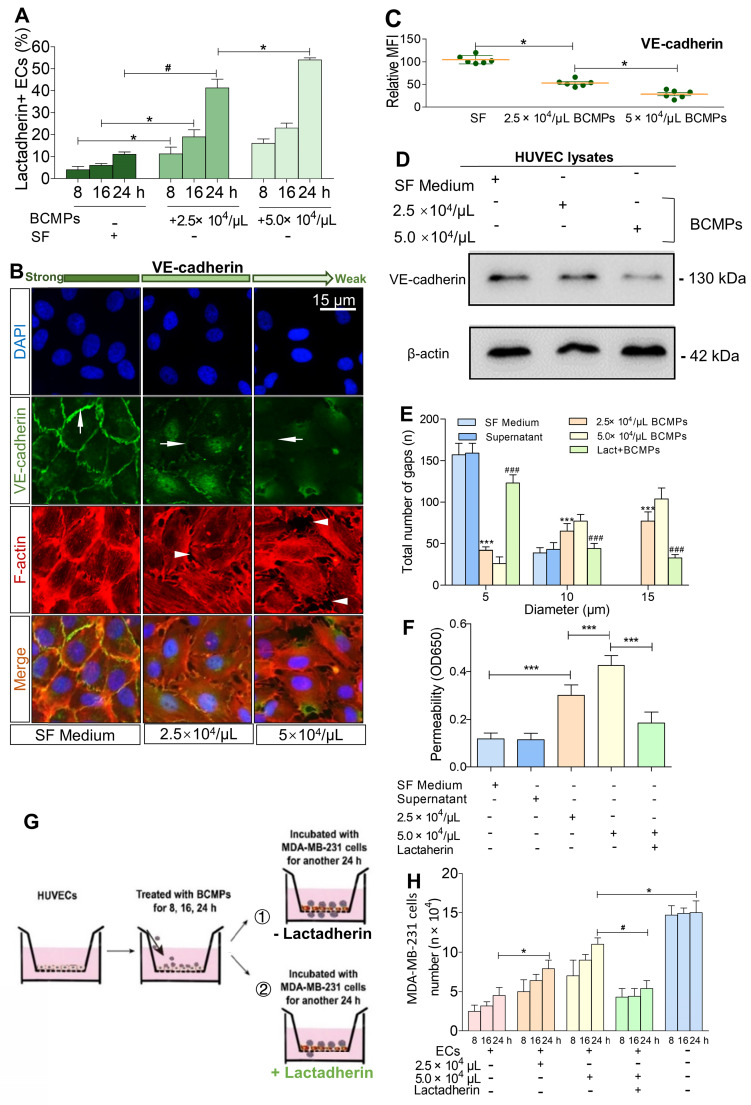
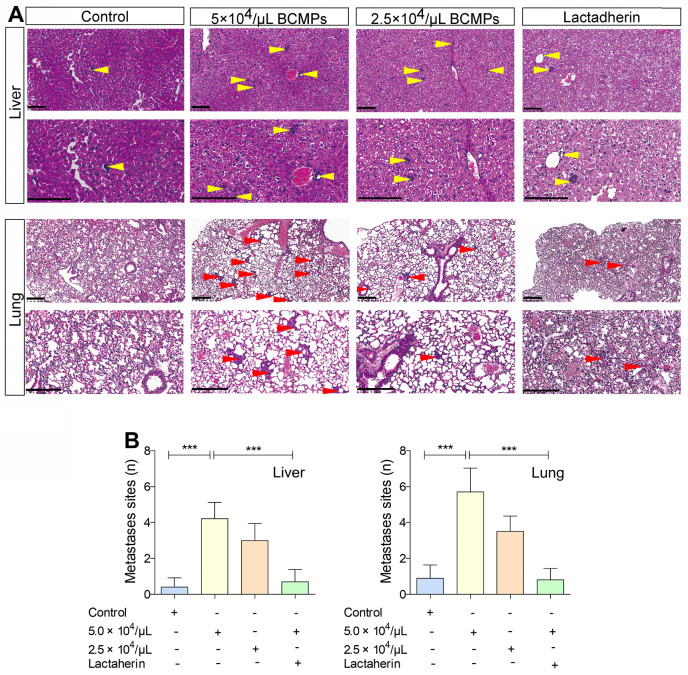
Neoadjuvant chemotherapy is relevant to the formation of thromboembolism and secondary neoplasms in triple-negative breast cancer (TNBC). Chemotherapy-induced breast cancer cell-derived microparticles (BCMPs) may have important thrombogenic and pro-metastatic effects on platelets and endothelium, which may be related to the expression and distribution of phosphatidylserine (PS). However, investigating these interactions is challenging due to technical limitations. A study was conducted in 20 healthy individuals and 18 patients who had been recently diagnosed with TNBC and were undergoing neoadjuvant chemotherapy with doxorubicin and cyclophosphamide. BCMPs were isolated from patient blood samples and doxorubicin-treated breast cancer cell lines. Their structure and morphology were studied by electron microscopy and antigen levels were measured by fluorescence-activated cell sorting. In an inhibition assay, isolated BCMPs were pretreated with lactadherin or tissue factor antibodies. Platelets isolated from healthy subjects were treated with BCMPs and coagulation time, fibrin formation, and expression of intrinsic/extrinsic factor Xase (FXa) and thrombin were evaluated. The effects of BCMPs on endothelial thrombogenicity and integrity were assessed by confocal microscopy, electron microscopy, measurement of intrinsic/extrinsic FXa, prothrombinase assay, and transwell permeability assay. Neoadjuvant chemotherapy significantly increased the expression of PS+ BCMPs in patient plasma. Its expression was associated with a rapid increase in procoagulant activity. Treatment with lactadherin, a PS-binding scavenging molecule, markedly reduced the adhesion of BCMPs and abolished their procoagulant activity, but this was not observed with tissue factor antibody treatment. Intravenous injection of BCMPs in mice induced a significant hypercoagulable state, reducing the extent of plasma fibrinogen and promoting the appearance of new thrombus. Cancer cells incubated with doxorubicin released large numbers of PS+ BCMPs, which stimulated and transformed endothelial cells into a procoagulant phenotype and increased the aggregation and activation of platelets. Moreover, cancer cells exploited this BCMP-induced endothelial leakiness and showed promoted metastasis. Pretreatment with lactadherin increased uptake of both PS+ BCMPs and cancer cells by endothelial cells and limited the transendothelial migration of cancer cells. Lactadherin, a biosensor that we developed, was used to study the extracellular vesicle distribution of PS, which revealed a novel PS+ BCMPs administrative axis that initiated a local coagulation cascade and facilitated metastatic colonization of circulating cancer cells.
新辅助化疗与三阴性乳腺癌(TNBC)中血栓栓塞和继发性肿瘤的形成有关。化疗诱导的乳腺癌细胞衍生微粒(BCMPs)可能对血小板和内皮细胞具有重要的促血栓形成和促转移作用,这可能与磷脂酰丝氨酸(PS)的表达和分布有关。然而,由于技术限制,研究这些相互作用具有挑战性。对20名健康个体和18名最近被诊断为TNBC并正在接受阿霉素和环磷酰胺新辅助化疗的患者进行了一项研究。从患者血液样本和阿霉素处理的乳腺癌细胞系中分离出BCMPs。通过电子显微镜研究其结构和形态,并通过荧光激活细胞分选测量抗原水平。在抑制试验中,用乳黏附素或组织因子抗体预处理分离出的BCMPs。用BCMPs处理从健康受试者分离出的血小板,并评估凝血时间、纤维蛋白形成以及内源性/外源性因子Xa(FXa)和凝血酶的表达。通过共聚焦显微镜、电子显微镜、内源性/外源性FXa的测量、凝血酶原酶测定和Transwell通透性测定评估BCMPs对内皮血栓形成性和完整性的影响。新辅助化疗显著增加了患者血浆中PS+ BCMPs的表达。其表达与促凝活性的快速增加有关。用PS结合清除分子乳黏附素治疗可显著降低BCMPs的黏附并消除其促凝活性,但组织因子抗体治疗未观察到这种情况。给小鼠静脉注射BCMPs会诱导显著的高凝状态,降低血浆纤维蛋白原水平并促进新血栓的出现。用阿霉素孵育的癌细胞释放大量PS+ BCMPs,其刺激内皮细胞并将其转化为促凝表型,增加血小板的聚集和活化。此外,癌细胞利用这种BCMP诱导的内皮渗漏并显示出转移促进作用。用乳黏附素预处理可增加内皮细胞对PS+ BCMPs和癌细胞的摄取,并限制癌细胞的跨内皮迁移。我们开发的生物传感器乳黏附素用于研究PS的细胞外囊泡分布,揭示了一个新的PS+ BCMPs管理轴,该轴启动局部凝血级联反应并促进循环癌细胞的转移定植。