Miller Stacey D, Juricic Maria, Fajardo Nandy, So Judy, Shore Benjamin J, Narayanan Unni G, Mulpuri Kishore
BC Children's Hospital.
Departments of Physical Therapy.
J Pediatr Orthop. 2021 Aug 1;41(7):e563-e569. doi: 10.1097/BPO.0000000000001850.
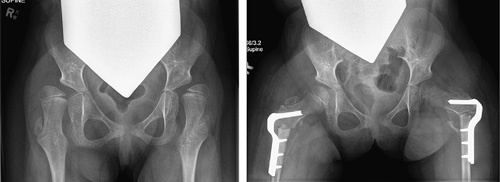
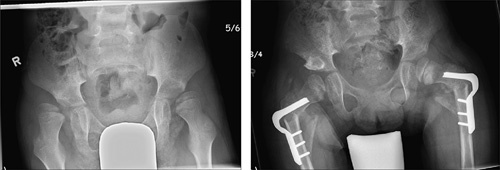
Despite being a common procedure, there are no standard protocols for postoperative immobilization and rehabilitation following reconstructive hip surgery in children with cerebral palsy (CP). The purpose of this study was to investigate variability in postoperative management and physical therapy (PT) recommendations among orthopaedic surgeons treating hip displacement in children with CP.
An invitation to participate in an anonymous, online survey was sent to 44 pediatric orthopaedic surgeons. The case of a child undergoing bilateral femoral varus derotation osteotomies and adductor tenotomies was presented. Surgeons were asked to consider their typical practice and the case scenario when answering questions related to immobilization, weight-bearing, and rehabilitation. Recommendations with increasingly complex surgical interventions and different age or level of motor function were also assessed.
Twenty-eight orthopaedic surgeons from 9 countries with a mean 21.3 years (range: 5 to 40 y) of experience completed the survey. Postoperative immobilization was recommended by 86% (24/28) of respondents with 7 different methods of immobilization identified. All but 1 (23/24) reported immobilizing full time. Most (20/23) reported using immobilization for 4 to 6 weeks. Return to weight-bearing varied from 0 to 6 weeks for partial weight-bearing and 0 to 12 weeks for full weight-bearing. PT in the first 1 to 2 weeks postoperatively was reported as unnecessary by 29% (8/28) of surgeons. PT for range of motion, strengthening, and return to function was recommended by 96% (27/28) of surgeons, starting at a mean of 2.6 weeks postoperatively (range: 0 to 16 wk). Only 48% (13/27) reported all of their patients would receive PT for these goals in their practice setting. Inpatient rehabilitation was available for 75% (21/28) but most surgeons (17/21) reported this was accessed by 20% or fewer of their patients.
Postoperative immobilization and PT recommendations were highly variable among surgeons. This variability may influence surgical outcomes and complication rates and should be considered when evaluating procedures. Further study into the impact of postoperative immobilization and rehabilitation is warranted.
尽管重建性髋关节手术在脑瘫(CP)患儿中是一种常见的手术,但术后固定和康复并没有标准方案。本研究的目的是调查治疗CP患儿髋关节脱位的骨科医生在术后管理和物理治疗(PT)建议方面的差异。
向44名儿科骨科医生发送了一份参与匿名在线调查的邀请。呈现了一名接受双侧股骨内翻旋转截骨术和内收肌切断术的儿童病例。要求外科医生在回答与固定、负重和康复相关的问题时考虑他们的典型做法和病例情况。还评估了随着手术干预越来越复杂以及不同年龄或运动功能水平的建议。
来自9个国家的28名骨科医生完成了调查,他们的平均经验为21.3年(范围:5至40年)。86%(24/28)的受访者推荐术后固定,确定了7种不同的固定方法。除1人外(23/24),所有人都报告为全天固定。大多数(20/23)报告使用固定4至6周。部分负重恢复负重的时间为0至6周,完全负重为0至12周。29%(8/28)的外科医生报告术后1至2周不需要PT。96%(27/28)的外科医生建议进行运动范围、强化和恢复功能的PT,平均从术后2.6周开始(范围:0至16周)。只有48%(13/27)报告他们所有的患者在其实践环境中会接受针对这些目标的PT。75%(21/28)的患者可获得住院康复,但大多数外科医生(17/21)报告只有20%或更少的患者能够获得。
外科医生在术后固定和PT建议方面存在很大差异。这种差异可能会影响手术结果和并发症发生率,在评估手术时应予以考虑。有必要进一步研究术后固定和康复的影响。