• 文献检索
  • 文档翻译
  • 深度研究
  • 学术资讯
  • Suppr Zotero 插件Zotero 插件
  • 邀请有礼
  • 套餐&价格
  • 历史记录
应用&插件
Suppr Zotero 插件Zotero 插件浏览器插件Mac 客户端Windows 客户端微信小程序
定价
高级版会员购买积分包购买API积分包
服务
文献检索文档翻译深度研究API 文档MCP 服务
关于我们
关于 Suppr公司介绍联系我们用户协议隐私条款
关注我们

Suppr 超能文献

核心技术专利:CN118964589B侵权必究
粤ICP备2023148730 号-1Suppr @ 2026

文献检索

告别复杂PubMed语法,用中文像聊天一样搜索,搜遍4000万医学文献。AI智能推荐,让科研检索更轻松。

立即免费搜索

文件翻译

保留排版,准确专业,支持PDF/Word/PPT等文件格式,支持 12+语言互译。

免费翻译文档

深度研究

AI帮你快速写综述,25分钟生成高质量综述,智能提取关键信息,辅助科研写作。

立即免费体验

竞争协调 Hedgehog 共受体在同种亲合黏附和信号接收中的双重作用。

Competitive coordination of the dual roles of the Hedgehog co-receptor in homophilic adhesion and signal reception.

机构信息

Department of Anatomy and Cell Biology, George Washington University School of Medicine and Health Sciences, Washington, United States.

GW Cancer Center, George Washington University School of Medicine and Health Sciences, Washington, United States.

出版信息

Elife. 2021 May 18;10:e65770. doi: 10.7554/eLife.65770.

DOI:10.7554/eLife.65770
PMID:34003115
原文链接:https://pmc.ncbi.nlm.nih.gov/articles/PMC8131103/
Abstract

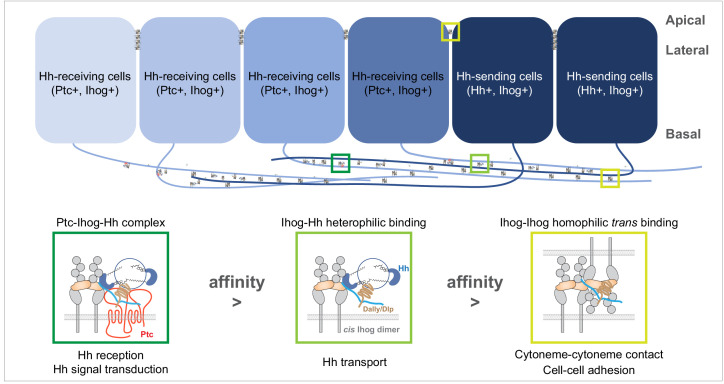
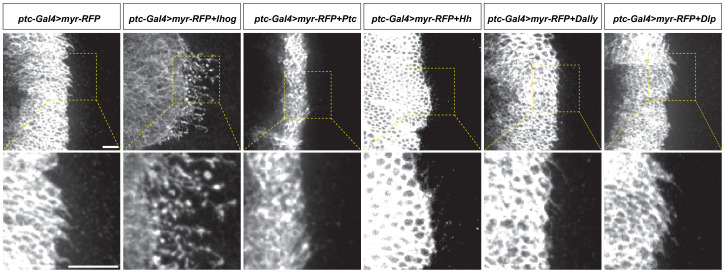
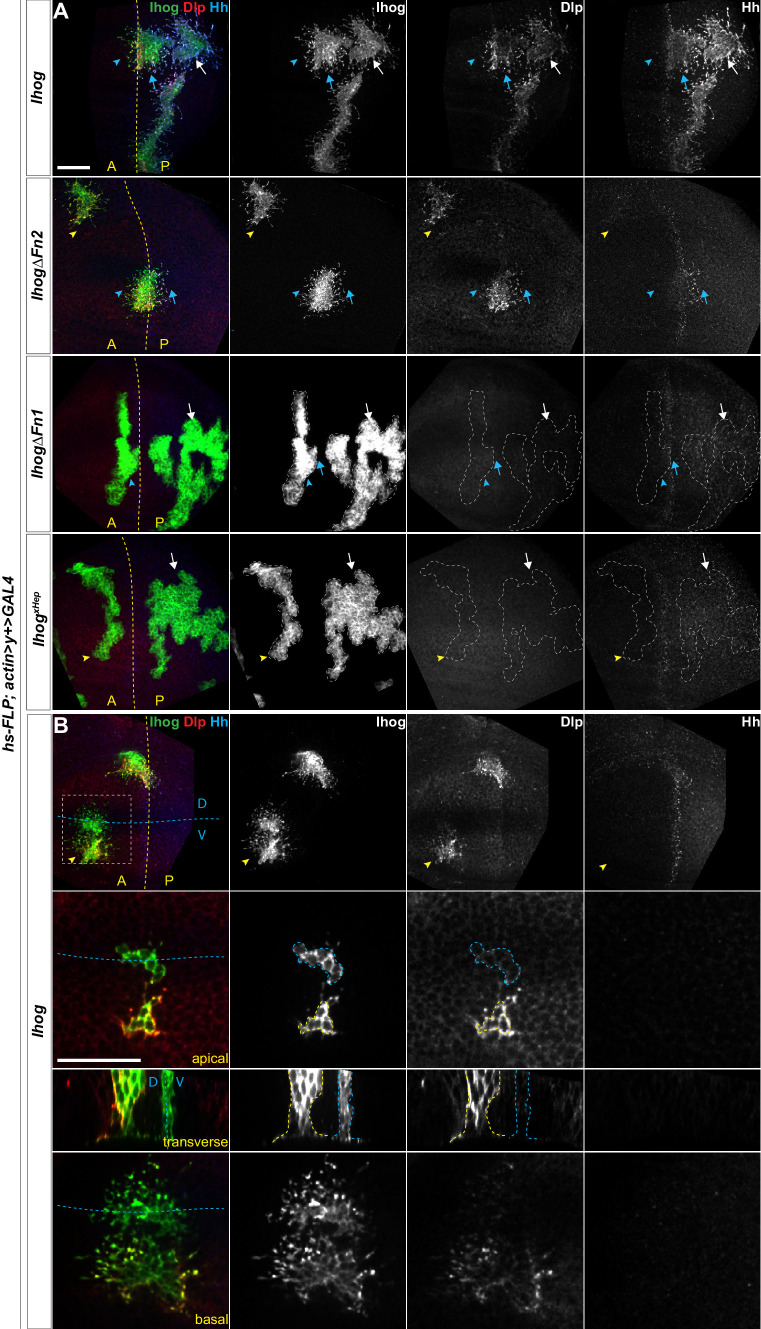
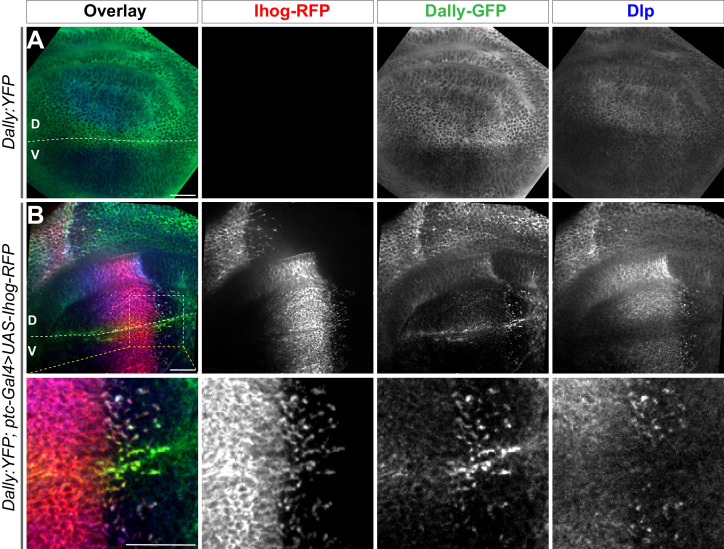
Hedgehog (Hh) signaling patterns embryonic tissues and contributes to homeostasis in adults. In , Hh transport and signaling are thought to occur along a specialized class of actin-rich filopodia, termed cytonemes. Here, we report that Interference hedgehog (Ihog) not only forms a Hh receptor complex with Patched to mediate intracellular signaling, but Ihog also engages in -homophilic binding leading to cytoneme stabilization in a manner independent of its role as the Hh receptor. Both functions of Ihog (-homophilic binding for cytoneme stabilization and Hh binding for ligand sensing) involve a heparin-binding site on the first fibronectin repeat of the extracellular domain. Thus, the Ihog-Ihog interaction and the Hh-Ihog interaction cannot occur simultaneously for a single Ihog molecule. By combining experimental data and mathematical modeling, we determined that Hh-Ihog heterophilic interaction dominates and Hh can disrupt and displace Ihog molecules involved in -homophilic binding. Consequently, we proposed that the weaker Ihog-Ihog interaction promotes and stabilizes direct membrane contacts along cytonemes and that, as the cytoneme encounters secreted Hh ligands, the ligands trigger release of Ihog from Ihog-Ihog complex enabling transport or internalization of the Hh ligand-Ihog-Patched -receptor complex. Thus, the seemingly incompatible functions of Ihog in homophilic adhesion and ligand binding cooperate to assist Hh transport and reception along the cytonemes.

摘要

刺猬(Hh)信号模式胚胎组织,并有助于在成人的体内平衡。在,Hh 运输和信号被认为沿着一个特殊的肌动蛋白丰富的纤毛,称为纤毛发生。在这里,我们报告说干扰刺猬(Ihog)不仅与帕奇特(Patched)形成 Hh 受体复合物来介导细胞内信号转导,而且 Ihog 还参与同种型结合,导致纤毛发生稳定,其方式独立于其作为 Hh 受体的作用。Ihog 的这两种功能(同种型结合以稳定纤毛发生和结合 Hh 以感知配体)都涉及细胞外结构域第一纤维连接蛋白重复中的肝素结合位点。因此,单个 Ihog 分子不能同时发生 Ihog-Ihog 相互作用和 Hh-Ihog 相互作用。通过结合实验数据和数学模型,我们确定 Hh-Ihog 异源相互作用占主导地位,并且 Hh 可以破坏和取代参与同种型结合的 Ihog 分子。因此,我们提出较弱的 Ihog-Ihog 相互作用促进并稳定了纤毛发生中的直接膜接触,并且当纤毛发生遇到分泌的 Hh 配体时,配体触发 Ihog 从 Ihog-Ihog 复合物中释放出来,从而使 Hh 配体-Ihog-Patched 受体复合物能够转运或内化。因此,Ihog 在同种型粘附和配体结合中的看似不兼容的功能协同作用以协助 Hh 沿着纤毛发生进行运输和接收。

https://cdn.ncbi.nlm.nih.gov/pmc/blobs/662e/8131103/4815b94fbca6/elife-65770-fig8.jpg
https://cdn.ncbi.nlm.nih.gov/pmc/blobs/662e/8131103/316844c9154a/elife-65770-fig1.jpg
https://cdn.ncbi.nlm.nih.gov/pmc/blobs/662e/8131103/05bb4e2c15eb/elife-65770-fig1-figsupp1.jpg
https://cdn.ncbi.nlm.nih.gov/pmc/blobs/662e/8131103/8229896f8d09/elife-65770-fig2.jpg
https://cdn.ncbi.nlm.nih.gov/pmc/blobs/662e/8131103/f4114a98ba35/elife-65770-fig3.jpg
https://cdn.ncbi.nlm.nih.gov/pmc/blobs/662e/8131103/315ae36df185/elife-65770-fig3-figsupp1.jpg
https://cdn.ncbi.nlm.nih.gov/pmc/blobs/662e/8131103/200948a04b3f/elife-65770-fig4.jpg
https://cdn.ncbi.nlm.nih.gov/pmc/blobs/662e/8131103/b073e8084e05/elife-65770-fig4-figsupp1.jpg
https://cdn.ncbi.nlm.nih.gov/pmc/blobs/662e/8131103/480076c74285/elife-65770-fig4-figsupp2.jpg
https://cdn.ncbi.nlm.nih.gov/pmc/blobs/662e/8131103/9ecbd9c0765a/elife-65770-fig4-figsupp3.jpg
https://cdn.ncbi.nlm.nih.gov/pmc/blobs/662e/8131103/c40bbb76bf78/elife-65770-fig5.jpg
https://cdn.ncbi.nlm.nih.gov/pmc/blobs/662e/8131103/14a7389ec345/elife-65770-fig5-figsupp1.jpg
https://cdn.ncbi.nlm.nih.gov/pmc/blobs/662e/8131103/549dc1b75bb7/elife-65770-fig5-figsupp2.jpg
https://cdn.ncbi.nlm.nih.gov/pmc/blobs/662e/8131103/6cfe9d167f17/elife-65770-fig5-figsupp3.jpg
https://cdn.ncbi.nlm.nih.gov/pmc/blobs/662e/8131103/8eaf99d5b8f9/elife-65770-fig6.jpg
https://cdn.ncbi.nlm.nih.gov/pmc/blobs/662e/8131103/8daab53c9eef/elife-65770-fig6-figsupp1.jpg
https://cdn.ncbi.nlm.nih.gov/pmc/blobs/662e/8131103/ec038fcea188/elife-65770-fig6-figsupp2.jpg
https://cdn.ncbi.nlm.nih.gov/pmc/blobs/662e/8131103/da3513b1b874/elife-65770-fig6-figsupp3.jpg
https://cdn.ncbi.nlm.nih.gov/pmc/blobs/662e/8131103/1e3f18179144/elife-65770-fig7.jpg
https://cdn.ncbi.nlm.nih.gov/pmc/blobs/662e/8131103/4815b94fbca6/elife-65770-fig8.jpg
https://cdn.ncbi.nlm.nih.gov/pmc/blobs/662e/8131103/316844c9154a/elife-65770-fig1.jpg
https://cdn.ncbi.nlm.nih.gov/pmc/blobs/662e/8131103/05bb4e2c15eb/elife-65770-fig1-figsupp1.jpg
https://cdn.ncbi.nlm.nih.gov/pmc/blobs/662e/8131103/8229896f8d09/elife-65770-fig2.jpg
https://cdn.ncbi.nlm.nih.gov/pmc/blobs/662e/8131103/f4114a98ba35/elife-65770-fig3.jpg
https://cdn.ncbi.nlm.nih.gov/pmc/blobs/662e/8131103/315ae36df185/elife-65770-fig3-figsupp1.jpg
https://cdn.ncbi.nlm.nih.gov/pmc/blobs/662e/8131103/200948a04b3f/elife-65770-fig4.jpg
https://cdn.ncbi.nlm.nih.gov/pmc/blobs/662e/8131103/b073e8084e05/elife-65770-fig4-figsupp1.jpg
https://cdn.ncbi.nlm.nih.gov/pmc/blobs/662e/8131103/480076c74285/elife-65770-fig4-figsupp2.jpg
https://cdn.ncbi.nlm.nih.gov/pmc/blobs/662e/8131103/9ecbd9c0765a/elife-65770-fig4-figsupp3.jpg
https://cdn.ncbi.nlm.nih.gov/pmc/blobs/662e/8131103/c40bbb76bf78/elife-65770-fig5.jpg
https://cdn.ncbi.nlm.nih.gov/pmc/blobs/662e/8131103/14a7389ec345/elife-65770-fig5-figsupp1.jpg
https://cdn.ncbi.nlm.nih.gov/pmc/blobs/662e/8131103/549dc1b75bb7/elife-65770-fig5-figsupp2.jpg
https://cdn.ncbi.nlm.nih.gov/pmc/blobs/662e/8131103/6cfe9d167f17/elife-65770-fig5-figsupp3.jpg
https://cdn.ncbi.nlm.nih.gov/pmc/blobs/662e/8131103/8eaf99d5b8f9/elife-65770-fig6.jpg
https://cdn.ncbi.nlm.nih.gov/pmc/blobs/662e/8131103/8daab53c9eef/elife-65770-fig6-figsupp1.jpg
https://cdn.ncbi.nlm.nih.gov/pmc/blobs/662e/8131103/ec038fcea188/elife-65770-fig6-figsupp2.jpg
https://cdn.ncbi.nlm.nih.gov/pmc/blobs/662e/8131103/da3513b1b874/elife-65770-fig6-figsupp3.jpg
https://cdn.ncbi.nlm.nih.gov/pmc/blobs/662e/8131103/1e3f18179144/elife-65770-fig7.jpg
https://cdn.ncbi.nlm.nih.gov/pmc/blobs/662e/8131103/4815b94fbca6/elife-65770-fig8.jpg

相似文献

1
Competitive coordination of the dual roles of the Hedgehog co-receptor in homophilic adhesion and signal reception.竞争协调 Hedgehog 共受体在同种亲合黏附和信号接收中的双重作用。
Elife. 2021 May 18;10:e65770. doi: 10.7554/eLife.65770.
2
The Hedgehog receptor component Interference hedgehog (Ihog) mediates cell-cell interactions through -homophilic binding.刺猬受体元件干扰刺猬(Ihog)通过 -同型结合介导细胞-细胞相互作用。
J Biol Chem. 2019 Aug 16;294(33):12339-12348. doi: 10.1074/jbc.RA119.008744. Epub 2019 Jun 17.
3
Predictive model for cytoneme guidance in Hedgehog signaling based on Ihog- Glypicans interaction.基于 Ihog-聚糖蛋白相互作用的 Hedgehog 信号通路中纤毛导向的预测模型。
Nat Commun. 2022 Sep 26;13(1):5647. doi: 10.1038/s41467-022-33262-4.
4
Glypicans define unique roles for the Hedgehog co-receptors boi and ihog in cytoneme-mediated gradient formation.Glypicans 在 Hedgehog 共受体 boi 和 ihog 在纤毛介导的梯度形成中定义了独特的作用。
Elife. 2021 Aug 6;10:e64581. doi: 10.7554/eLife.64581.
5
Structure of a heparin-dependent complex of Hedgehog and Ihog.刺猬因子(Hedgehog)与跨膜类免疫球蛋白(Ihog)的肝素依赖性复合物的结构
Proc Natl Acad Sci U S A. 2006 Nov 14;103(46):17208-13. doi: 10.1073/pnas.0606738103. Epub 2006 Oct 31.
6
The mode of Hedgehog binding to Ihog homologues is not conserved across different phyla.刺猬蛋白与Ihog同源物的结合模式在不同门之间并不保守。
Nature. 2008 Oct 16;455(7215):979-83. doi: 10.1038/nature07358. Epub 2008 Sep 14.
7
The ihog cell-surface proteins bind Hedgehog and mediate pathway activation.跨膜类免疫球蛋白(ihog)细胞表面蛋白结合刺猬因子并介导信号通路激活。
Cell. 2006 Apr 21;125(2):343-57. doi: 10.1016/j.cell.2006.02.040.
8
Cytoneme-mediated cell-cell contacts for Hedgehog reception.纤毛介导的细胞间接触用于 Hedgehog 受体。
Elife. 2017 Aug 21;6:e24045. doi: 10.7554/eLife.24045.
9
The Drosophila WIF1 homolog Shifted maintains glypican-independent Hedgehog signaling and interacts with the Hedgehog co-receptors Ihog and Boi.果蝇 WIF1 同源物 Shifted 维持糖蛋白非依赖性 Hedgehog 信号转导,并与 Hedgehog 共受体 Ihog 和 Boi 相互作用。
Development. 2013 Jan 1;140(1):107-16. doi: 10.1242/dev.078444. Epub 2012 Nov 15.
10
Genetic and biochemical definition of the Hedgehog receptor.Hedgehog 受体的遗传和生化定义。
Genes Dev. 2010 Jan 1;24(1):57-71. doi: 10.1101/gad.1870310.

引用本文的文献

1
The Drosophila epidermal growth factor receptor pathway regulates Hedgehog signalling and cytoneme behaviour.果蝇表皮生长因子受体途径调节刺猬信号通路和丝状伪足行为。
Nat Commun. 2025 Feb 26;16(1):1994. doi: 10.1038/s41467-025-57162-5.
2
Hedgehog on the Move: Glypican-Regulated Transport and Gradient Formation in .移动中的刺猬信号通路:磷脂酰肌醇蛋白聚糖调节的转运与梯度形成
Cells. 2024 Feb 27;13(5):418. doi: 10.3390/cells13050418.
3
The role of glycosaminoglycan modification in Hedgehog regulated tissue morphogenesis.糖胺聚糖修饰在 Hedgehog 调控组织形态发生中的作用。

本文引用的文献

1
Polarized sorting of Patched enables cytoneme-mediated Hedgehog reception in the Drosophila wing disc. patched 的极化分选使 Hedgehog 受体在果蝇翅盘中通过纤毛介导。
EMBO J. 2020 Jun 2;39(11):e103629. doi: 10.15252/embj.2019103629. Epub 2020 Apr 20.
2
Glioblastoma cells vampirize WNT from neurons and trigger a JNK/MMP signaling loop that enhances glioblastoma progression and neurodegeneration.胶质母细胞瘤细胞从神经元中吸取 WNT,并触发 JNK/MMP 信号环路,从而增强胶质母细胞瘤的进展和神经退行性变。
PLoS Biol. 2019 Dec 17;17(12):e3000545. doi: 10.1371/journal.pbio.3000545. eCollection 2019 Dec.
3
The Hedgehog receptor component Interference hedgehog (Ihog) mediates cell-cell interactions through -homophilic binding.
Biochem Soc Trans. 2023 Jun 28;51(3):983-993. doi: 10.1042/BST20220719.
4
From mesenchymal niches to engineered model systems: Exploring and exploiting biomechanical regulation of vertebrate hedgehog signalling.从间充质微环境到工程模型系统:探索和利用脊椎动物刺猬信号通路的生物力学调控
Mater Today Bio. 2022 Nov 22;17:100502. doi: 10.1016/j.mtbio.2022.100502. eCollection 2022 Dec 15.
5
Predictive model for cytoneme guidance in Hedgehog signaling based on Ihog- Glypicans interaction.基于 Ihog-聚糖蛋白相互作用的 Hedgehog 信号通路中纤毛导向的预测模型。
Nat Commun. 2022 Sep 26;13(1):5647. doi: 10.1038/s41467-022-33262-4.
6
Regulatory mechanisms of cytoneme-based morphogen transport.基于丝状伪足的形态发生素运输的调控机制。
Cell Mol Life Sci. 2022 Feb 4;79(2):119. doi: 10.1007/s00018-022-04148-x.
7
Glypicans define unique roles for the Hedgehog co-receptors boi and ihog in cytoneme-mediated gradient formation.Glypicans 在 Hedgehog 共受体 boi 和 ihog 在纤毛介导的梯度形成中定义了独特的作用。
Elife. 2021 Aug 6;10:e64581. doi: 10.7554/eLife.64581.
刺猬受体元件干扰刺猬(Ihog)通过 -同型结合介导细胞-细胞相互作用。
J Biol Chem. 2019 Aug 16;294(33):12339-12348. doi: 10.1074/jbc.RA119.008744. Epub 2019 Jun 17.
4
The cytoneme connection: direct long-distance signal transfer during development.纤毛连接:发育过程中的直接远距离信号传递
Development. 2019 May 8;146(9):dev174607. doi: 10.1242/dev.174607.
5
Hedgehog mediated degradation of Ihog adhesion proteins modulates cell segregation in Drosophila wing imaginal discs. Hedgehog 介导的 Ihog 黏附蛋白降解调节果蝇翅膀 imaginal discs 中的细胞分离。
Nat Commun. 2017 Nov 2;8(1):1275. doi: 10.1038/s41467-017-01364-z.
6
A fixation method to preserve cultured cell cytonemes facilitates mechanistic interrogation of morphogen transport.一种用于保存培养细胞丝状伪足的固定方法有助于对形态发生素运输进行机制研究。
Development. 2017 Oct 1;144(19):3612-3624. doi: 10.1242/dev.152736. Epub 2017 Aug 21.
7
Cytoneme-mediated cell-cell contacts for Hedgehog reception.纤毛介导的细胞间接触用于 Hedgehog 受体。
Elife. 2017 Aug 21;6:e24045. doi: 10.7554/eLife.24045.
8
Essential basal cytonemes take up Hedgehog in the wing imaginal disc.必需的基底细胞丝在翅成虫盘摄取刺猬蛋白。
Development. 2017 Sep 1;144(17):3134-3144. doi: 10.1242/dev.149856. Epub 2017 Jul 25.
9
Enhanced energy transport in genetically engineered excitonic networks.基因工程激子网络中的增强能量输运。
Nat Mater. 2016 Feb;15(2):211-6. doi: 10.1038/nmat4448. Epub 2015 Oct 12.
10
CoinFLP: a system for efficient mosaic screening and for visualizing clonal boundaries in Drosophila.CoinFLP:一个用于高效马赛克筛选和可视化果蝇克隆边界的系统。
Development. 2015 Feb 1;142(3):597-606. doi: 10.1242/dev.114603.