Molecular Mucosal Vaccine Immunology Group, Department of Immunology and Infectious Disease, The John Curtin School of Medical Research, The Australian National University, Canberra, ACT, 2601, Australia.
Sir William Dunn School of Pathology, Medical Sciences Division, University of Oxford, Oxfordshire, OX1 3RE, UK.
Sci Rep. 2021 May 18;11(1):10495. doi: 10.1038/s41598-021-89860-7.
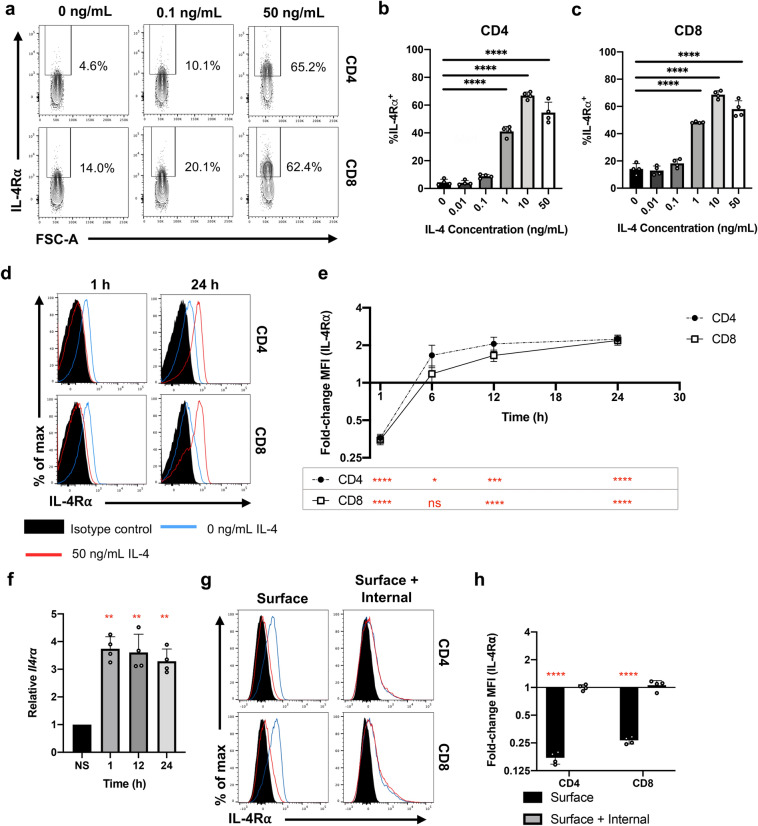
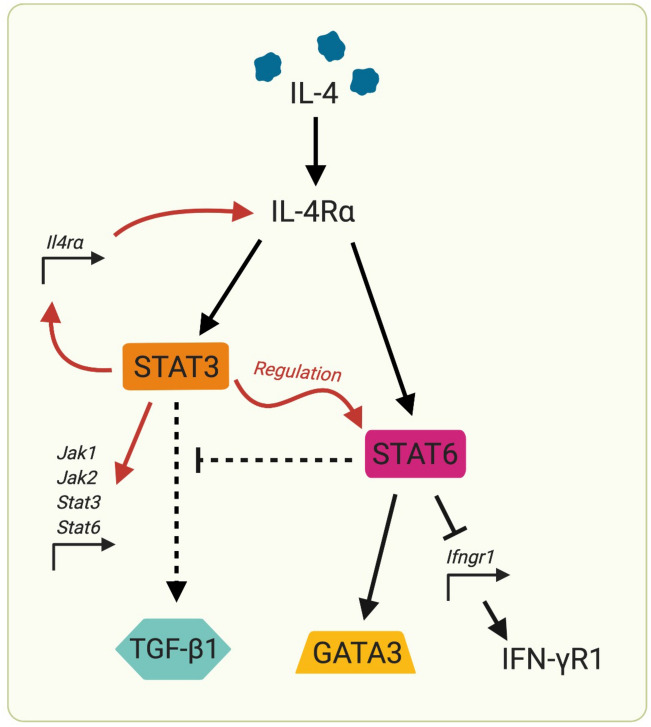
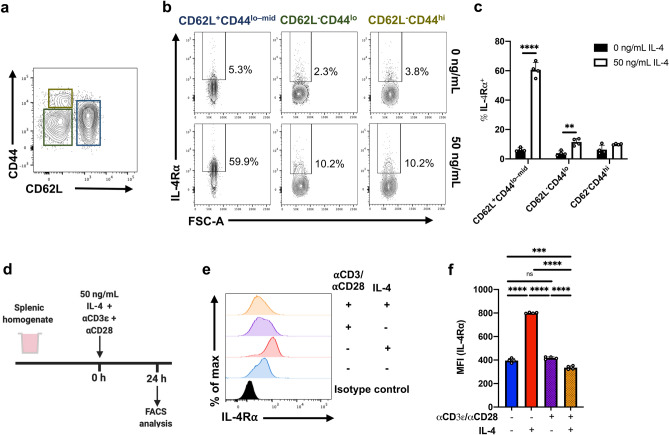
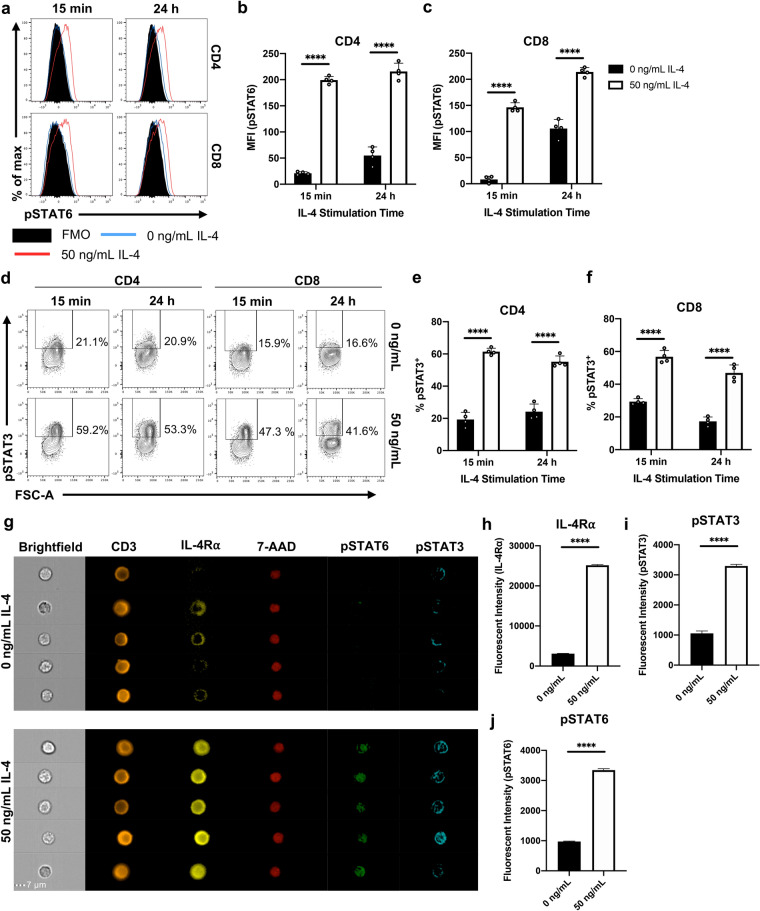
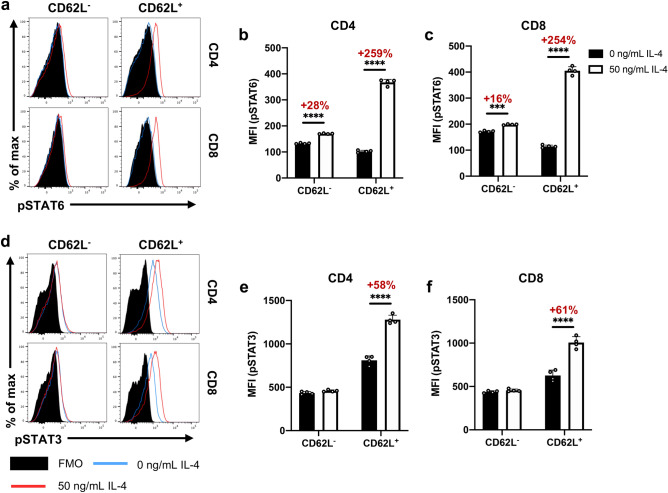
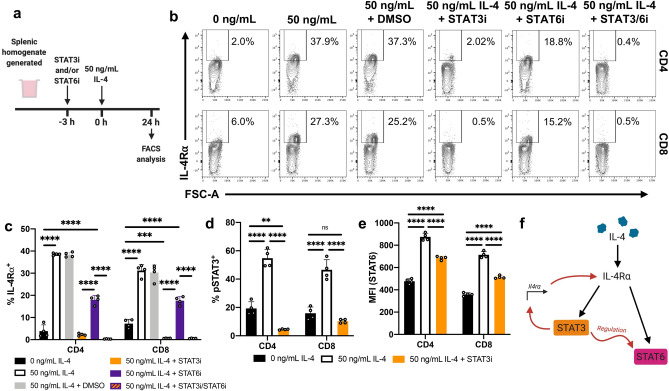
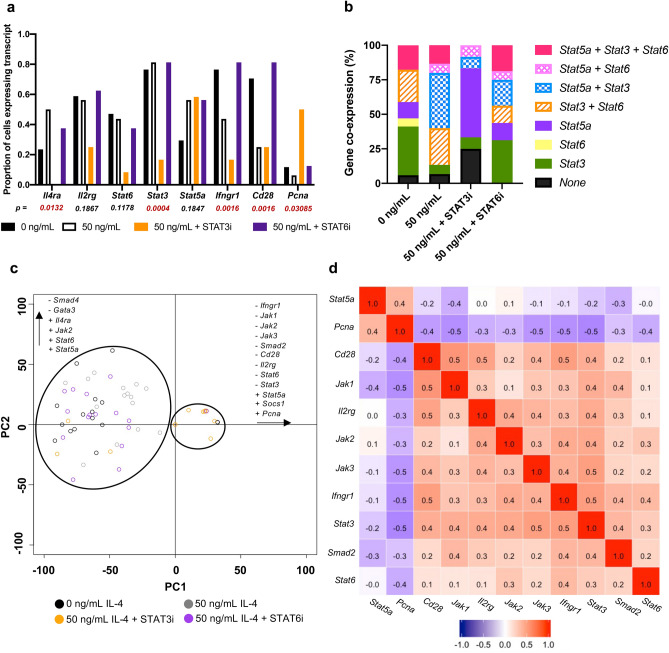
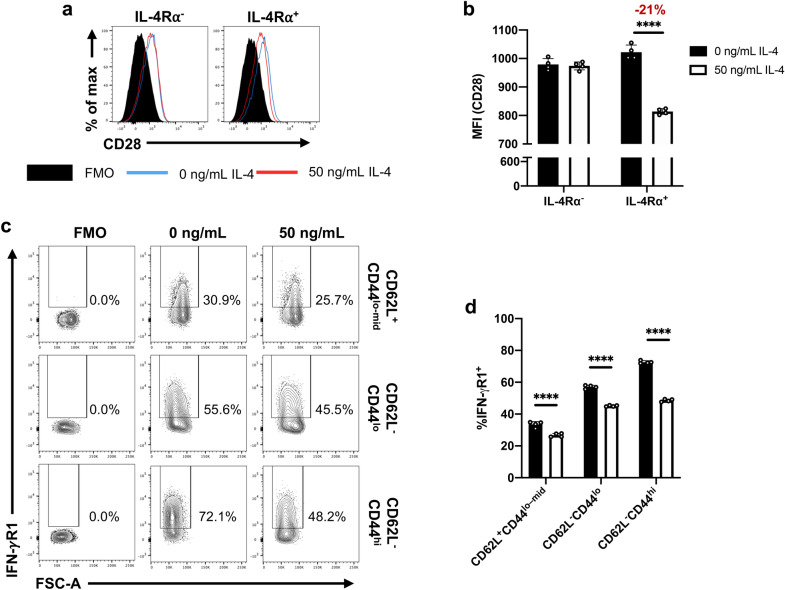
IL-4 production is associated with low-avidity, poorly cytotoxic T cell induction that contributes to viral immune evasion and the failure of T cell-based vaccines. Yet, the precise mechanisms that regulate IL-4 signalling in T cells remain elusive. Mounting evidence indicates that cells can dynamically alter their IL-4/IL-13 receptor signature to modulate downstream immune outcomes upon pathogen encounter. Here, we describe how naïve (CD62LCD44) CD4 and CD8 T cells distinctly engage both STAT6 and STAT3 in response to IL-4. We further show that IL-4R⍺ expression is both time- and IL-4 concentration-dependent. Remarkably, our findings reveal that STAT3 inhibition can ablate IL-4R⍺ and affect transcriptional expression of other Stat and Jak family members. By extension, the loss of STAT3 lead to aberrant STAT6 phosphorylation, revealing an inter-regulatory relationship between the two transcription factors. Moreover, IL-4 stimulation down-regulated TGF-β1 and IFN-γR1 expression on naïve T cells, possibly signifying the broad regulatory implications of IL-4 in conditioning lineage commitment decisions during early infection. Surprisingly, naïve T cells were unresponsive to IL-13 stimulation, unlike dendritic cells. Collectively, these findings could be exploited to inform more efficacious vaccines, as well as design treatments against IL-4/IL-13-associated disease conditions.
白细胞介素 4(IL-4)的产生与低亲和力、细胞毒性差的 T 细胞诱导有关,这有助于病毒的免疫逃避和 T 细胞疫苗的失败。然而,调节 T 细胞中 IL-4 信号的精确机制仍难以捉摸。越来越多的证据表明,细胞可以动态改变其 IL-4/IL-13 受体特征,以在遇到病原体时调节下游免疫结果。在这里,我们描述了幼稚(CD62LCD44)CD4 和 CD8 T 细胞如何分别响应 IL-4 而同时激活 STAT6 和 STAT3。我们进一步表明,IL-4Rα的表达既依赖于时间又依赖于 IL-4 的浓度。值得注意的是,我们的发现表明 STAT3 抑制可以消除 IL-4Rα 并影响其他 Stat 和 Jak 家族成员的转录表达。由此,STAT3 的缺失导致 STAT6 磷酸化异常,揭示了这两种转录因子之间的相互调节关系。此外,IL-4 刺激下调幼稚 T 细胞中 TGF-β1 和 IFN-γR1 的表达,这可能表明 IL-4 在早期感染过程中对谱系决定的调节具有广泛的影响。令人惊讶的是,与树突状细胞不同,幼稚 T 细胞对 IL-13 刺激无反应。总的来说,这些发现可以被用来为更有效的疫苗提供信息,并设计针对 IL-4/IL-13 相关疾病的治疗方法。