Zhong Juan, Liu Shuqin, Lai Dan, Lu Tao, Shen Yifeng, Gong Qisheng, Li Peijia, Zhang Qinxiu
Hospital of Chengdu University of Traditional Chinese Medicine, No. 39 Shi-er-qiao Road, Chengdu 610072, Sichuan Province, China.
Department of Otolaryngology Head and Neck Surgery, The Affiliated Hospital of Southwest Medical University, No. 25 TaiPing Street, Luzhouv 646000, Sichuan, China.
Evid Based Complement Alternat Med. 2021 May 3;2021:6699749. doi: 10.1155/2021/6699749. eCollection 2021.
The treatment effects and safety of ear acupressure (EAP) for patients with allergic rhinitis (AR) have yet to be clarified.
To evaluate the effects and safety of EAP in AR patients.
Systematic review of published studies.
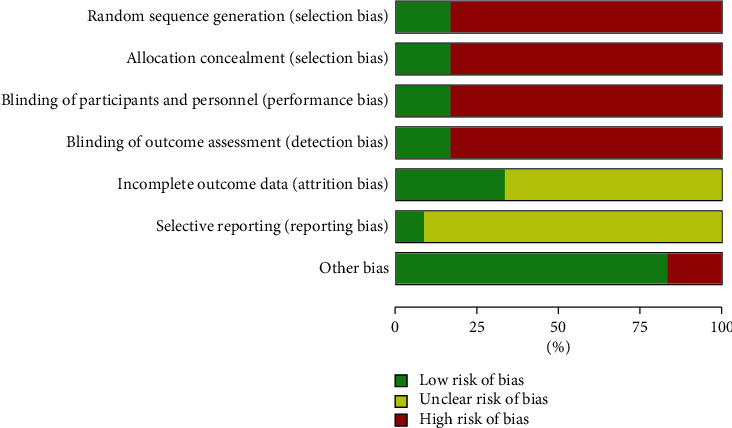
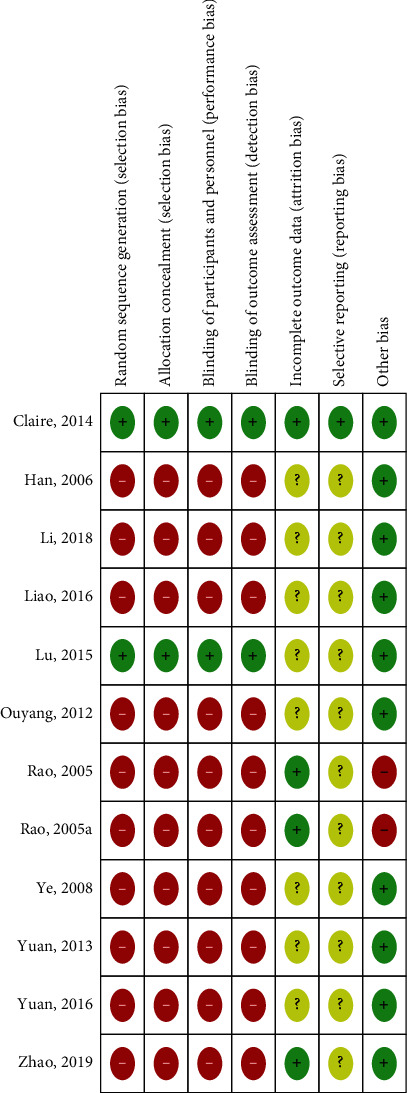
A total of 24 English and Chinese databases (PubMed, EMBASE (Excerpta Medical Database), Cochrane Central Register of Controlled Trials, CINAHL, Informit, ScienceDirect, LILACS (Latin American and Caribbean Health Sciences), ProQuest, AMED, Blackwell Synergy, PsycINFO, Panteleimon, AcuBriefs, KoreaMed, IndMed, Ingenta, mRCT, ISI Web of Knowledge, ERIC, VIP Information (http://www.cqvip.com), China National Knowledge Infrastructure (http://www.cnki.net), Cochrane Library, Chinese Cochrane Centre Controlled Trials Register Platform, and Wanfang Chinese Digital Periodical and Conference Database) were searched from their respective inceptions to August 2020 to collect randomized controlled trials of ear acupressure for allergic rhinitis. We performed literature inclusion, data extraction, and trial quality evaluations. Methodological quality was assessed according to the Cochrane Handbook. Revman5.3 was used for all analyses.
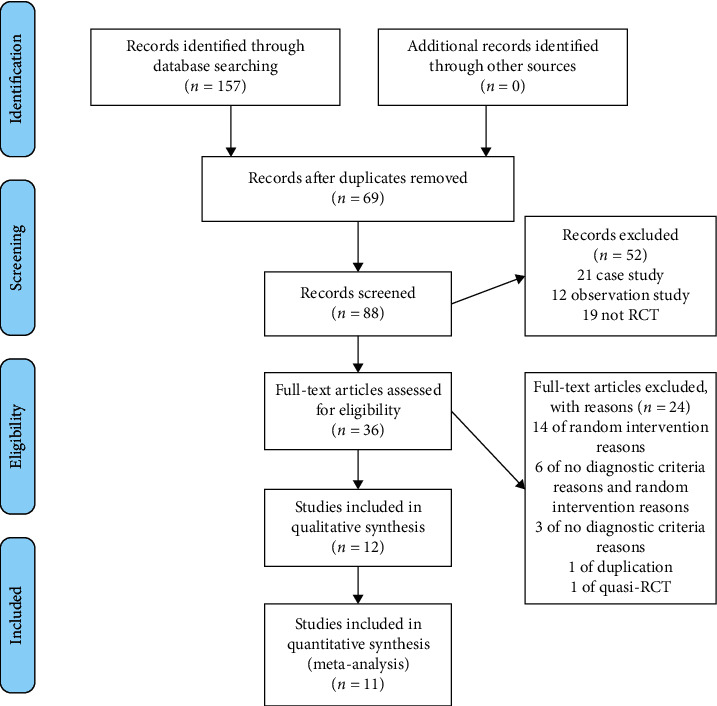
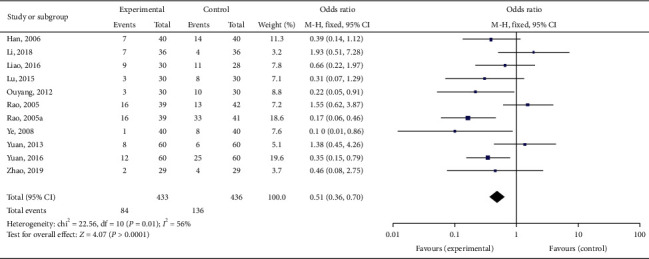
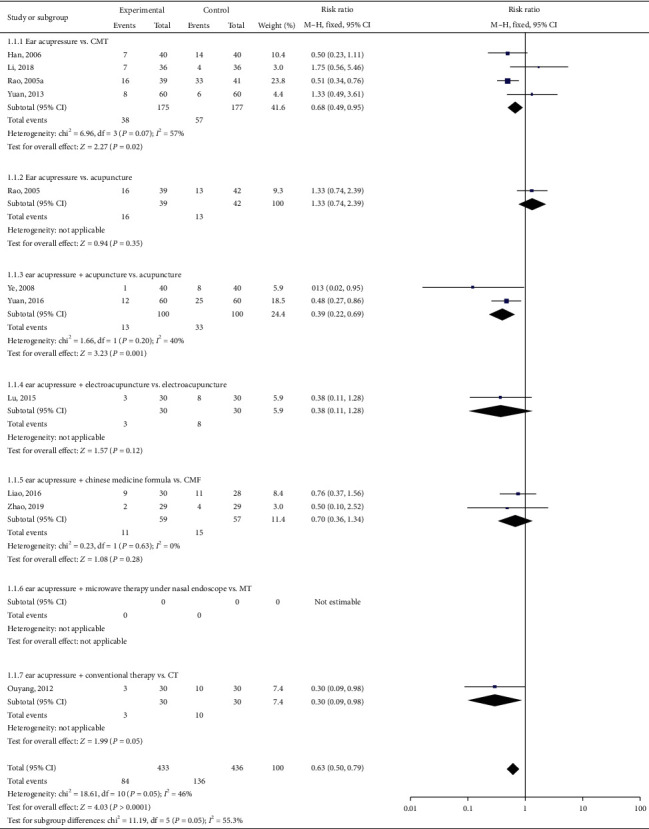
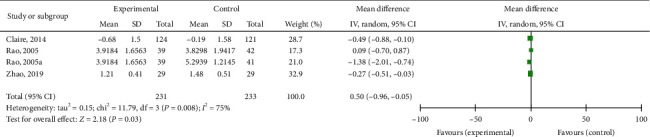
A total of 203 trials were identified and eleven studies involved 1094 participants aged 3-70 years. EAP was better than control group interventions in terms of effectiveness (risk ratio (RR): 0.51; 95% confidence interval (CI): 0.36-0.70; < 0.0001). EAP was superior to sham EAP in terms of improvement of the total nasal symptom score (RR: -0.50; 95% CI: -0.96-0.05; = 0.03), sneezing score (RR: -0.36; 95% CI: -0.59-0.12; = 0.003), global QoL score (RR: 0.42; 95% CI: 0.04-0.08; = 0.03), and eye symptom score (RR: -0.36; 95% CI: -0.67-0.05; = 0.02).
Despite the positive results, it is premature to confirm the efficacy of EAP for treating AR. More high-quality studies are needed to confirm safety and efficacy.
耳穴按压法(EAP)治疗变应性鼻炎(AR)患者的疗效和安全性尚待阐明。
评估耳穴按压法对AR患者的疗效和安全性。
对已发表研究的系统评价。
检索了总共24个英文和中文数据库(PubMed、EMBASE(医学文摘数据库)、Cochrane对照试验中心注册库、CINAHL、Informit、ScienceDirect、LILACS(拉丁美洲和加勒比卫生科学)、ProQuest、AMED、Blackwell Synergy、PsycINFO、Panteleimon、AcuBriefs、KoreaMed、IndMed、Ingenta、mRCT、ISI Web of Knowledge、ERIC、维普资讯(http://www.cqvip.com)、中国知网(http://www.cnki.net)、Cochrane图书馆、中国Cochrane中心对照试验注册平台以及万方中文数字化期刊和会议数据库),从各数据库建库至2020年8月,收集耳穴按压治疗变应性鼻炎的随机对照试验。我们进行了文献纳入、数据提取和试验质量评估。根据Cochrane手册评估方法学质量。所有分析均使用Revman5.3。
共识别出203项试验,11项研究纳入了1094名年龄在3至70岁之间的参与者。在有效性方面,耳穴按压法优于对照组干预措施(风险比(RR):0.51;95%置信区间(CI):0.36 - 0.70;P < 0.0001)。在改善总鼻症状评分(RR: - 0.50;95% CI: - 0.96 - 0.05;P = 0.03)、打喷嚏评分(RR: - 0.36;95% CI: - 0.59 - 0.12;P = 0.003)、总体生活质量评分(RR:0.42;95% CI:0.04 - 0.08;P = 0.03)和眼部症状评分(RR: - 0.36;95% CI: - 0.67 - 0.05;P = 0.02)方面,耳穴按压法优于假耳穴按压法。
尽管有积极结果,但确认耳穴按压法治疗变应性鼻炎的疗效为时尚早。需要更多高质量研究来证实其安全性和有效性。