Department of Biotechnology, National Institute of Pharmaceutical Education and Research-Raebareli, Bijnor-Sisendi Road, Post Office Mati, Lucknow 226002, India.
Department of Pharmacology & Toxicology, National Institute of Pharmaceutical Education and Research-Raebareli, Bijnor-Sisendi Road, Post Office Mati, Lucknow 226002, India.
Oxid Med Cell Longev. 2021 Apr 28;2021:9074206. doi: 10.1155/2021/9074206. eCollection 2021.
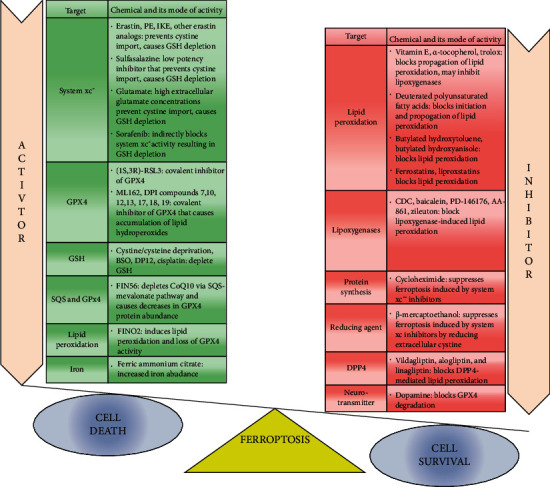
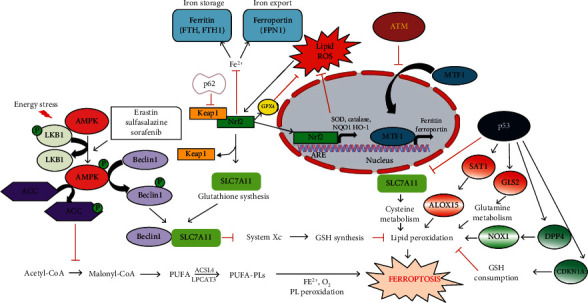
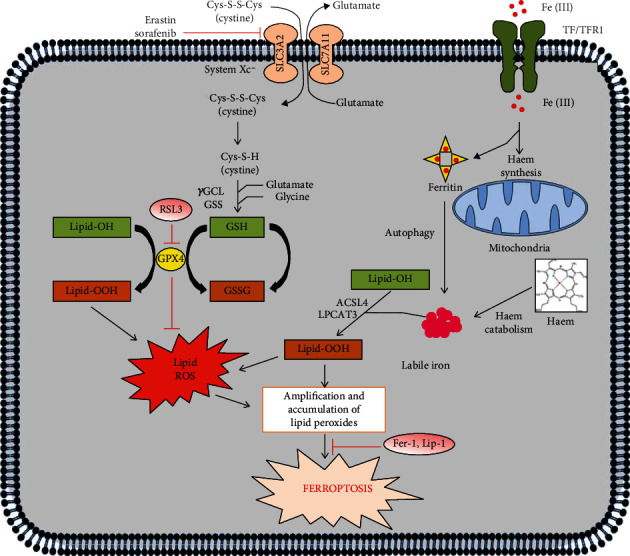
Ferroptosis is a recently recognized regulated form of cell death characterized by accumulation of lipid-based reactive oxygen species (ROS), particularly lipid hydroperoxides and loss of activity of the lipid repair enzyme glutathione peroxidase 4 (GPX4). This iron-dependent form of cell death is morphologically, biochemically, and also genetically discrete from other regulated cell death processes, which include autophagy, apoptosis, necrosis, and necroptosis. Ferroptosis is defined by three hallmarks, defined as the loss of lipid peroxide repair capacity by GPX4, the bioavailability of redox-active iron, and oxidation of polyunsaturated fatty acid- (PUFA-) containing phospholipids. Experimentally, it can be induced by many compounds (e.g., erastin, Ras-selective lethal small-molecule 3, and buthionine sulfoximine) and also can be pharmacologically inhibited by iron chelators (e.g., deferoxamine and deferoxamine mesylate) and lipid peroxidation inhibitors (e.g., ferrostatin and liproxstatin). The sensitivity of a cell towards ferroptotic cell death is tightly associated with the metabolism of amino acid, iron, and polyunsaturated fatty acid metabolism, and also with the biosynthesis of glutathione, phospholipids, NADPH, and coenzyme Q10. Ferroptosis sensitivity is also governed by many regulatory proteins, which also link ferroptosis to the function of key tumour suppressor pathways. In this review, we highlight the discovery of ferroptosis, the mechanism of ferroptosis regulation, and its association with other cellular metabolic processes.
铁死亡是一种新近被发现的细胞死亡形式,其特征是脂质活性氧(ROS)的积累,特别是脂质过氧化物和脂质修复酶谷胱甘肽过氧化物酶 4(GPX4)活性的丧失。这种铁依赖性的细胞死亡在形态、生化和遗传上都与其他调控性细胞死亡过程不同,包括自噬、凋亡、坏死和坏死性凋亡。铁死亡的三个特征定义为:GPX4 丧失脂质过氧化物修复能力、氧化还原活性铁的生物利用度以及多不饱和脂肪酸(PUFA)含量磷脂的氧化。实验上,它可以被许多化合物(如 erastin、Ras 选择性致死小分子 3 和丁硫氨酸亚砜胺)诱导,也可以被铁螯合剂(如去铁胺和去铁胺甲磺酸盐)和脂质过氧化抑制剂(如 ferrostatin 和 liproxstatin)抑制。细胞对铁死亡的敏感性与氨基酸、铁和多不饱和脂肪酸代谢的代谢以及谷胱甘肽、磷脂、NADPH 和辅酶 Q10 的生物合成密切相关。铁死亡的敏感性还受到许多调节蛋白的控制,这些蛋白也将铁死亡与关键肿瘤抑制途径的功能联系起来。在这篇综述中,我们强调了铁死亡的发现、铁死亡调控的机制及其与其他细胞代谢过程的关联。