Department of Cell & Developmental Biology, University of Colorado Anschutz Medical Campus, Aurora, United States.
The Rocky Mountain Taste and Smell Center, University of Colorado Anschutz Medical Campus, Aurora, United States.
Elife. 2021 May 19;10:e64013. doi: 10.7554/eLife.64013.
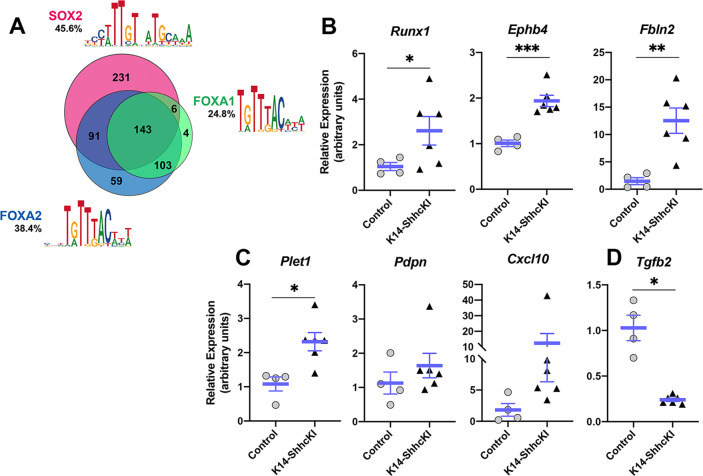
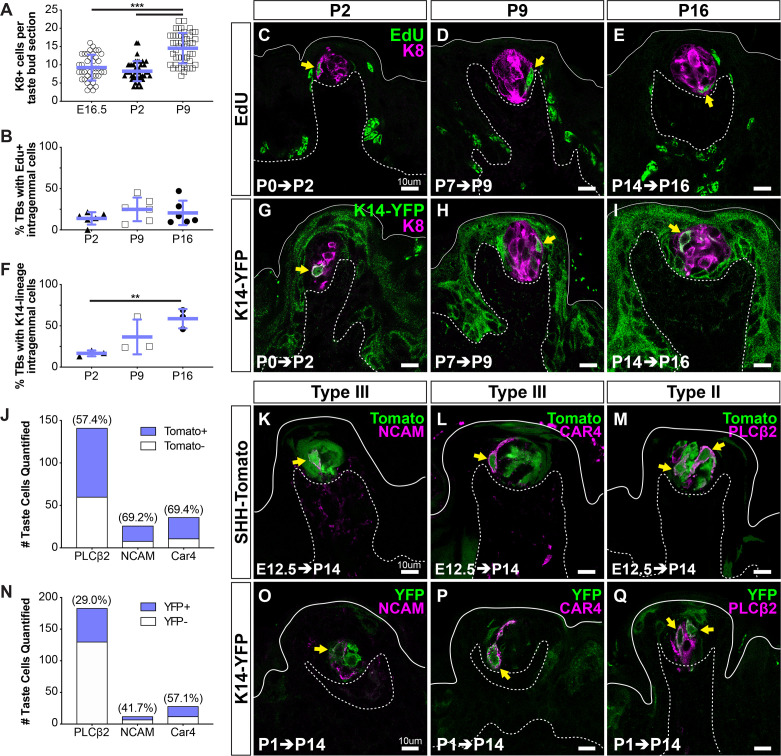
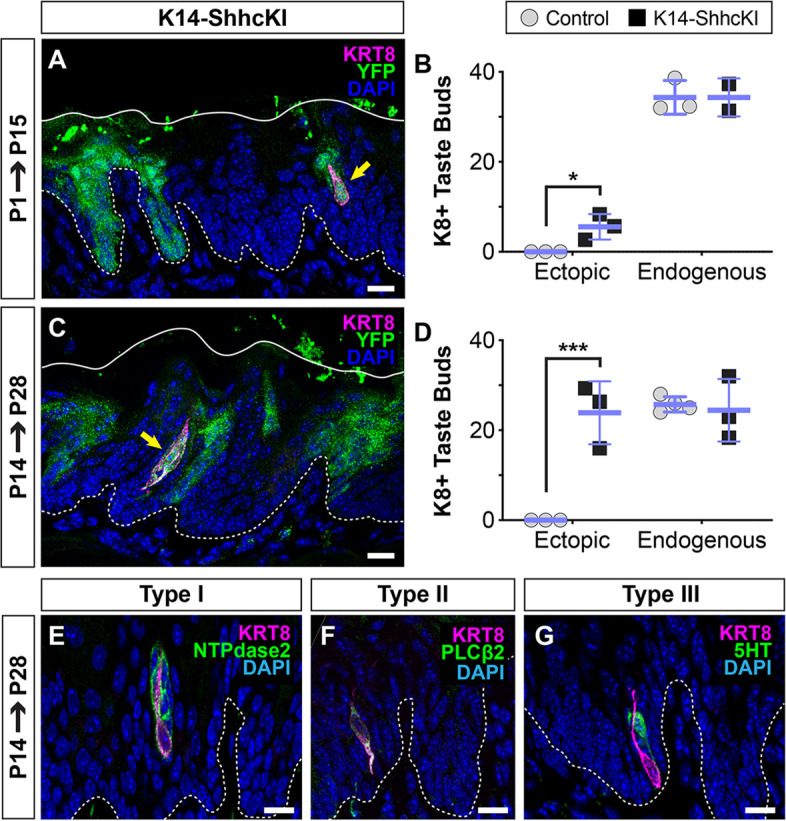
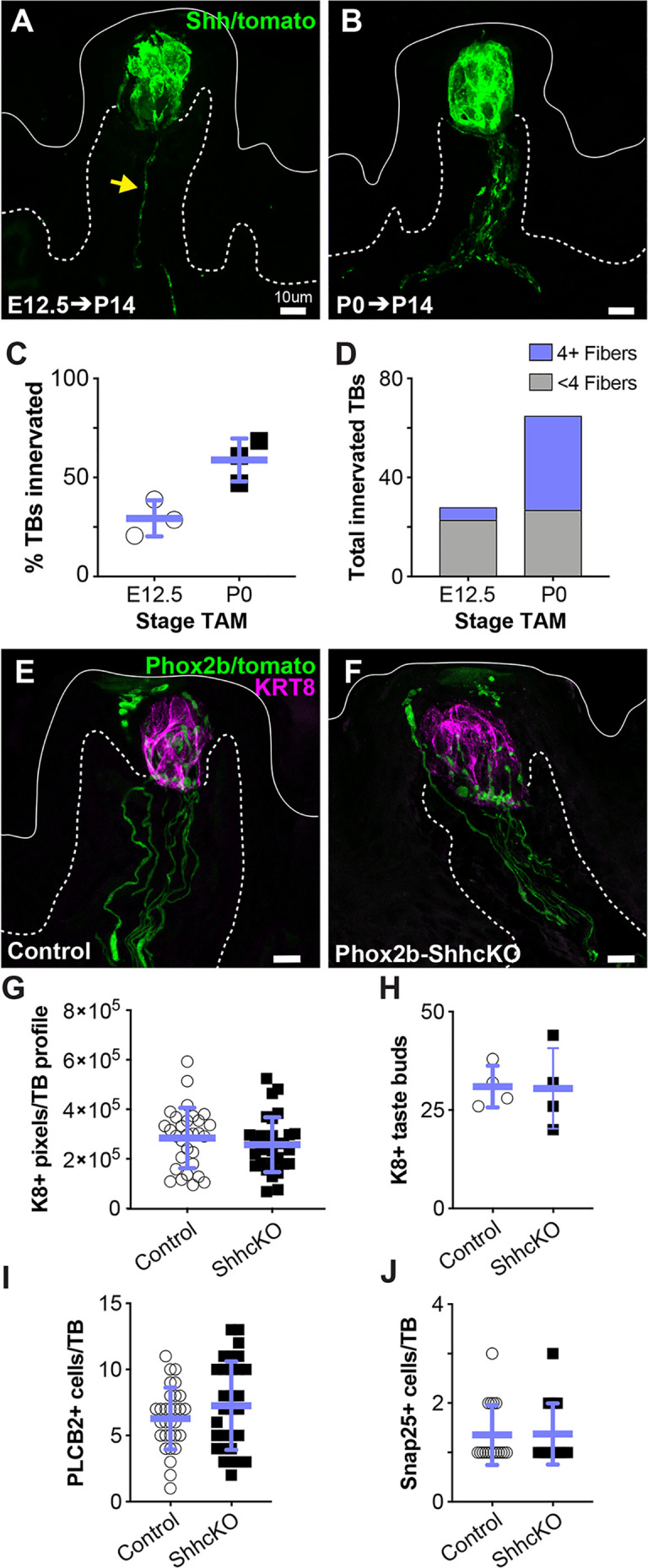
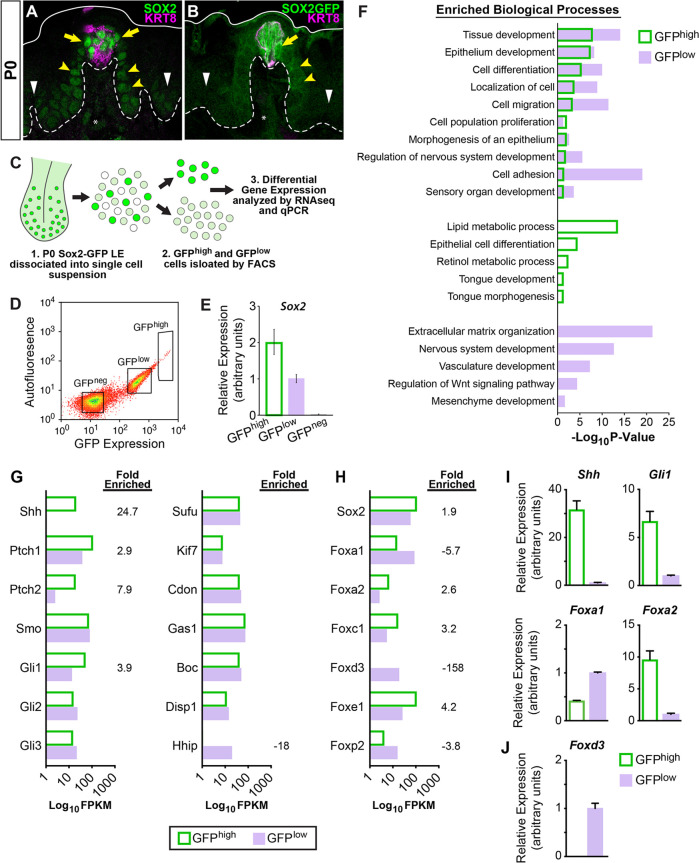
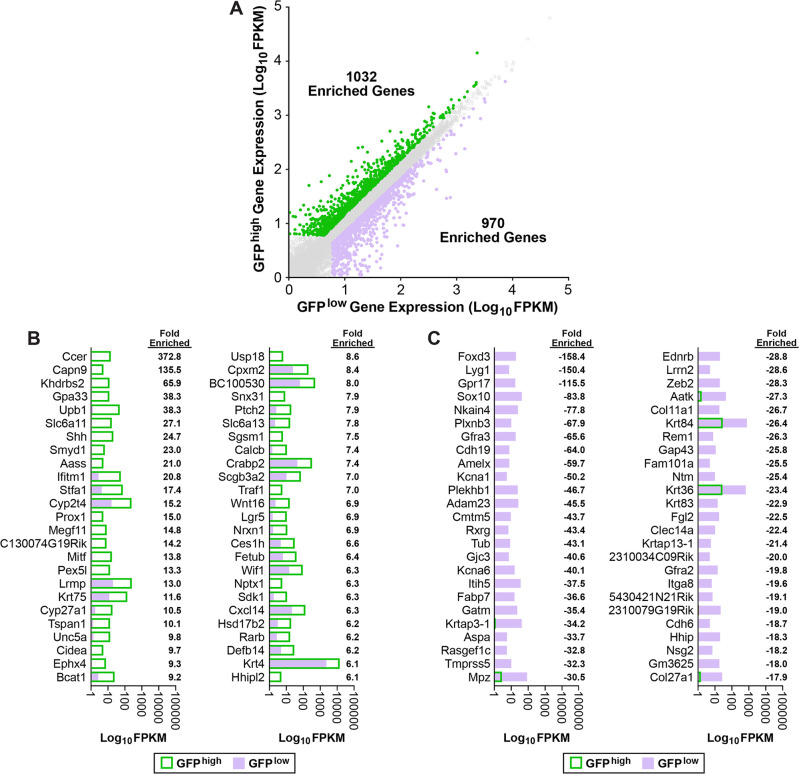
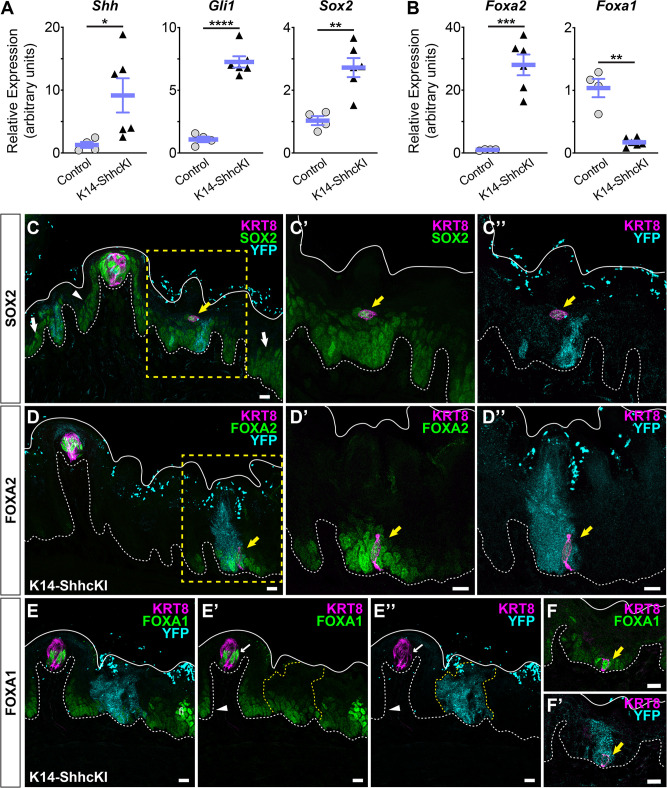
Embryonic taste bud primordia are specified as taste placodes on the tongue surface and differentiate into the first taste receptor cells (TRCs) at birth. Throughout adult life, TRCs are continually regenerated from epithelial progenitors. Sonic hedgehog (SHH) signaling regulates TRC development and renewal, repressing taste fate embryonically, but promoting TRC differentiation in adults. Here, using mouse models, we show TRC renewal initiates at birth and coincides with onset of SHHs pro-taste function. Using transcriptional profiling to explore molecular regulators of renewal, we identified and as potential SHH target genes in lingual progenitors at birth and show that SHH overexpression in vivo alters FoxA1 and FoxA2 expression relevant to taste buds. We further bioinformatically identify genes relevant to cell adhesion and cell locomotion likely regulated by FOXA1;FOXA2 and show that expression of these candidates is also altered by forced SHH expression. We present a new model where SHH promotes TRC differentiation by regulating changes in epithelial cell adhesion and migration.
胚胎味蕾原基在舌表面被指定为味斑,并在出生时分化为第一味觉受体细胞(TRC)。在整个成年期,TRC 不断地从上皮祖细胞中再生。Sonic Hedgehog(SHH)信号调节 TRC 的发育和更新,在胚胎期抑制味觉命运,但在成年期促进 TRC 分化。在这里,我们使用小鼠模型表明,TRC 的更新始于出生,并与 SHH 前味觉功能的开始同时发生。通过转录谱分析探索更新的分子调节剂,我们确定 和 是出生时舌祖细胞中潜在的 SHH 靶基因,并表明体内 SHH 的过表达改变了与味觉有关的 FoxA1 和 FoxA2 的表达。我们进一步通过生物信息学鉴定与细胞黏附和细胞运动相关的基因,这些基因可能受 FOXA1;FOXA2 调控,并表明这些候选基因的表达也被强制 SHH 表达所改变。我们提出了一个新的模型,其中 SHH 通过调节上皮细胞黏附和迁移的变化来促进 TRC 分化。