Department of Biologic and Materials Sciences, School of Dentistry, University of Michigan, Ann Arbor, MI, USA.
Dev Biol. 2013 Oct 1;382(1):82-97. doi: 10.1016/j.ydbio.2013.07.022. Epub 2013 Aug 2.
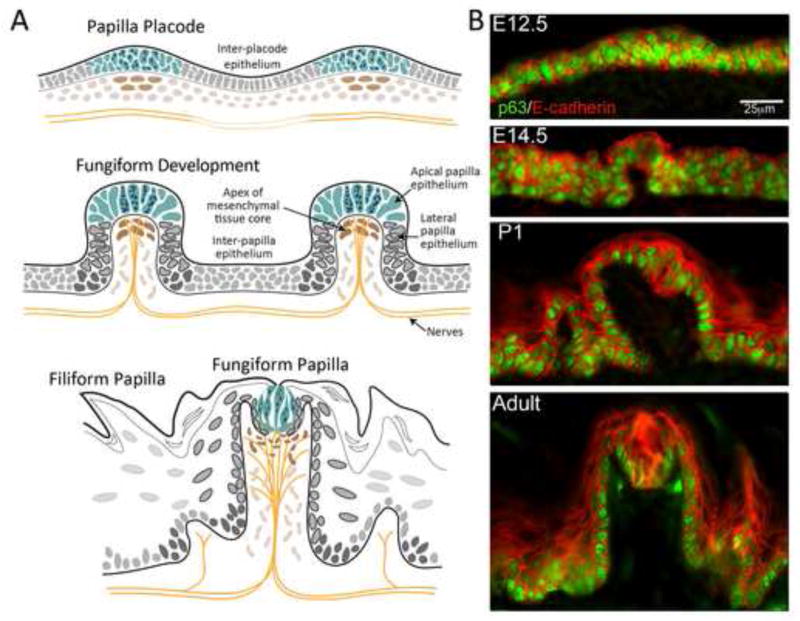
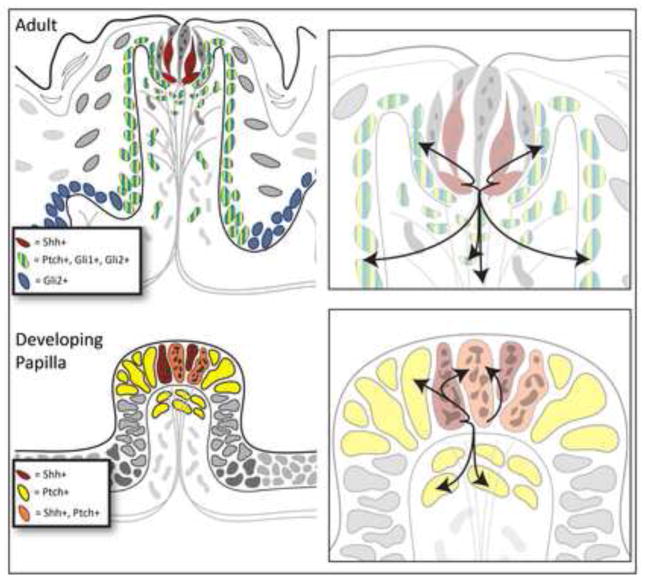
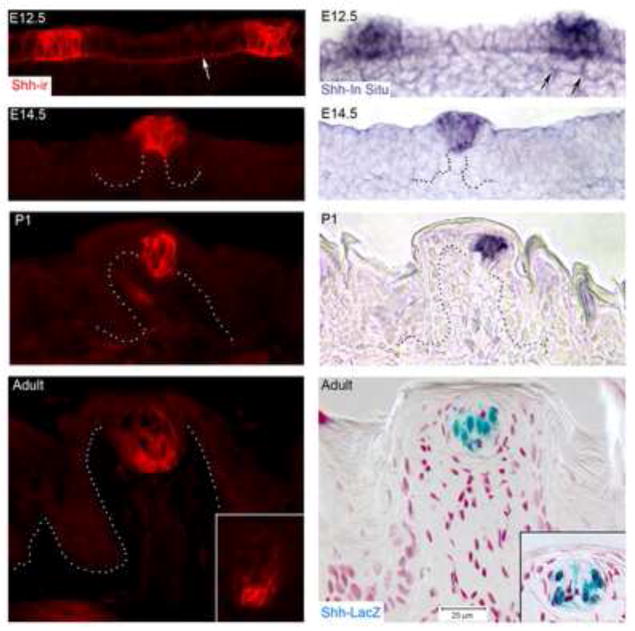
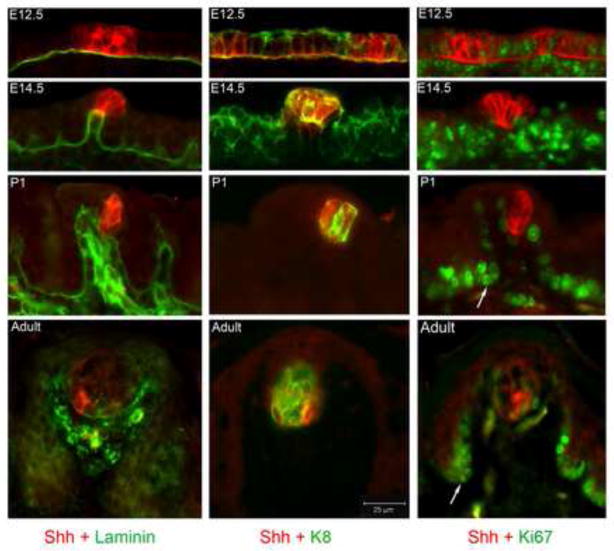
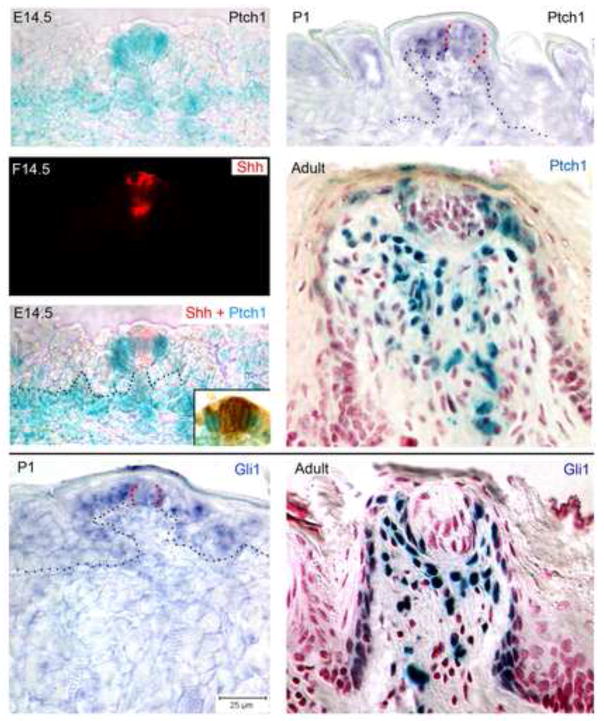
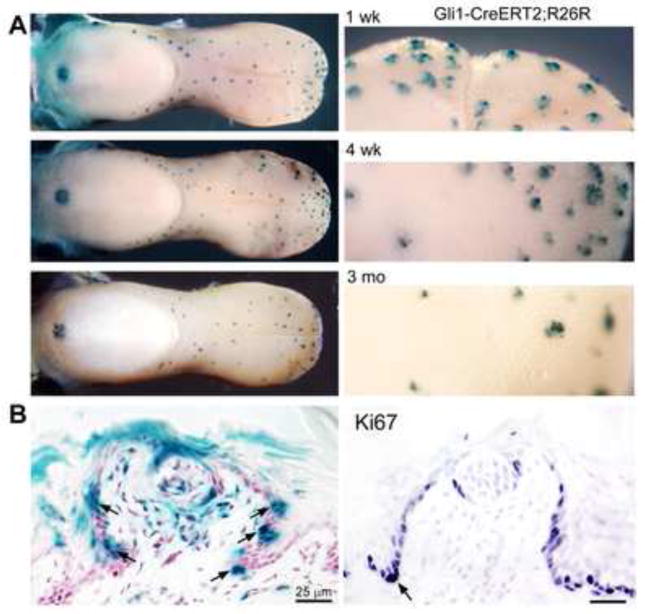
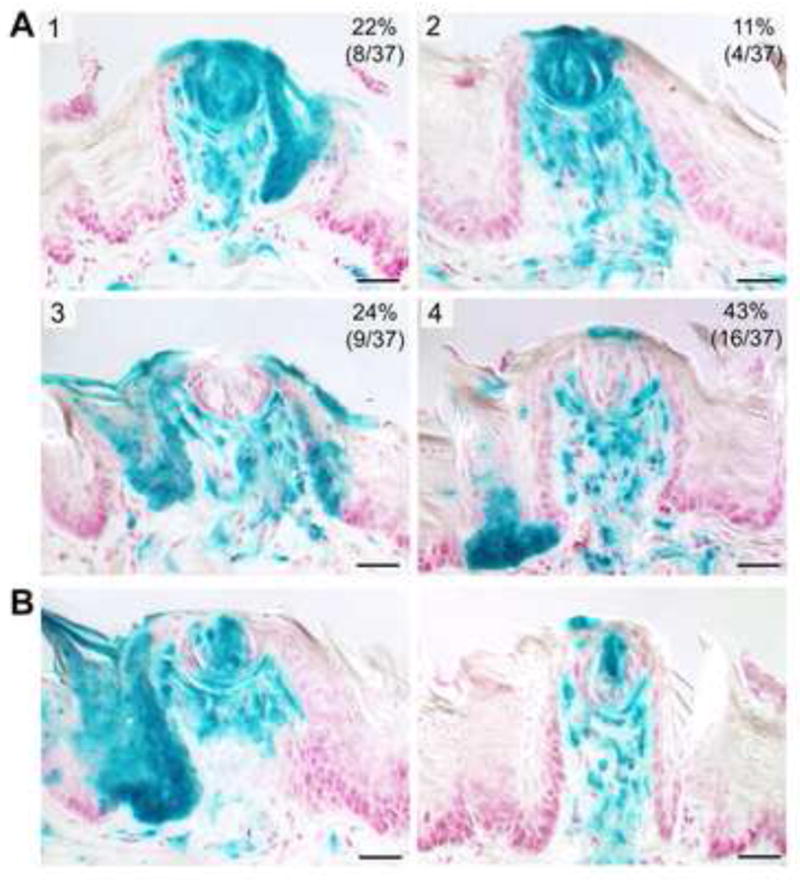
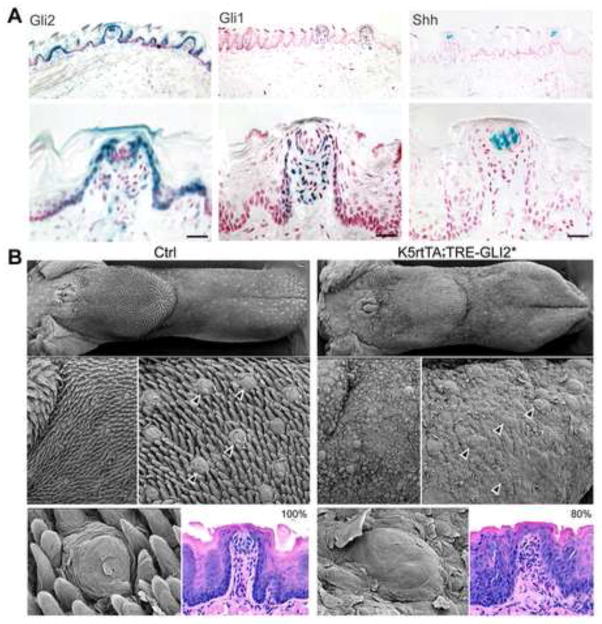
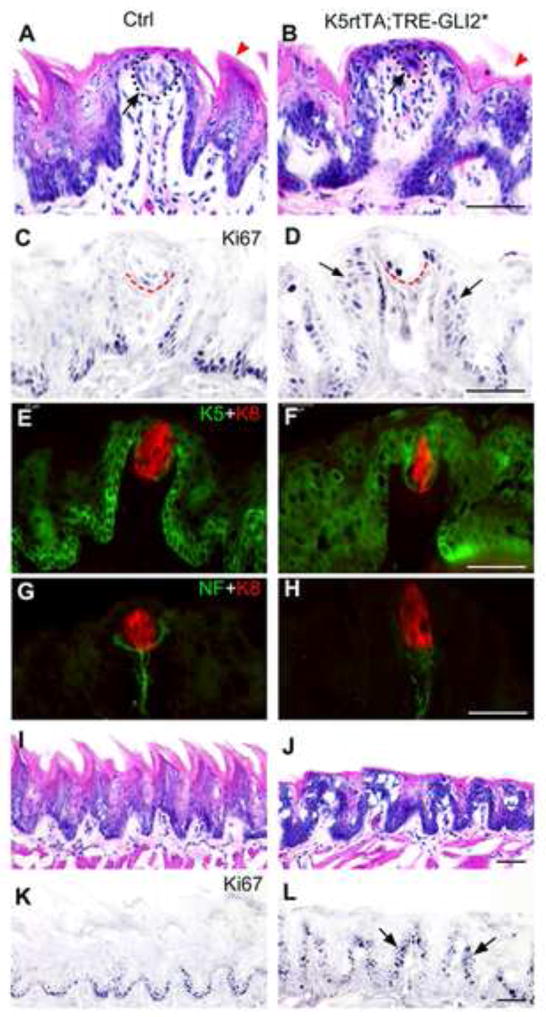
The adult fungiform taste papilla is a complex of specialized cell types residing in the stratified squamous tongue epithelium. This unique sensory organ includes taste buds, papilla epithelium and lateral walls that extend into underlying connective tissue to surround a core of lamina propria cells. Fungiform papillae must contain long-lived, sustaining or stem cells and short-lived, maintaining or transit amplifying cells that support the papilla and specialized taste buds. Shh signaling has established roles in supporting fungiform induction, development and patterning. However, for a full understanding of how Shh transduced signals act in tongue, papilla and taste bud formation and maintenance, it is necessary to know where and when the Shh ligand and pathway components are positioned. We used immunostaining, in situ hybridization and mouse reporter strains for Shh, Ptch1, Gli1 and Gli2-expression and proliferation markers to identify cells that participate in hedgehog signaling. Whereas there is a progressive restriction in location of Shh ligand-expressing cells, from placode and apical papilla cells to taste bud cells only, a surrounding population of Ptch1 and Gli1 responding cells is maintained in signaling centers throughout papilla and taste bud development and differentiation. The Shh signaling targets are in regions of active cell proliferation. Using genetic-inducible lineage tracing for Gli1-expression, we found that Shh-responding cells contribute not only to maintenance of filiform and fungiform papillae, but also to taste buds. A requirement for normal Shh signaling in fungiform papilla, taste bud and filiform papilla maintenance was shown by Gli2 constitutive activation. We identified proliferation niches where Shh signaling is active and suggest that epithelial and mesenchymal compartments harbor potential stem and/or progenitor cell zones. In all, we report a set of hedgehog signaling centers that regulate development and maintenance of taste organs, the fungiform papilla and taste bud, and surrounding lingual cells. Shh signaling has roles in forming and maintaining fungiform papillae and taste buds, most likely via stage-specific autocrine and/or paracrine mechanisms, and by engaging epithelial/mesenchymal interactions.
成人菌状味乳头是一种位于复层扁平舌上皮中的特化细胞类型复合体。这个独特的感觉器官包括味蕾、乳突上皮和侧向壁,它们延伸到下面的结缔组织中,包围着固有层细胞的核心。菌状乳突必须包含长寿的、维持或干细胞和短命的、维持或过渡扩增细胞,以支持乳突和特化的味蕾。Shh 信号在支持菌状诱导、发育和模式形成方面具有既定的作用。然而,为了全面了解 Shh 转导信号如何在舌、乳突和味蕾形成和维持中发挥作用,有必要知道 Shh 配体和途径成分的位置和时间。我们使用免疫染色、原位杂交和 Shh、Ptch1、Gli1 和 Gli2 表达和增殖标记物的小鼠报告品系来鉴定参与 Hedgehog 信号的细胞。虽然 Shh 配体表达细胞的位置逐渐受限,从基板和乳突顶端细胞到仅味蕾细胞,但在乳突和味蕾发育和分化过程中,信号中心周围的 Ptch1 和 Gli1 反应细胞群仍然存在。Shh 信号的靶标位于活跃的细胞增殖区域。使用Gli1 表达的遗传诱导谱系追踪,我们发现 Shh 反应细胞不仅有助于丝状和菌状乳突的维持,还有助于味蕾的维持。通过Gli2 组成型激活,我们证明了正常 Shh 信号对菌状乳突、味蕾和丝状乳突的维持是必需的。我们确定了 Shh 信号活跃的增殖小生境,并提出上皮和间充质隔室可能含有潜在的干细胞和/或祖细胞区。总之,我们报告了一组 Hedgehog 信号中心,它们调节味觉器官、菌状乳突和味蕾以及周围舌细胞的发育和维持。Shh 信号在形成和维持菌状乳突和味蕾方面具有作用,很可能通过阶段特异性自分泌和/或旁分泌机制,并通过参与上皮/间充质相互作用来发挥作用。