Department of Pathobiology, College of Veterinary Medicine, University of Illinois at Urbana-Champaign, Urbana, Illinois, United States of America.
Northwest Mosquito Abatement District, Wheeling, Illinois, United States of America.
PLoS One. 2021 May 19;16(5):e0251517. doi: 10.1371/journal.pone.0251517. eCollection 2021.
Since 1999, West Nile virus (WNV) has moved rapidly across the United States, resulting in tens of thousands of human cases. Both the number of human cases and the minimum infection rate (MIR) in vector mosquitoes vary across time and space and are driven by numerous abiotic and biotic forces, ranging from differences in microclimates to socio-demographic factors. Because the interactions among these multiple factors affect the locally variable risk of WNV illness, it has been especially difficult to model human disease risk across varying spatial and temporal scales. Cook and DuPage Counties, comprising the city of Chicago and surrounding suburbs, experience some of the highest numbers of human neuroinvasive cases of WNV in the United States. Despite active mosquito control efforts, there is consistent annual WNV presence, resulting in more than 285 confirmed WNV human cases and 20 deaths from the years 2014-2018 in Cook County alone.
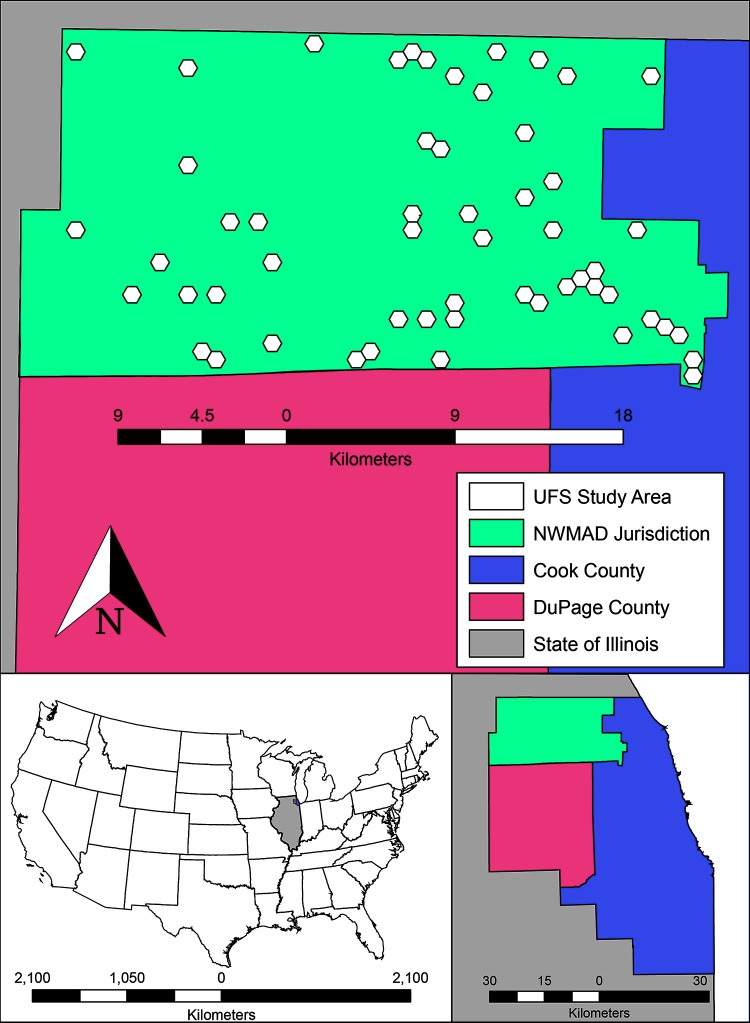
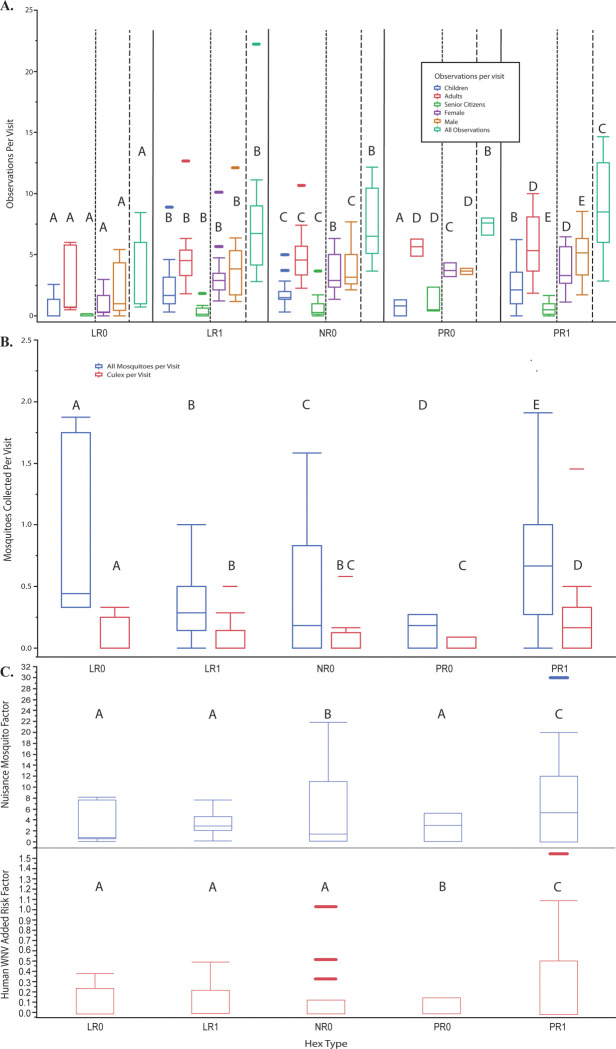
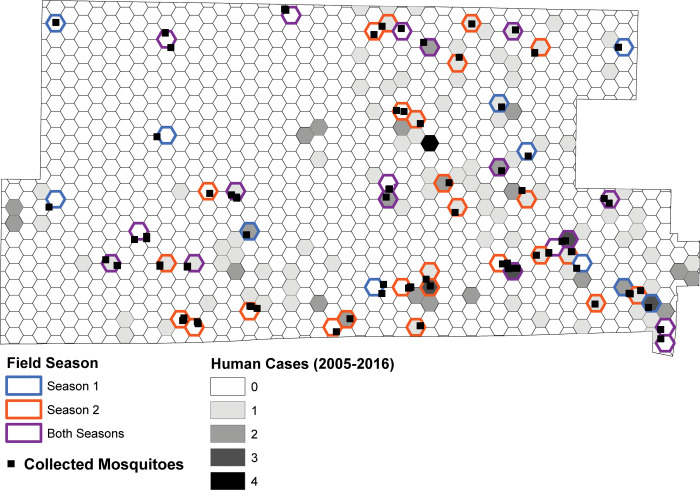
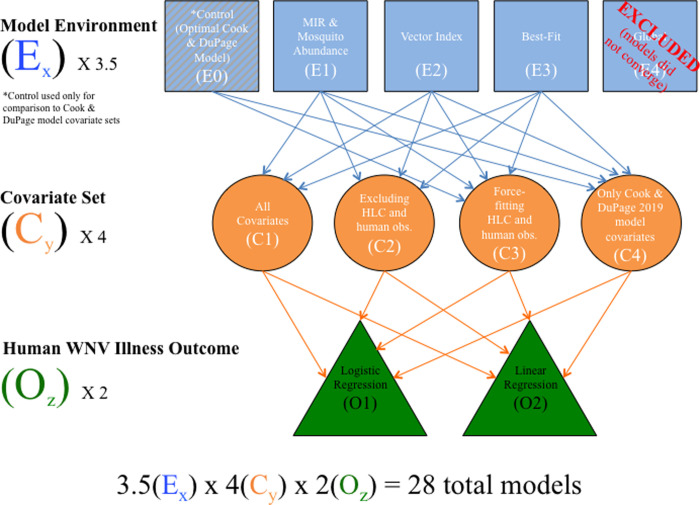
A previous Chicago-area WNV model identified the fifty-five most high and low risk locations in the Northwest Mosquito Abatement District (NWMAD), an enclave ¼ the size of the combined Cook and DuPage county area. In these locations, human WNV risk was stratified by model performance, as indicated by differences in studentized residuals. Within these areas, an additional two-years of field collections and data processing was added to a 12-year WNV dataset that includes human cases, MIR, vector abundance, and land-use, historical climate, and socio-economic and demographic variables, and was assessed by an ultra-fine-scale (1 km spatial x 1 week temporal resolution) multivariate logistic regression model.
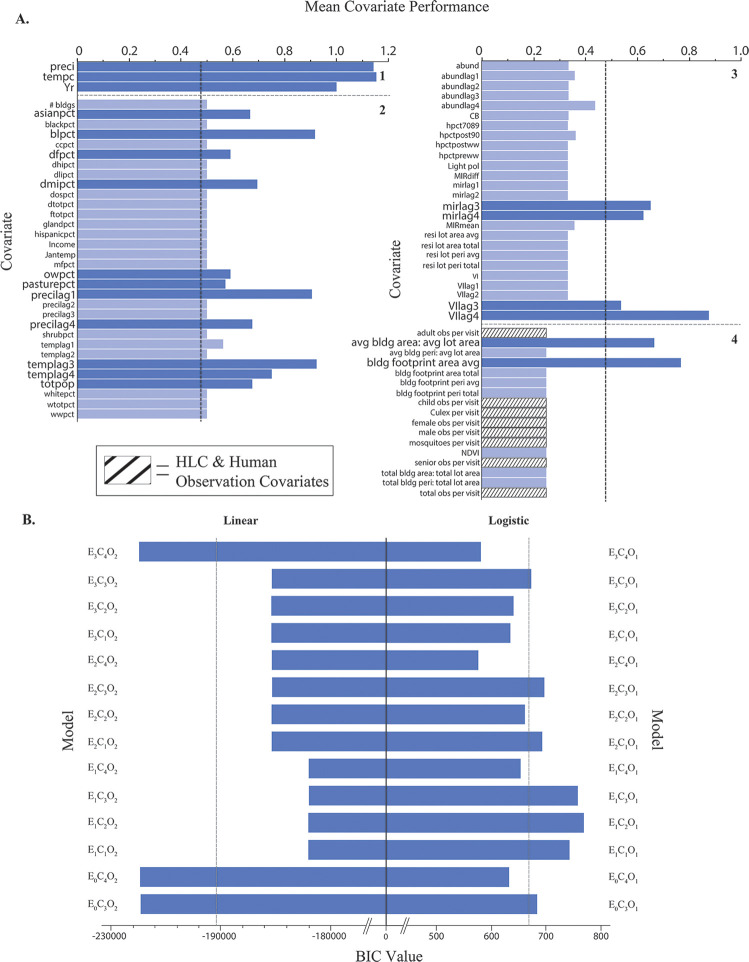
Multivariate statistical methods applied to the ultra-fine-scale model identified fewer explanatory variables while improving upon the fit of the previous model. Beyond MIR and climatic factors, efforts to acquire additional covariates only slightly improved model predictive performance.
These results suggest human WNV illness in the Chicago area may be associated with fewer, but increasingly critical, key variables at finer scales. Given limited resources, these findings suggest large variations in model performance occur, depending on covariate availability, and provide guidance in variable selection for optimal WNV human illness modeling.
自 1999 年以来,西尼罗河病毒(WNV)迅速传播到美国各地,导致数以万计的人类感染。人类感染病例的数量和媒介蚊虫的最小感染率(MIR)随时间和空间而变化,这是由许多非生物和生物因素驱动的,包括微气候差异到社会人口因素。由于这些多个因素的相互作用会影响 WNV 疾病的局部风险,因此很难在不同的时空尺度上对人类疾病风险进行建模。库克县和杜佩奇县(包括芝加哥市及其周边郊区)是美国报告的人类神经侵袭性 WNV 病例数最多的地区之一。尽管采取了积极的蚊虫控制措施,但每年仍持续存在 WNV,仅在库克县,2014 年至 2018 年就有超过 285 例确诊的 WNV 人类病例和 20 例死亡。
之前的芝加哥地区 WNV 模型确定了西北蚊虫防治区(NWMAD)中 55 个高风险和低风险地点,该区域面积为库克县和杜佩奇县面积总和的四分之一。在这些地点,根据模型性能(表现为学生残差的差异)对人类 WNV 风险进行分层。在这些区域内,在包括人类病例、MIR、媒介丰度以及土地利用、历史气候、社会经济和人口变量的 12 年 WNV 数据集的基础上,又增加了两年的实地采集和数据处理,并使用超精细尺度(1 公里空间 x 1 周时间分辨率)的多元逻辑回归模型进行了评估。
应用于超精细尺度模型的多元统计方法确定了较少的解释变量,同时提高了之前模型的拟合度。除了 MIR 和气候因素外,获取更多协变量的努力仅略微提高了模型的预测性能。
这些结果表明,芝加哥地区的人类 WNV 疾病可能与较少但在更精细尺度上越来越关键的关键变量有关。考虑到资源有限,这些发现表明,取决于协变量的可用性,模型性能会有很大差异,并为最佳 WNV 人类疾病建模中的变量选择提供指导。