Hematology Department, Clínica Universidad de Navarra, Pamplona, Spain.
Hemato-Oncology Department, Centro de Investigación Médica Aplicada (CIMA), Pamplona, Spain.
Front Immunol. 2021 May 3;12:659018. doi: 10.3389/fimmu.2021.659018. eCollection 2021.
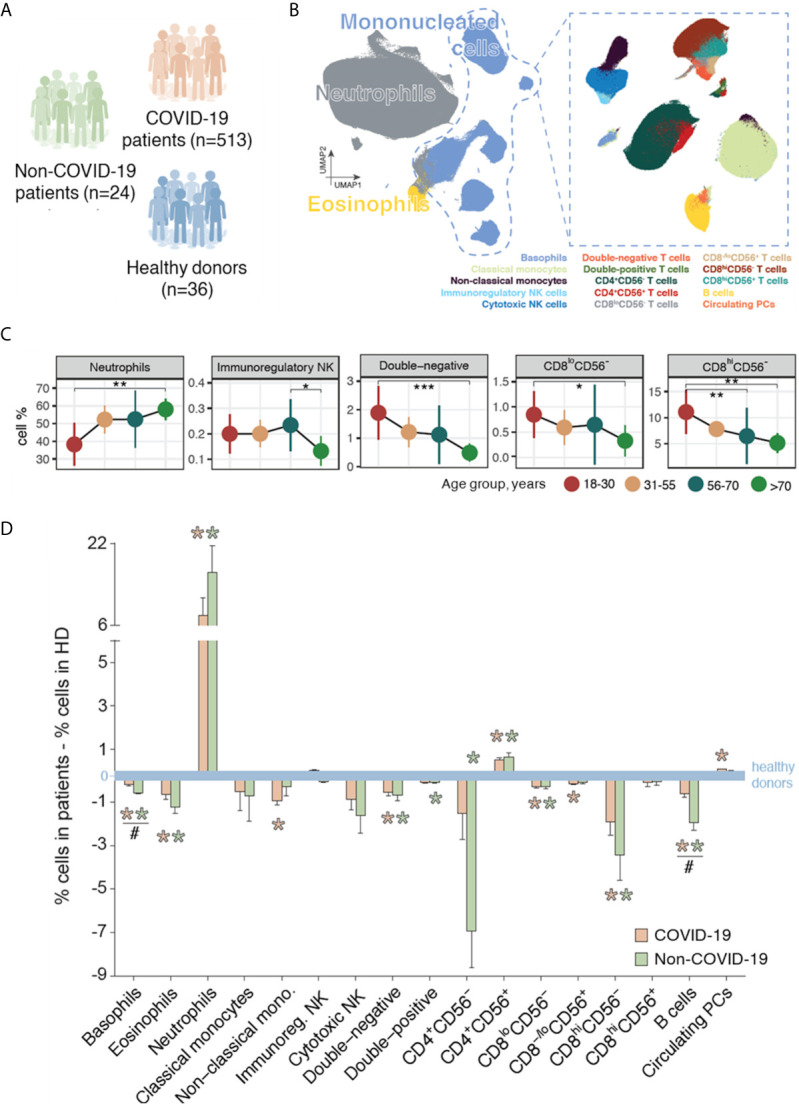
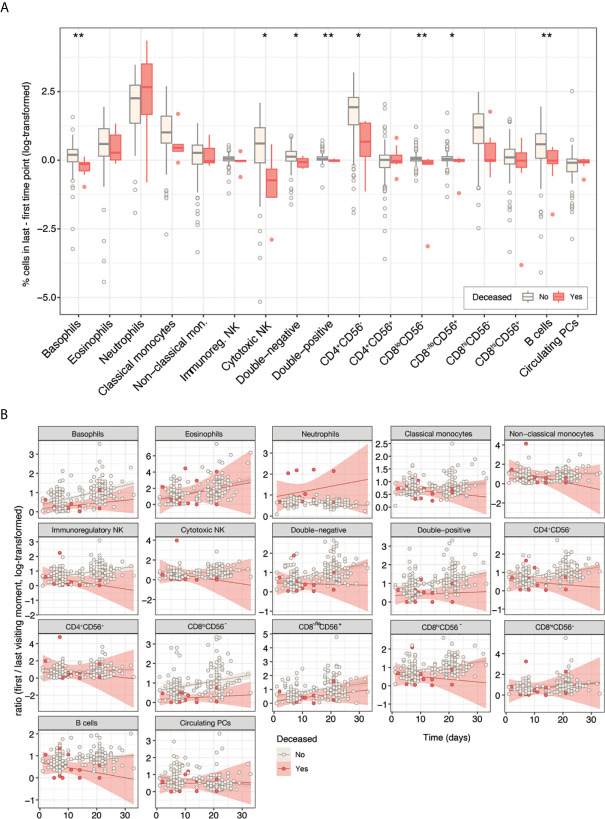
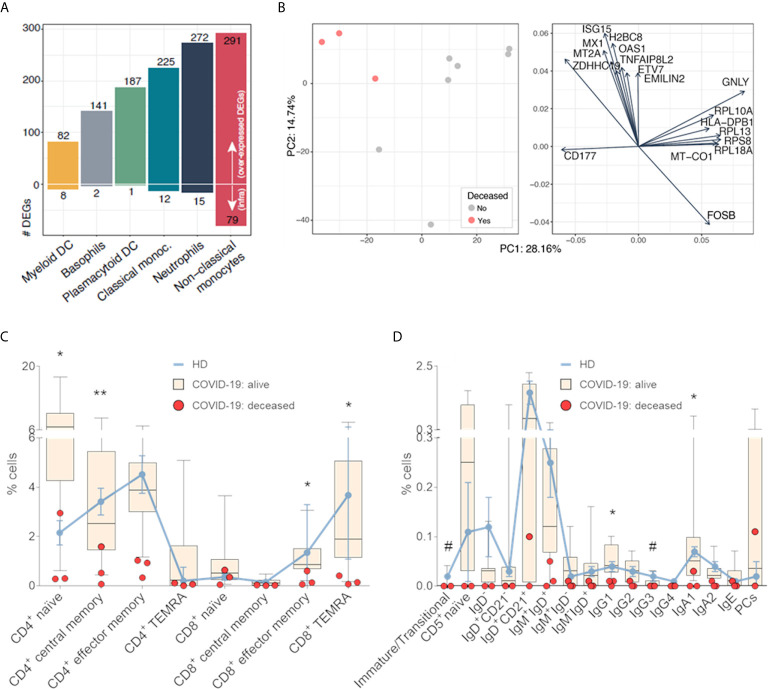
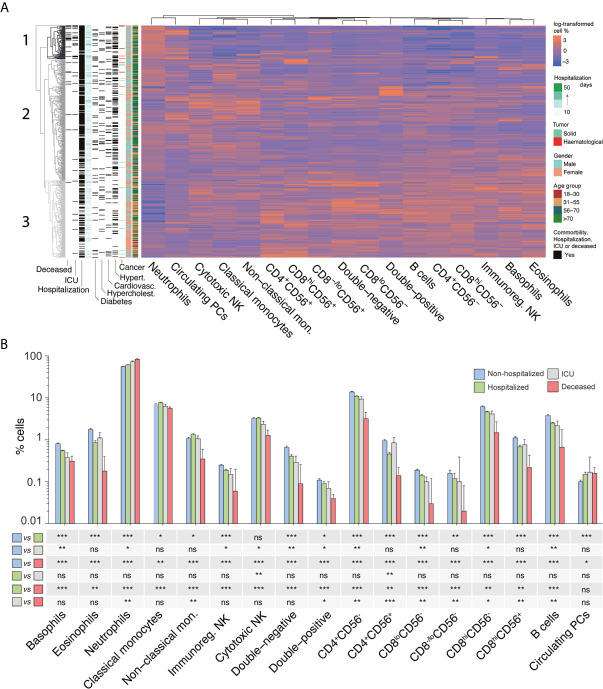
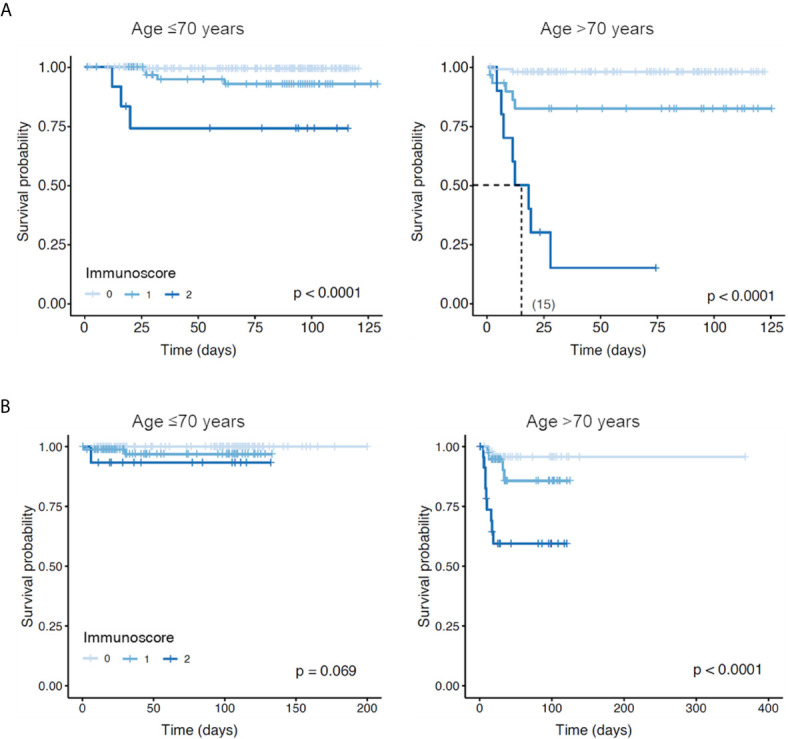
Information on the immunopathobiology of coronavirus disease 2019 (COVID-19) is rapidly increasing; however, there remains a need to identify immune features predictive of fatal outcome. This large-scale study characterized immune responses to severe acute respiratory syndrome coronavirus-2 (SARS-CoV-2) infection using multidimensional flow cytometry, with the aim of identifying high-risk immune biomarkers. Holistic and unbiased analyses of 17 immune cell-types were conducted on 1,075 peripheral blood samples obtained from 868 COVID-19 patients and on samples from 24 patients presenting with non-SARS-CoV-2 infections and 36 healthy donors. Immune profiles of COVID-19 patients were significantly different from those of age-matched healthy donors but generally similar to those of patients with non-SARS-CoV-2 infections. Unsupervised clustering analysis revealed three immunotypes during SARS-CoV-2 infection; immunotype 1 (14% of patients) was characterized by significantly lower percentages of all immune cell-types except neutrophils and circulating plasma cells, and was significantly associated with severe disease. Reduced B-cell percentage was most strongly associated with risk of death. On multivariate analysis incorporating age and comorbidities, B-cell and non-classical monocyte percentages were independent prognostic factors for survival in training (n=513) and validation (n=355) cohorts. Therefore, reduced percentages of B-cells and non-classical monocytes are high-risk immune biomarkers for risk-stratification of COVID-19 patients.
关于 2019 年冠状病毒病(COVID-19)的免疫病理生物学信息正在迅速增加;然而,仍需要确定预测致命结局的免疫特征。这项大规模研究使用多维流式细胞术对严重急性呼吸综合征冠状病毒 2(SARS-CoV-2)感染的免疫反应进行了特征描述,目的是确定高风险的免疫生物标志物。对 868 例 COVID-19 患者的 1075 份外周血样本和 24 例非 SARS-CoV-2 感染患者及 36 名健康供体的样本进行了 17 种免疫细胞类型的整体和无偏分析。COVID-19 患者的免疫谱与年龄匹配的健康供体明显不同,但通常与非 SARS-CoV-2 感染患者的免疫谱相似。无监督聚类分析显示,SARS-CoV-2 感染期间存在三种免疫表型;免疫表型 1(占患者的 14%)的特点是所有免疫细胞类型的比例明显较低,除中性粒细胞和循环浆细胞外,与严重疾病显著相关。B 细胞百分比降低与死亡风险的相关性最强。在纳入年龄和合并症的多变量分析中,B 细胞和非经典单核细胞百分比是训练(n=513)和验证(n=355)队列中生存的独立预后因素。因此,B 细胞和非经典单核细胞百分比降低是 COVID-19 患者风险分层的高风险免疫生物标志物。