Bai Zeyang, Xu Lianyan, Dai Yong, Yuan Qingchen, Zhou Zihua
Department of Cardiology, Union Hospital, Tongji Medical College, Huazhong University of Science and Technology, Wuhan, China.
Key Lab of Molecular Biological Targeted Therapies of the Ministry of Education, Union Hospital, Tongji Medical College, Huazhong University of Science and Technology, Wuhan, China.
J Thorac Dis. 2021 Apr;13(4):2242-2254. doi: 10.21037/jtd-20-3069.
Pulmonary artery hypertension (PAH) is an incurable disease with a high mortality rate. Current medications ameliorate symptoms but cannot target adverse vascular remodeling. New therapeutic strategies for PAH need to be established.
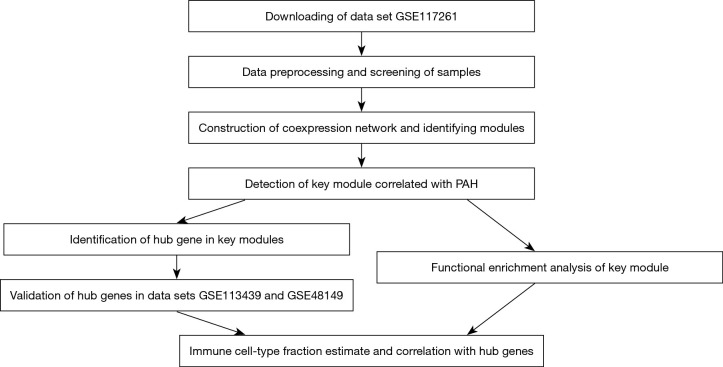
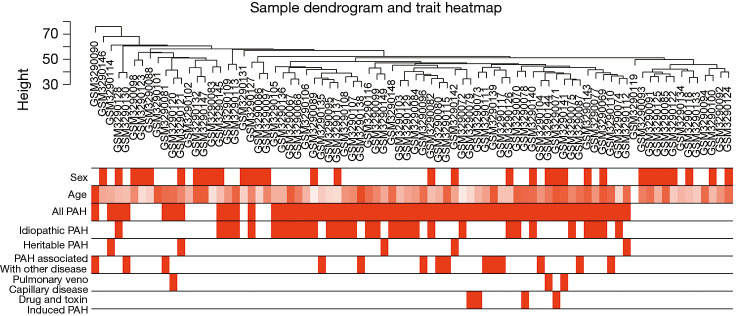
Using the weighted gene coexpression network analysis (WGCNA) algorithm, we constructed a coexpression network of dataset GSE117261 from the Gene Expression Omnibus (GEO) database. Key modules were identified by the relationship between module eigengenes and clinical traits. Hub genes were screened out based on gene significance (GS), module membership (MM), and mean pulmonary artery pressure (mPAP). External validations were conducted in GSE48149 and GSE113439. Functional enrichment and immune cell infiltration were analyzed using Metascape and CIBERSORTx.
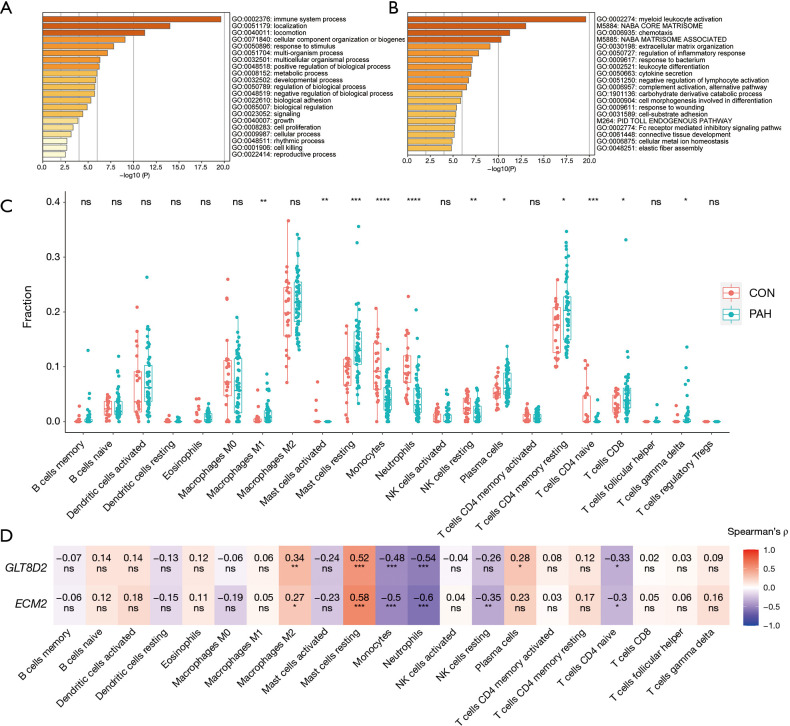
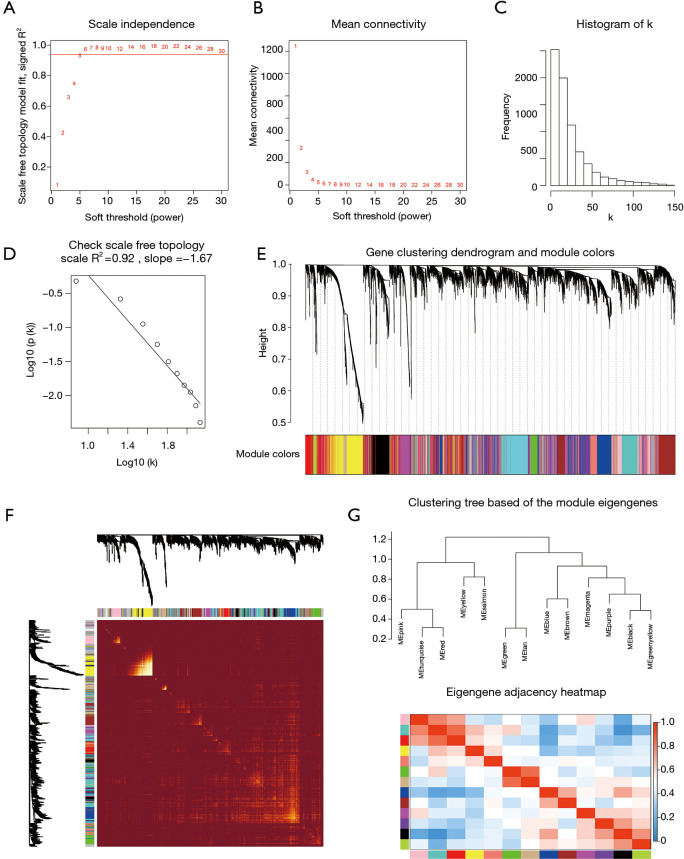
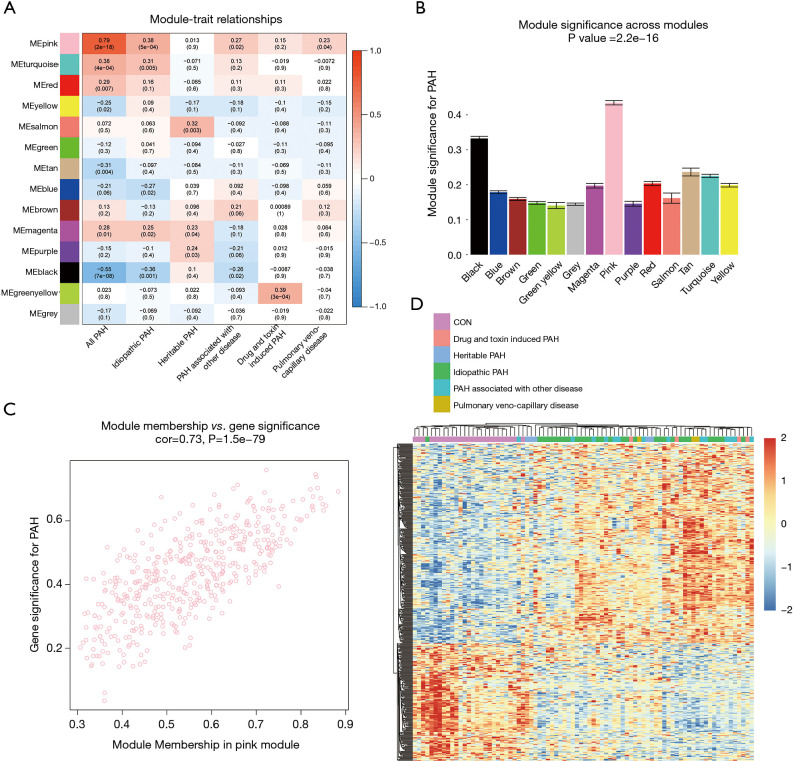
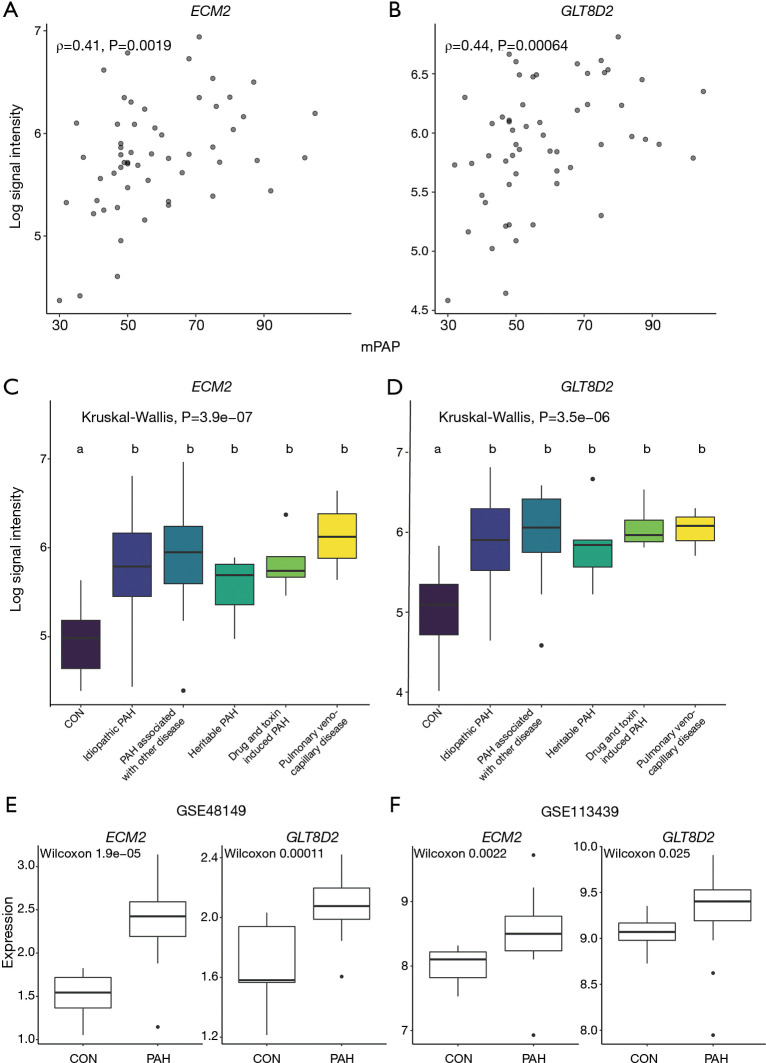
The WGCNA analysis revealed 13 coexpression modules. The pink module had the highest correlation with PAH in terms of module eigengene (r=0.79; P=2e-18) and module significance (MS =0.43). Functional enrichment indicated genes in the pink module contributed to the immune system process and extracellular matrix (ECM). In the pink module, (GS =0.65, MM =0.86, ρ=0.407, P=0.0019) and (GS =0.63, MM =0.85, ρ=0.443, P=0.006) were identified as hub genes. For immune cells infiltration in PAH lung tissue, hub genes were positively correlated with M2 macrophages and resting mast cells, and were negatively correlated with monocytes, neutrophils, and CD4-naïve T cells.
Our research identified 2 hub genes and related to PAH. The functions of these hub genes were involved in the immune process and ECM, indicating that they might serve as candidate therapeutic targets for PAH.
肺动脉高压(PAH)是一种无法治愈且死亡率高的疾病。目前的药物可改善症状,但无法针对不良血管重塑。需要建立新的PAH治疗策略。
使用加权基因共表达网络分析(WGCNA)算法,我们从基因表达综合数据库(GEO)构建了数据集GSE117261的共表达网络。通过模块特征基因与临床特征之间的关系确定关键模块。基于基因显著性(GS)、模块成员度(MM)和平均肺动脉压(mPAP)筛选出枢纽基因。在GSE48149和GSE113439中进行外部验证。使用Metascape和CIBERSORTx分析功能富集和免疫细胞浸润。
WGCNA分析揭示了13个共表达模块。就模块特征基因而言,粉色模块与PAH的相关性最高(r = 0.79;P = 2e - 18),模块显著性(MS = 0.43)。功能富集表明粉色模块中的基因有助于免疫系统过程和细胞外基质(ECM)。在粉色模块中,(GS = 0.65,MM = 0.86,ρ = 0.407,P = 0.0019)和(GS = 0.63,MM = 0.85,ρ = 0.443,P = 0.006)被确定为枢纽基因。对于PAH肺组织中的免疫细胞浸润,枢纽基因与M2巨噬细胞和静止肥大细胞呈正相关,与单核细胞、中性粒细胞和CD4初始T细胞呈负相关。
我们的研究确定了2个与PAH相关的枢纽基因 和 。这些枢纽基因的功能涉及免疫过程和ECM,表明它们可能作为PAH的候选治疗靶点。