Department of Nuclear Medicine and PET Center, The Second Affiliated Hospital of Zhejiang University School of Medicine, 88 Jiefang Road, Zhejiang, 310009, Hangzhou, China.
Institute of Nuclear Medicine and Molecular Imaging of Zhejiang University, Hangzhou, China.
Eur J Nucl Med Mol Imaging. 2021 Nov;48(12):3903-3917. doi: 10.1007/s00259-021-05347-7. Epub 2021 May 19.
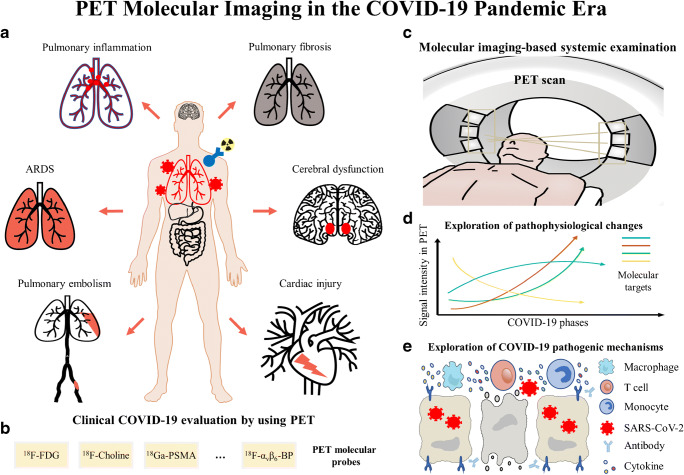
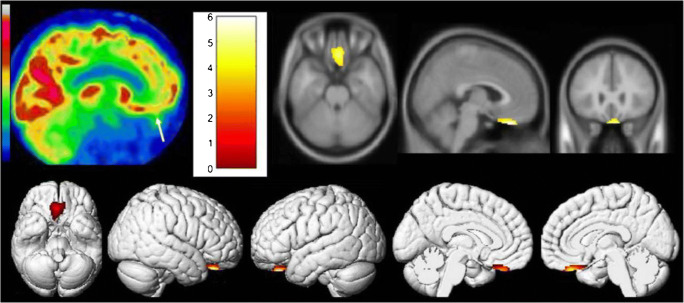
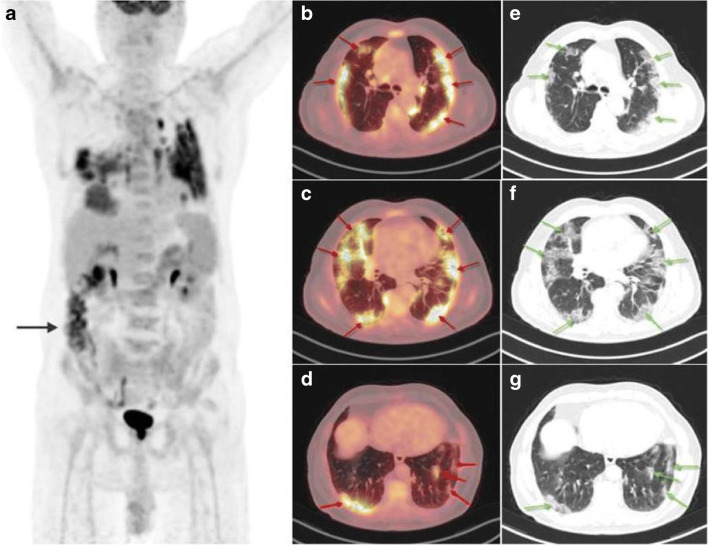
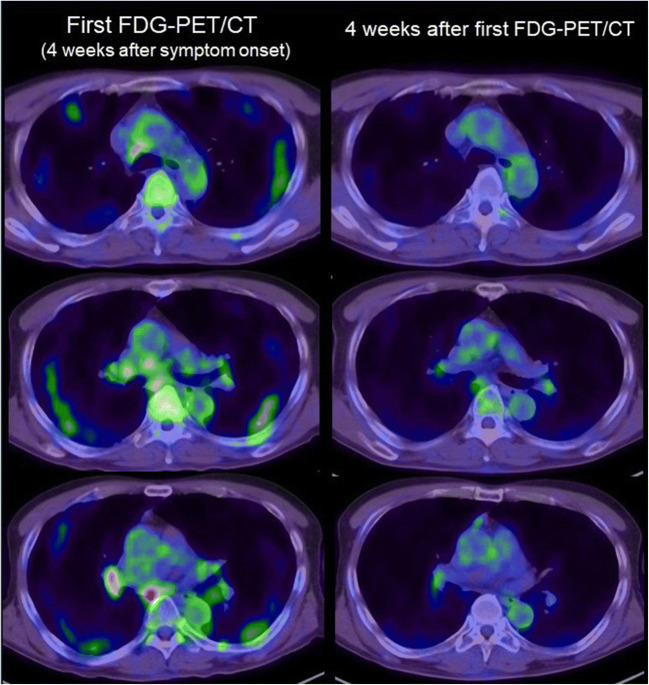
Coronavirus disease 2019 (COVID-19) has become a major public health problem worldwide since its outbreak in 2019. Currently, the spread of COVID-19 is far from over, and various complications have roused increasing awareness of the public, calling for novel techniques to aid at diagnosis and treatment. Based on the principle of molecular imaging, positron emission tomography (PET) is expected to offer pathophysiological alternations of COVID-19 in the molecular/cellular perspectives and facilitate the clinical management of patients. A number of PET-related cases and research have been reported on COVID-19 over the past one year. This article reviews the current studies of PET in the diagnosis and treatment of COVID-19, and discusses potential applications of PET in the development of management strategy for COVID-19 patients in the pandemic era.
自 2019 年爆发以来,2019 年冠状病毒病(COVID-19)已成为全球主要的公共卫生问题。目前,COVID-19 的传播还远未结束,各种并发症引起了公众的日益关注,需要新的技术来辅助诊断和治疗。基于分子成像原理,正电子发射断层扫描(PET)有望从分子/细胞角度提供 COVID-19 的病理生理变化,并有助于患者的临床管理。在过去的一年中,已经有许多与 COVID-19 相关的 PET 案例和研究报告。本文综述了 PET 在 COVID-19 诊断和治疗中的研究现状,并讨论了 PET 在大流行时代 COVID-19 患者管理策略制定中的潜在应用。