Center for Artificial Intelligence in Drug Discovery, School of medicine, Case Western Reserve University, Cleveland, Ohio, United States of America.
Case Comprehensive Cancer Center, Case Western Reserve University, Cleveland, Ohio, United States of America.
PLoS One. 2021 May 20;16(5):e0250278. doi: 10.1371/journal.pone.0250278. eCollection 2021.
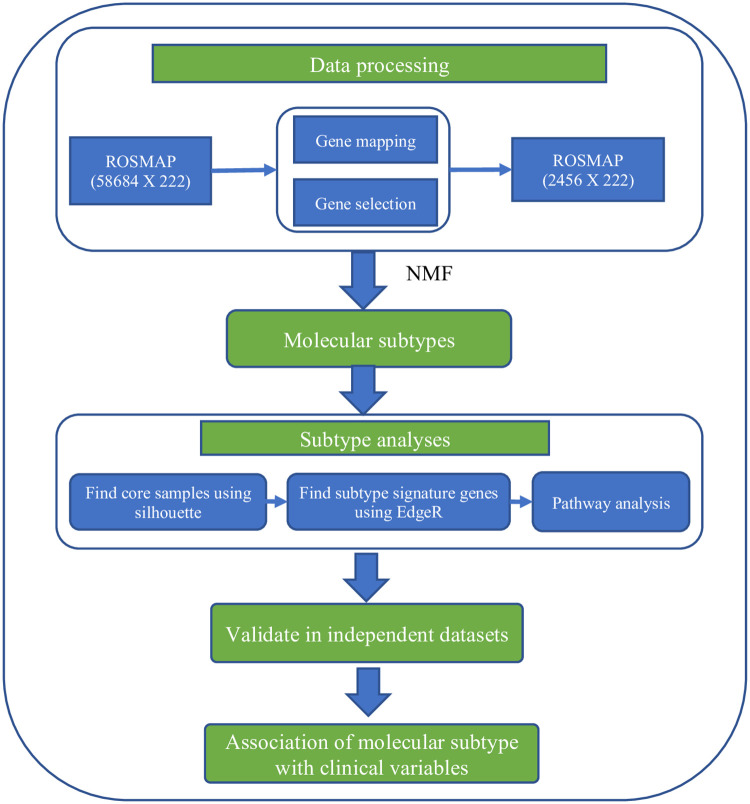
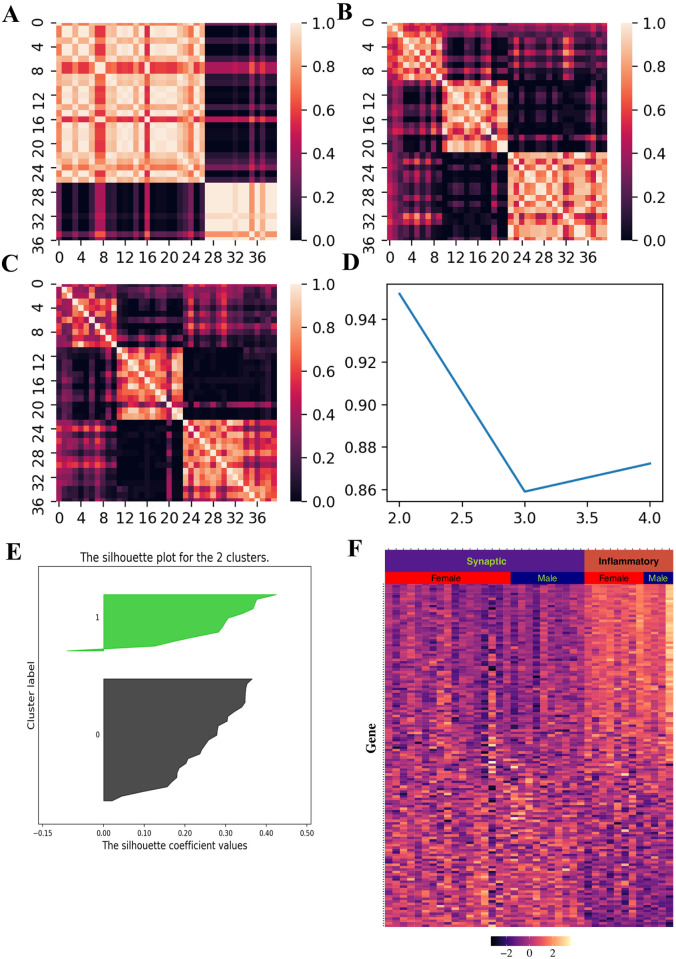
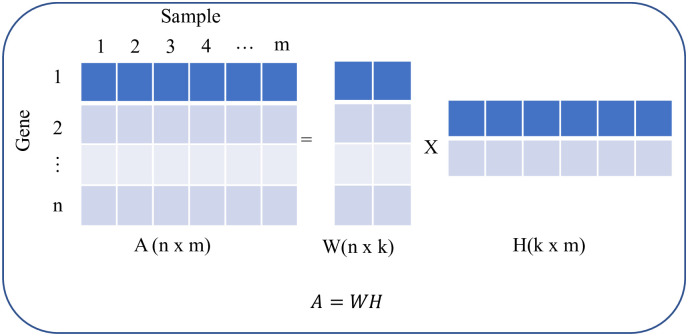
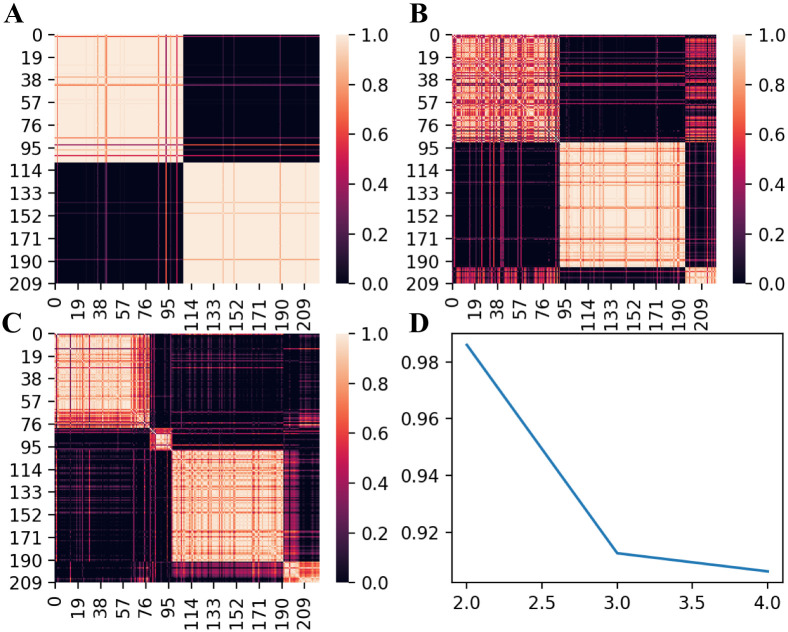
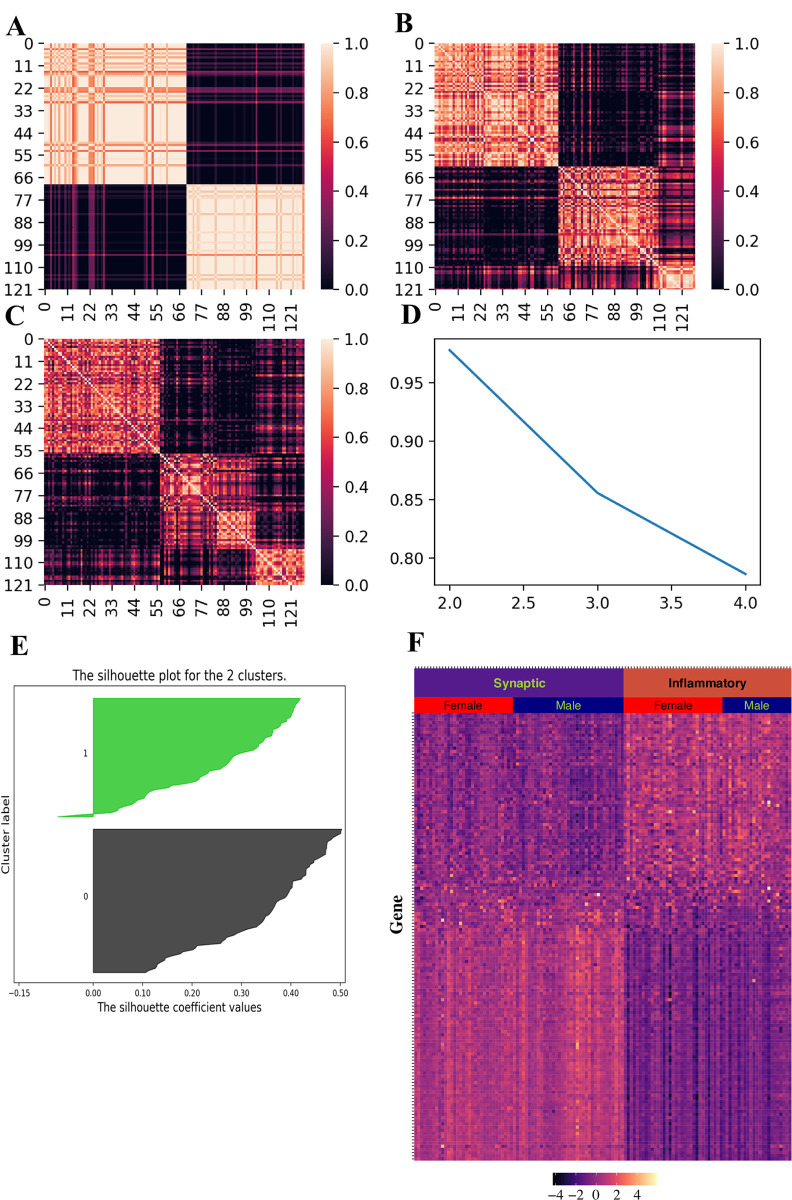
Alzheimer's disease (AD) is a heterogeneous disease and exhibits diverse clinical presentations and disease progression. Some pathological and anatomical subtypes have been proposed. However, these subtypes provide a limited mechanistic understanding for AD. Leveraging gene expression data of 222 AD patients from The Religious Orders Study and Memory and Aging Project (ROSMAP) Study, we identified two AD molecular subtypes (synaptic type and inflammatory type) using consensus non-negative matrix factorization (NMF). Synaptic type is characterized by disrupted synaptic vesicle priming and recycling and synaptic plasticity. Inflammatory type is characterized by disrupted IL2, interferon alpha and gamma pathways. The two AD molecular subtypes were validated using independent data from Gene Expression Omnibus. We further demonstrated that the two molecular subtypes are associated with APOE genotypes, with synaptic type more prevalent in AD patients with E3E4 genotype and inflammatory type more prevalent in AD patients with E3E3 genotype (p = 0.031). In addition, two molecular subtypes are differentially represented in male and female AD, with synaptic type more prevalent in male and inflammatory type in female patients (p = 0.051). Identification of AD molecular subtypes has potential in facilitating disease mechanism understanding, clinical trial design, drug discovery, and precision medicine for AD.
阿尔茨海默病(AD)是一种异质性疾病,表现出不同的临床症状和疾病进展。已经提出了一些病理和解剖亚型。然而,这些亚型为 AD 提供了有限的机制理解。利用来自宗教秩序研究和记忆与衰老项目(ROSMAP)研究的 222 名 AD 患者的基因表达数据,我们使用共识非负矩阵分解(NMF)鉴定了两种 AD 分子亚型(突触型和炎症型)。突触型的特征是突触小泡启动和回收以及突触可塑性受损。炎症型的特征是 IL2、干扰素 α 和 γ 途径受损。使用来自基因表达综合数据库的独立数据验证了这两种 AD 分子亚型。我们进一步证明,这两种分子亚型与 APOE 基因型相关,突触型在 E3E4 基因型的 AD 患者中更为常见,炎症型在 E3E3 基因型的 AD 患者中更为常见(p=0.031)。此外,这两种分子亚型在男女 AD 中存在差异表达,突触型在男性 AD 患者中更为常见,炎症型在女性 AD 患者中更为常见(p=0.051)。AD 分子亚型的鉴定有助于促进疾病机制的理解、临床试验设计、药物发现和 AD 的精准医学。