Douglas Mental Health University Institute, Montréal, Québec, Canada; Department of Human Genetics, McGill University, Montréal, Québec, Canada.
Douglas Mental Health University Institute, Montréal, Québec, Canada; Department of Psychiatry, McGill University, Montréal, Québec, Canada.
Neuroimage Clin. 2021;31:102695. doi: 10.1016/j.nicl.2021.102695. Epub 2021 May 7.
Although there is some evidence for a normalization of brain structure following exposure to ADHD medication, literature on the effects of duration and dose of continued use on the brain is scarce. Here, we investigated the association between cumulative exposure to medication (range 1 week to 4.69 years) and cortical structures and subcortical volumes in a clinical sample of children with ADHD taking medication (n = 109). To the best of our knowledge, this is the first structural MRI study investigating the effects of cumulative exposure to medication on subregional volumes in children treated for ADHD.
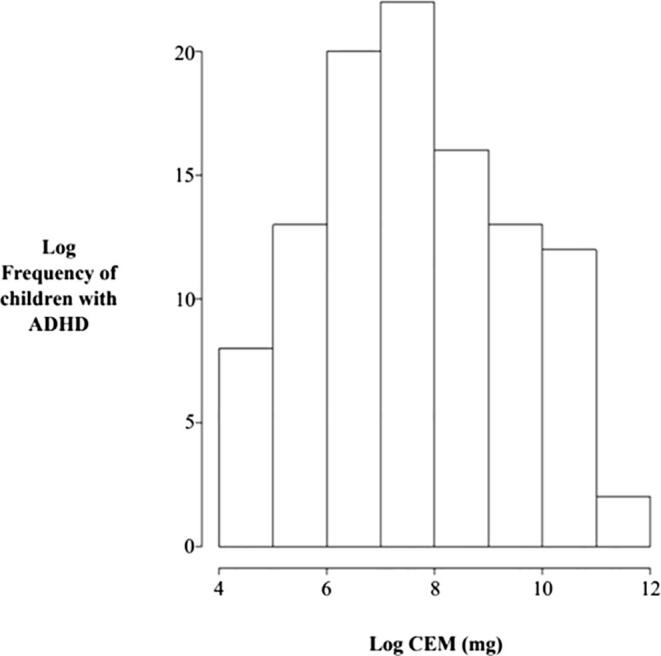
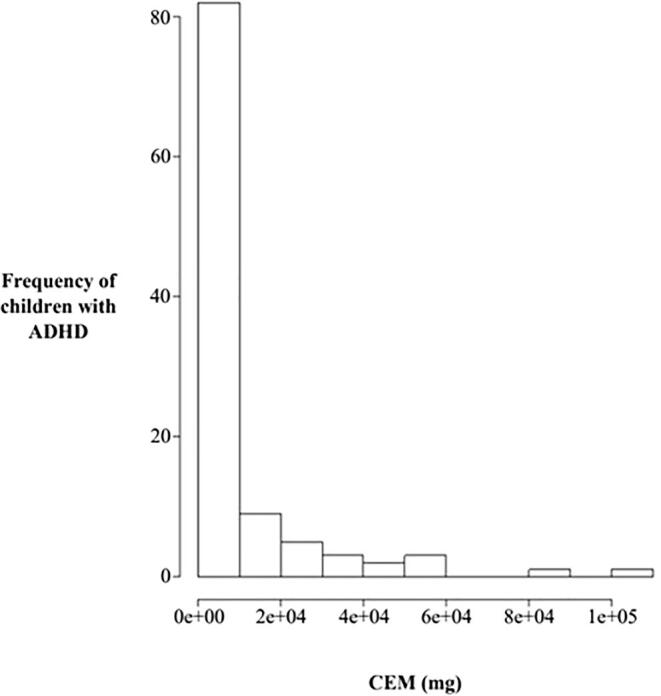
Cumulative exposure to ADHD medication (CEM) was defined as the product of duration on medication (days) and dose (mg/day), yielding the area under the curve (total mg). Cortical thickness and surface area measurements (CIVET-1.1.12), and subcortical volumes in 51 regions (MAGeT-Brain) were analyzed using general linear modelling.
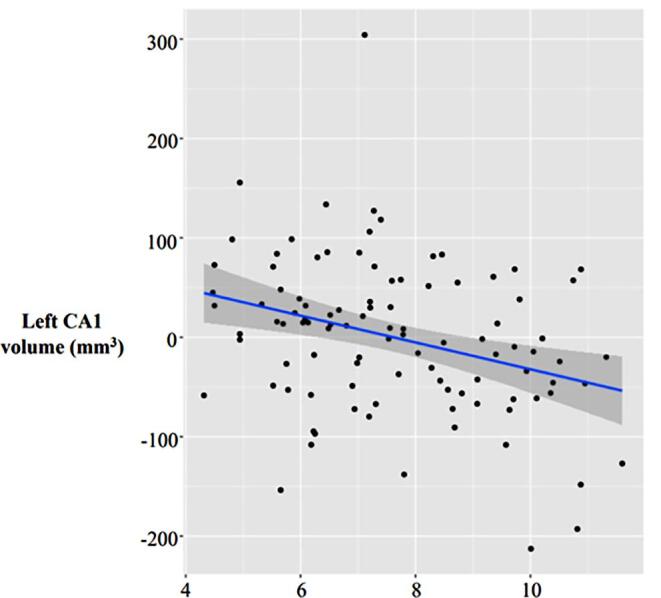
Significant effects of CEM were found in two subregions of the left hippocampus, the CA1 (df = 95; q = 0.003) and the strata radiatum/lacunosum/moleculare (df = 95; q = 0.003). Specifically, higher CEM was associated with smaller volumes within these subregions. No effects of medication exposure were detected on cortical thickness or surface area.
Although this study is cross-sectional, the results found within this sample of children show that prolonged ADHD medication use at higher doses is significantly associated with smaller hippocampus volumes in specific subregions. More research is required to determine whether these results are reproduced in other samples of children of ADHD, and further, whether these are beneficial or off-target effects of the medication.
尽管有一些证据表明在接触 ADHD 药物后大脑结构会恢复正常,但关于持续使用药物的持续时间和剂量对大脑的影响的文献却很少。在这里,我们研究了在服用药物的 ADHD 儿童临床样本中(n=109),药物累积暴露(范围 1 周至 4.69 年)与皮质结构和皮质下体积之间的关系。据我们所知,这是第一项研究累积暴露于药物对 ADHD 治疗儿童亚区体积影响的结构 MRI 研究。
ADHD 药物的累积暴露(CEM)定义为用药时间(天)和剂量(mg/天)的乘积,产生曲线下面积(总 mg)。使用一般线性模型分析 51 个区域的皮质厚度和表面积测量值(CIVET-1.1.12)以及皮质下体积。
在左侧海马体的两个亚区(CA1,df=95;q=0.003)和放射状层/腔隙状/分子层(df=95;q=0.003)中发现了 CEM 的显著影响。具体来说,较高的 CEM 与这些亚区的体积较小有关。药物暴露没有对皮质厚度或表面积产生影响。
尽管这项研究是横断面的,但在这个儿童样本中发现的结果表明,长时间以较高剂量使用 ADHD 药物与特定亚区的海马体体积较小显著相关。需要进一步的研究来确定这些结果是否在其他 ADHD 儿童样本中重现,以及这些结果是否是药物的有益或非靶向效应。