Institute of Medical Education Research Rotterdam, Erasmus Medical Center Rotterdam, Rotterdam, The Netherlands.
Erasmus School of Health Policy & Management, Erasmus University Rotterdam, Rotterdam, The Netherlands.
PLoS One. 2021 May 21;16(5):e0249092. doi: 10.1371/journal.pone.0249092. eCollection 2021.
In pursuing optimal health care, an adequate medical workforce is crucial. However, many countries are struggling with a misalignment of students' specialty preferences and societal needs regarding the future medical workforce. In order to bridge this gap, it is relevant to gain a better understanding of the medical career choice processes. We explored career orientations among medical students in the Netherlands and their implications for future career choices.
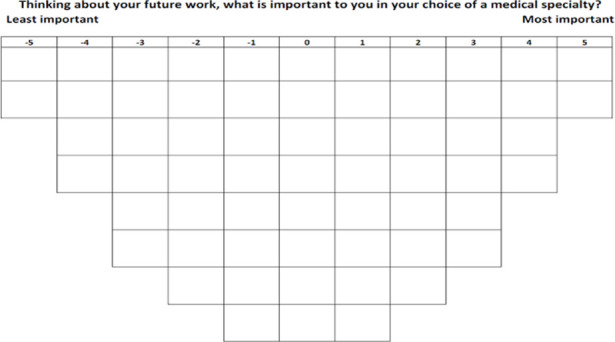
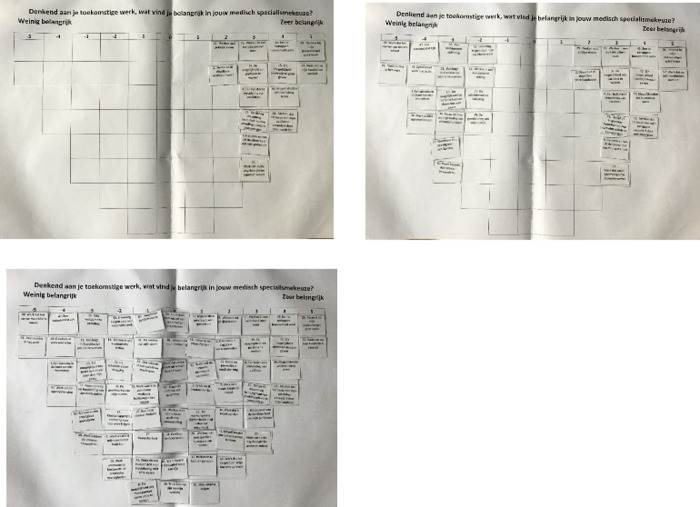
We used Q-methodology, a hybrid qualitative-quantitative method, to explore career orientations of medical students. Medical students from two universities in the Netherlands, varying in year of progression of medical school, ranked 62 statements with regard to importance for their future career choice. Participants explained their ranking in an interview and completed a questionnaire regarding demographics. Using by-person factor analysis we identified groups of individuals with similar orientations.
Twenty-four students participated in this study, resulting in three distinct orientations towards future careers: a first career orientation that highly values lifelong self-development; a second that values work-life balance, and a third that was more concerned with achievement and recognition of their work.
Medical students' career orientations differed in the importance of challenge, work-life balance, and need for recognition. This knowledge can help to design interventions to shift career choices of medical students closer towards future needs in society. Offering career coaching to students that challenges them to explore and prioritise their values, needs and motivations, for example using the materials form this study as a tool, and stimulates them to consider specialties accordingly, could be a promising strategy for guiding students to more long-term satisfying careers.
在追求最佳医疗保健的过程中,充足的医疗劳动力至关重要。然而,许多国家都面临着学生的专业偏好与社会对未来医疗劳动力需求之间的错位。为了弥合这一差距,了解医疗职业选择过程就显得尤为重要。我们探讨了荷兰医学生的职业取向及其对未来职业选择的影响。
我们使用了 Q 方法学,这是一种混合的定性和定量方法,来探索医学生的职业取向。荷兰两所大学的医学生,根据其在医学院的进展年份而有所不同,对 62 个与未来职业选择相关的重要性陈述进行了排名。参与者在访谈中解释了他们的排名,并完成了一份关于人口统计学的问卷。通过个人因素分析,我们确定了具有相似取向的个体群体。
本研究共有 24 名学生参与,结果确定了三种不同的未来职业取向:第一种高度重视终身自我发展;第二种重视工作与生活的平衡;第三种更关注工作成就和认可。
医学生的职业取向在挑战、工作与生活平衡以及对认可的需求方面存在差异。这些知识可以帮助设计干预措施,使医学生的职业选择更符合社会未来的需求。为学生提供职业指导,挑战他们探索和优先考虑自己的价值观、需求和动机,例如使用本研究的材料作为工具,并激励他们相应地考虑专业,这可能是指导学生走向更长期满足的职业的一种有前途的策略。