Department of Molecular Genetics and Microbiology, Duke University School of Medicine, Durham, NC 27710, USA.
Genome Integrity and Structural Biology Laboratory, National Institute of Environmental Health Sciences, National Institutes of Health, Research Triangle Park, NC 27709, USA.
Nucleic Acids Res. 2021 Jun 4;49(10):5623-5636. doi: 10.1093/nar/gkab371.
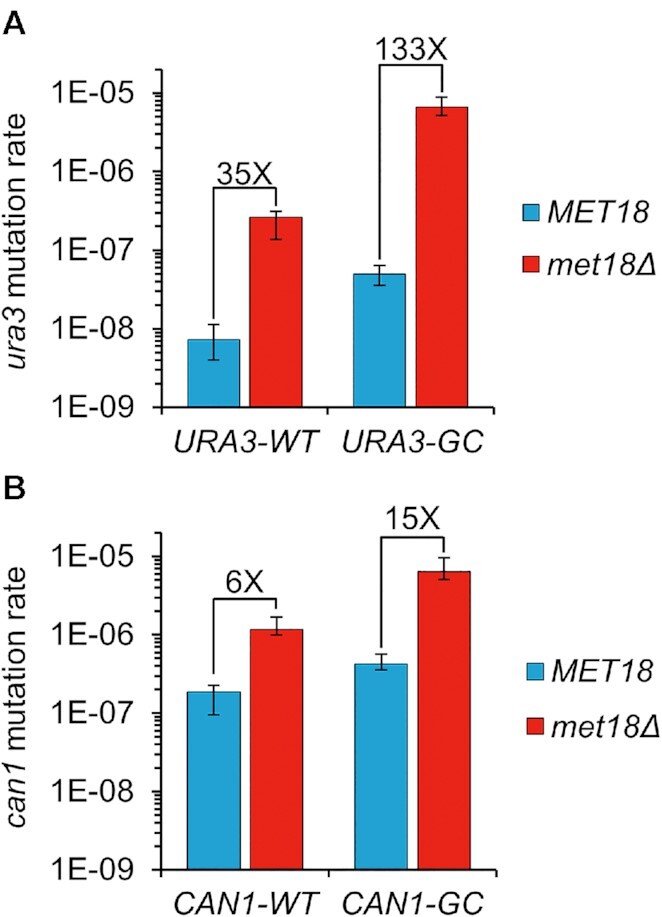
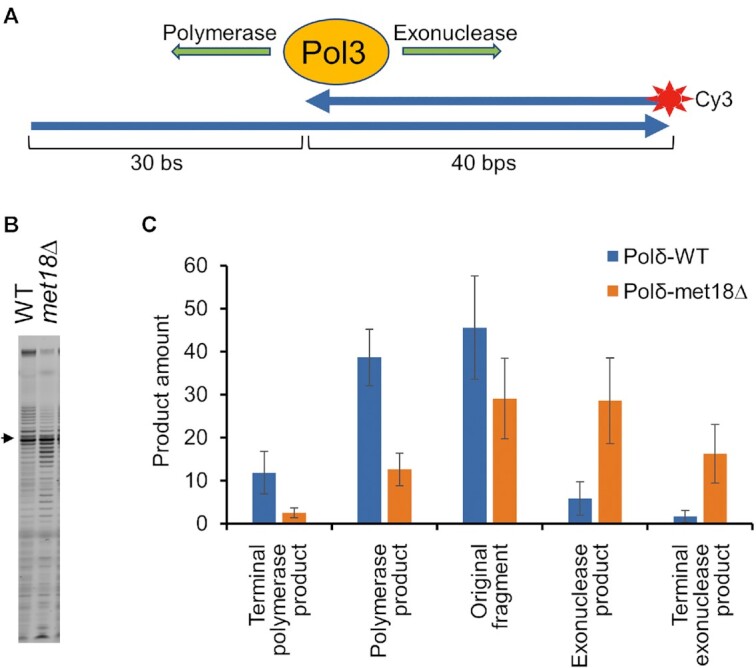
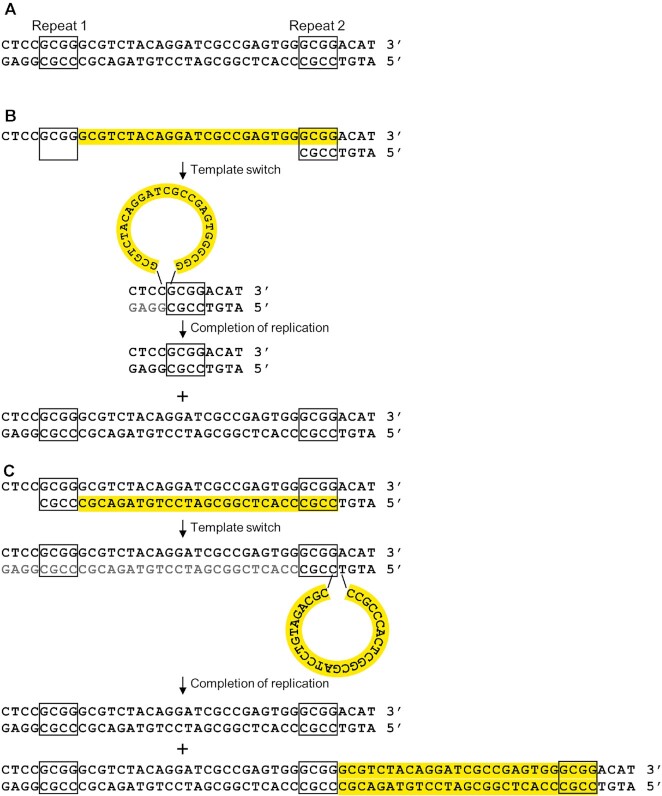
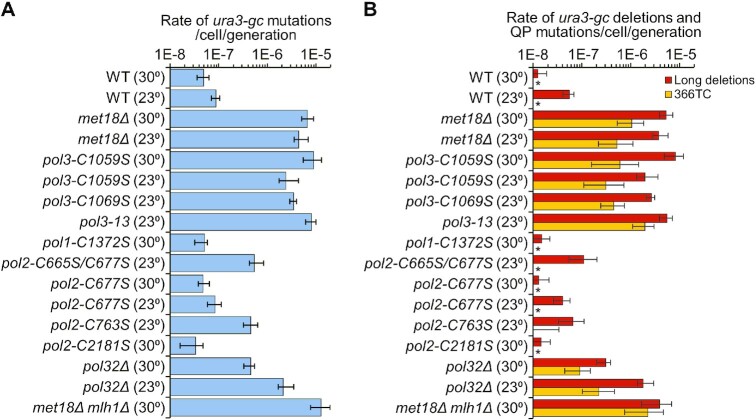
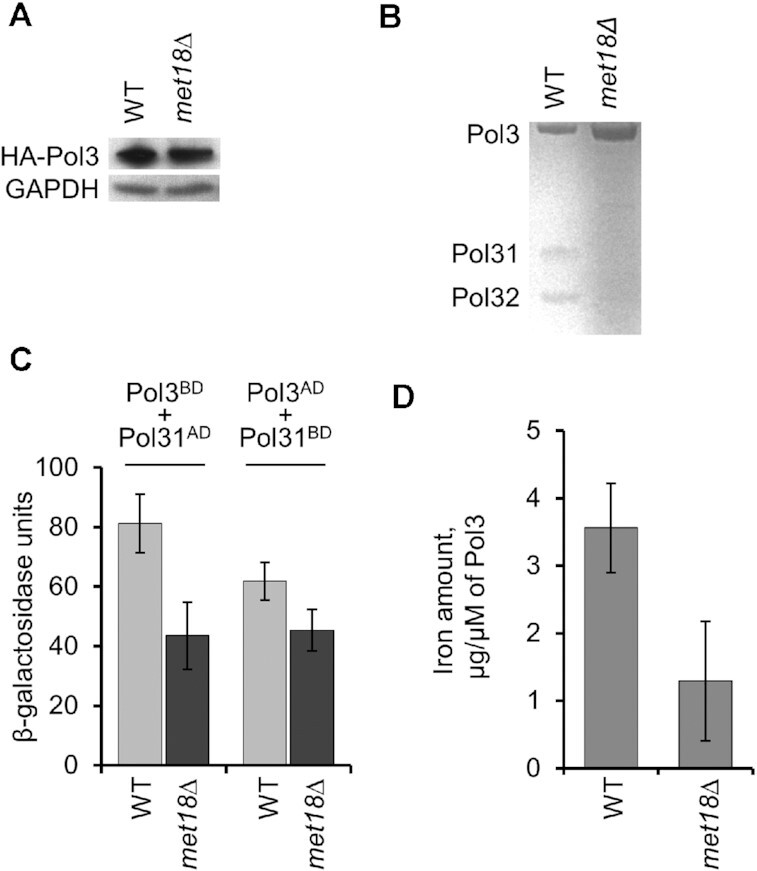
Iron-sulfur clusters (4Fe-4S) exist in many enzymes concerned with DNA replication and repair. The contribution of these clusters to enzymatic activity is not fully understood. We identified the MET18 (MMS19) gene of Saccharomyces cerevisiae as a strong mutator on GC-rich genes. Met18p is required for the efficient insertion of iron-sulfur clusters into various proteins. met18 mutants have an elevated rate of deletions between short flanking repeats, consistent with increased DNA polymerase slippage. This phenotype is very similar to that observed in mutants of POL3 (encoding the catalytic subunit of Pol δ) that weaken binding of the iron-sulfur cluster. Comparable mutants of POL2 (Pol ϵ) do not elevate deletions. Further support for the conclusion that met18 strains result in impaired DNA synthesis by Pol δ are the observations that Pol δ isolated from met18 strains has less bound iron and is less processive in vitro than the wild-type holoenzyme.
铁硫簇(4Fe-4S)存在于许多与 DNA 复制和修复相关的酶中。这些簇对酶活性的贡献尚未完全了解。我们鉴定出酿酒酵母的 MET18(MMS19)基因为 GC 丰富基因的强突变体。Met18p 是将铁硫簇有效插入各种蛋白质所必需的。met18 突变体在短侧翼重复之间的缺失率升高,与 DNA 聚合酶滑动增加一致。这种表型与 POL3(编码 Pol δ 的催化亚基)突变体观察到的非常相似,后者削弱了铁硫簇的结合。POL2(Pol ϵ)的类似突变体不会增加缺失。进一步支持 met18 菌株通过 Pol δ 导致 DNA 合成受损的结论是,从 met18 菌株中分离出的 Pol δ 结合的铁较少,体外的持续性低于野生型全酶。