Division of Pediatrics, Department of Biomedical and Clinical Sciences, Faculty of Medicine and Health Sciences and Crown Princess Victoria Children's Hospital, Linköping University, Linköping, Sweden
Department of Pediatrics, 2nd Faculty of Medicine, Charles University and Motol University Hospital, Prague, Czech Republic.
Diabetes Care. 2021 Jul;44(7):1604-1612. doi: 10.2337/dc21-0318. Epub 2021 May 21.
To evaluate the efficacy of aluminum-formulated intralymphatic glutamic acid decarboxylase (GAD-alum) therapy combined with vitamin D supplementation in preserving endogenous insulin secretion in all patients with type 1 diabetes (T1D) or in a genetically prespecified subgroup.
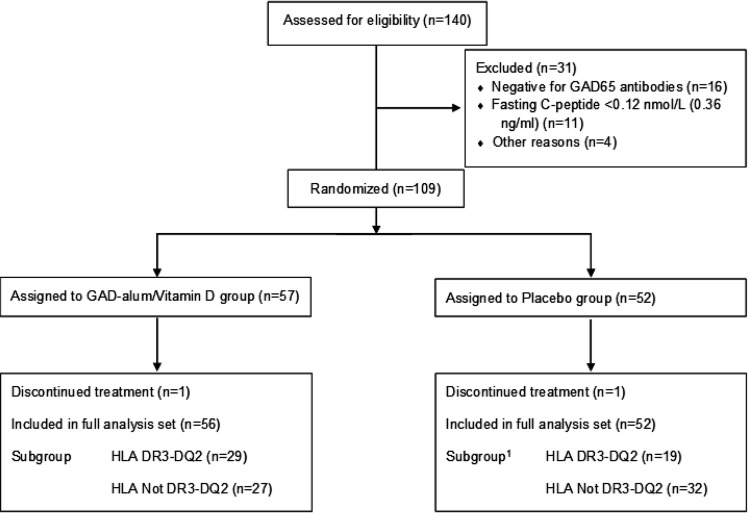
In a multicenter, randomized, placebo-controlled, double-blind trial, 109 patients aged 12-24 years (mean ± SD 16.4 ± 4.1) with a diabetes duration of 7-193 days (88.8 ± 51.4), elevated serum GAD65 autoantibodies, and a fasting serum C-peptide >0.12 nmol/L were recruited. Participants were randomized to receive either three intralymphatic injections (1 month apart) with 4 μg GAD-alum and oral vitamin D (2,000 IE daily for 120 days) or placebo. The primary outcome was the change in stimulated serum C-peptide (mean area under the curve [AUC] after a mixed-meal tolerance test) between baseline and 15 months.
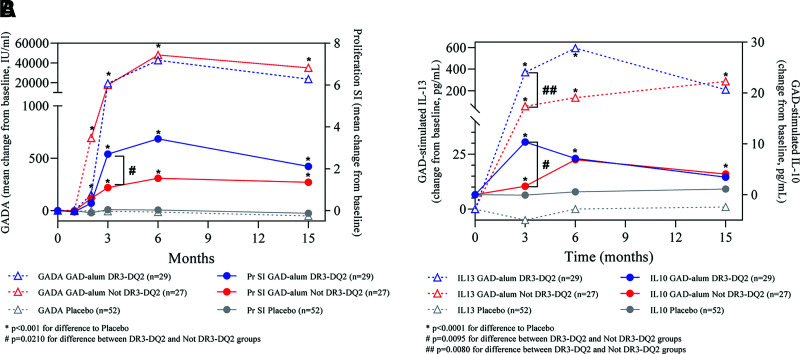
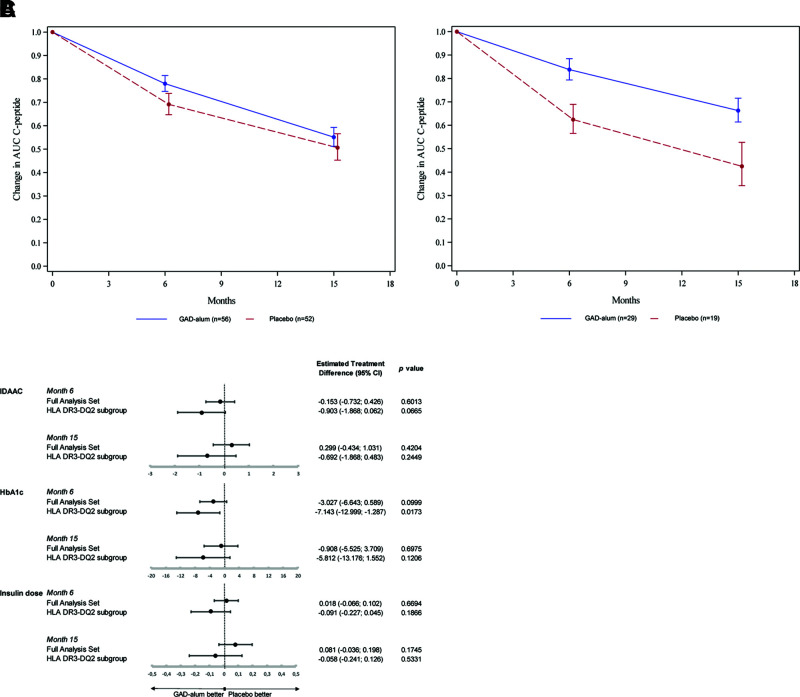
Primary end point was not met in the full analysis set (treatment effect ratio 1.091 [CI 0.845-1.408]; = 0.5009). However, GAD-alum-treated patients carrying HLA DR3-DQ2 ( = 29; defined as DRB103, DQB102:01) showed greater preservation of C-peptide AUC (treatment effect ratio 1.557 [CI 1.126-2.153]; = 0.0078) after 15 months compared with individuals receiving placebo with the same genotype ( = 17). Several secondary end points showed supporting trends, and a positive effect was seen in partial remission (insulin dose-adjusted HbA ≤9; = 0.0310). Minor transient injection site reactions were reported.
Intralymphatic administration of GAD-alum is a simple, well-tolerated treatment that together with vitamin D supplementation seems to preserve C-peptide in patients with recent-onset T1D carrying HLA DR3-DQ2. This constitutes a disease-modifying treatment for T1D with a precision medicine approach.
评估铝配方的谷氨酰胺脱羧酶(GAD-alum)联合维生素 D 补充治疗在所有 1 型糖尿病(T1D)患者或特定遗传亚组患者中维持内源性胰岛素分泌的疗效。
在一项多中心、随机、安慰剂对照、双盲试验中,招募了 109 名年龄在 12-24 岁(平均 ± SD 16.4 ± 4.1)、糖尿病病程为 7-193 天(88.8 ± 51.4)、血清 GAD65 自身抗体升高且空腹血清 C 肽 >0.12 nmol/L 的患者。参与者被随机分为三组,分别接受三次间隔 1 个月的淋巴内注射(每次 4μg GAD-alum)和口服维生素 D(120 天内每天 2000IE)或安慰剂。主要结局是混合餐耐量试验后刺激血清 C 肽的变化(平均曲线下面积[AUC])在基线和 15 个月之间的变化。
在全分析集(治疗效果比 1.091[CI 0.845-1.408]; = 0.5009)中未达到主要终点。然而,接受 GAD-alum 治疗且携带 HLA DR3-DQ2 的患者( = 29;定义为 DRB103,DQB102:01)与接受相同基因型( = 17)安慰剂的患者相比,在 15 个月时 C 肽 AUC 的保存效果更好(治疗效果比 1.557[CI 1.126-2.153]; = 0.0078)。几个次要终点显示出支持的趋势,并且在部分缓解(胰岛素剂量调整后的 HbA ≤9; = 0.0310)中观察到阳性效果。报告了轻微的暂时性注射部位反应。
淋巴内给予 GAD-alum 是一种简单、耐受性良好的治疗方法,与维生素 D 补充治疗相结合,似乎可以在携带 HLA DR3-DQ2 的近期发病 1 型糖尿病患者中保存 C 肽。这是一种针对 1 型糖尿病的疾病修饰治疗方法,采用精准医学方法。