BMC Musculoskelet Disord. 2021 May 22;22(1):471. doi: 10.1186/s12891-021-04354-x.
Opioids continue to be the analgesic of choice for postoperative pain control following arthroscopic knee and shoulder surgery. Despite their widespread use, there are limited evidence-based clinical practice guidelines for postoperative opioid prescribing. The Non-Opioid Prescriptions after Arthroscopic Surgery in Canada (NO PAin) Trial is a randomized controlled trial (RCT) designed to determine whether a non-opioid analgesia approach to postoperative pain, compared to usual care, reduces oral morphine equivalents (OME) consumed in patients undergoing outpatient knee and shoulder arthroscopy.
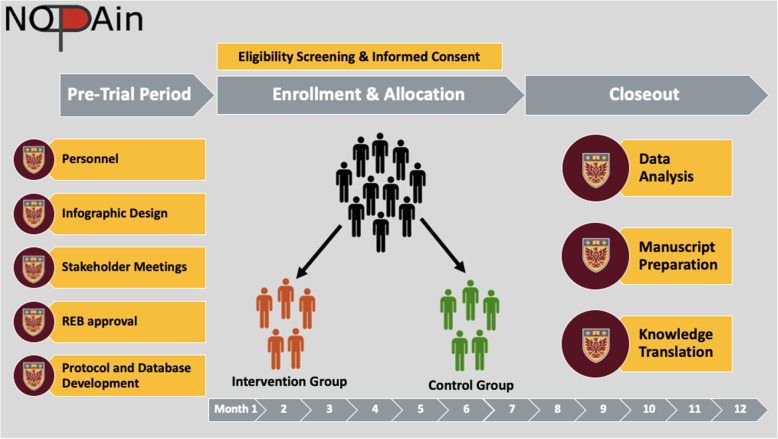
This is a multi-centre, RCT with a target sample size of 200 patients. Adult (18+ years of age) patients undergoing outpatient knee and shoulder arthroscopy will be randomized to a non-opioid postoperative protocol (intervention) or the current standard of care (control). The intervention will consist of a standardized non-opioid analgesic prescription, a limited rescue opioid prescription, and a patient education infographic. The control is defined as the treating surgeons' pre-trial postoperative analgesic regimen. Exclusion criteria include chronic opioid use, concomitant open surgery, contraindications to the prescribed analgesics or ongoing workers compensation/litigation. The primary outcome is OMEs consumed at 6 weeks postoperatively. Secondary outcomes will include patient-reported pain and satisfaction, quantity of OMEs prescribed, number of opioid refills, and any adverse events up to 6 weeks postoperatively. Utilizing the intention to treat principle for all analyses, independent samples t-test and presented with a p-value as well as a mean difference (MD) with 95% confidence intervals (CIs) will be performed for primary and secondary outcomes.
The ongoing opioid epidemic and overprescribing of opioids in orthopaedics serve as the rationale for this trial. There is a lack of evidence upon which to develop post-operative pain management guidelines for patients undergoing arthroscopic surgery. A prospective evaluation of this relatively inexpensive intervention will demonstrate whether an explicit effort to reduce the number of opioids prescribed results in a reduction in the amount of opioids consumed and help to inform future studies and guidelines.
The NO PAin trial has been prospectively registered with clinicaltrials.gov ( NCT04566250 ).
在关节镜膝关节和肩关节手术后,阿片类药物仍然是控制术后疼痛的首选镇痛药物。尽管它们被广泛使用,但针对术后阿片类药物处方的循证临床实践指南有限。加拿大关节镜手术后非阿片类药物处方(NO PAin)试验是一项随机对照试验(RCT),旨在确定与常规护理相比,术后疼痛的非阿片类镇痛方法是否会减少接受门诊膝关节和肩关节关节镜手术的患者口服吗啡等效物(OME)的消耗量。
这是一项多中心 RCT,目标样本量为 200 名患者。接受门诊膝关节和肩关节关节镜手术的成年(18 岁及以上)患者将被随机分配到非阿片类术后方案(干预组)或当前标准护理(对照组)。干预措施包括标准化的非阿片类镇痛处方、有限的解救阿片类药物处方和患者教育信息图。对照组定义为手术医生术前术后的镇痛方案。排除标准包括慢性阿片类药物使用、同时进行开放性手术、规定的镇痛药禁忌或正在进行的工人赔偿/诉讼。主要结局是术后 6 周时 OME 的消耗量。次要结局将包括患者报告的疼痛和满意度、处方 OME 的数量、阿片类药物的补充数量以及术后 6 周内的任何不良事件。所有分析均采用意向治疗原则,对于主要和次要结局,将进行独立样本 t 检验,并以 p 值以及 95%置信区间(CI)的均值差(MD)表示。
正在进行的阿片类药物流行和矫形外科过度开阿片类药物处方是该试验的基本原理。在制定接受关节镜手术患者的术后疼痛管理指南方面,缺乏证据。对这种相对廉价的干预措施进行前瞻性评估将表明,明确减少开阿片类药物处方的数量是否会导致阿片类药物消耗量减少,并有助于为未来的研究和指南提供信息。
NO PAin 试验已在 clinicaltrials.gov 上进行了前瞻性注册(NCT04566250)。