Brewer John Stephen, Zee Peter
Department of Biology University of Mississippi University MS USA.
Ecol Evol. 2021 Mar 22;11(10):5111-5120. doi: 10.1002/ece3.7404. eCollection 2021 May.
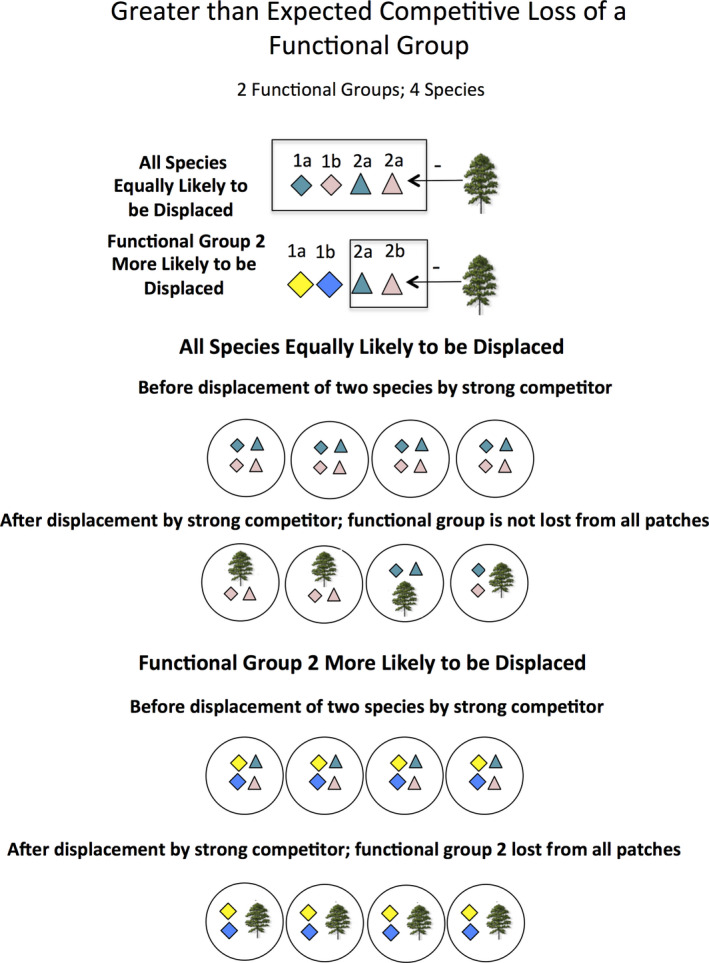
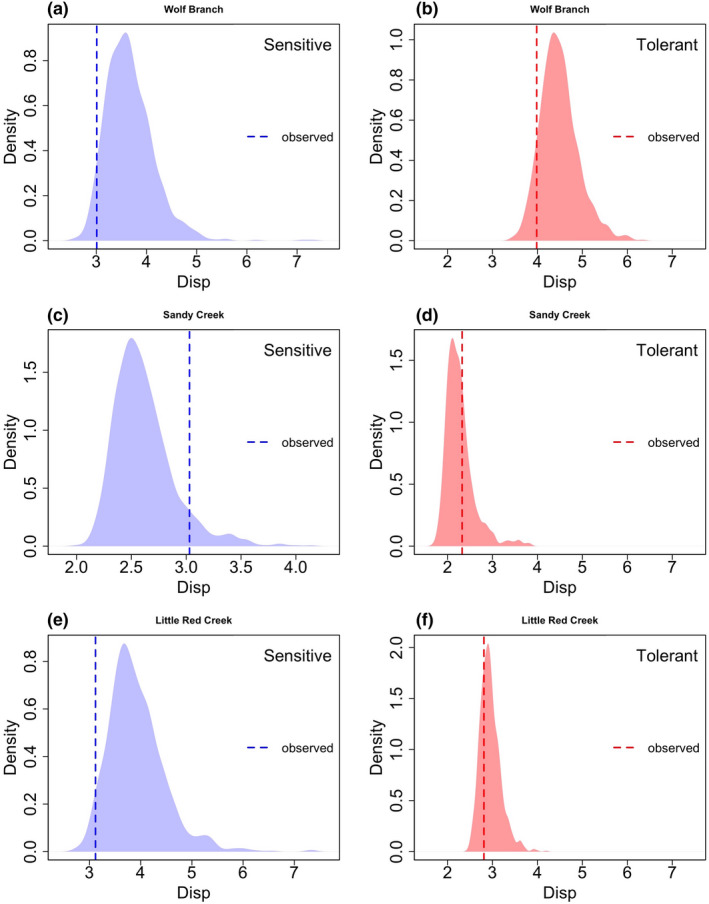
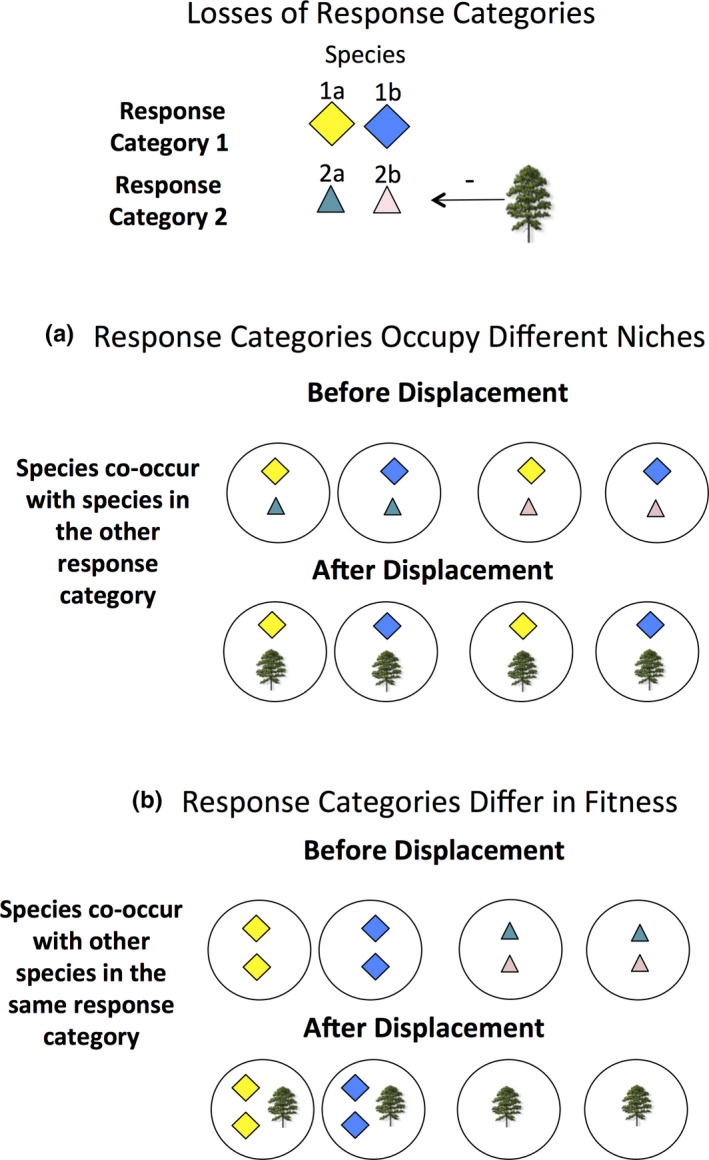
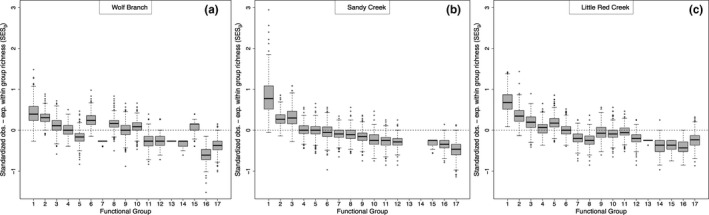
Trait differences among plant species can favor species coexistence. The role that such differences play in the assembly of diverse plant communities maintained by frequent fires remains unresolved. This lack of resolution results in part from the possibility that species with similar traits may coexist because none has a significant fitness advantage and in part from the difficulty of experimental manipulation of highly diverse assemblages dominated by perennial species. We examined a 65-year chronosequence of losses of herbaceous species following fire suppression (and subsequent encroachment by ) in three wet longleaf pine savannas. We used cluster analysis, similarity profile permutation tests, and k-R cluster analysis to identify statistically significant functional groups. We then used randomization tests to determine if the absence of functional groups near pines was greater (or less) than expected by chance. We also tested whether tolerant and sensitive species were less (or more) likely to co-occur by chance in areas in savannas away from pines in accordance with predictions of modern coexistence theory. Functional group richness near pines was lower than expected from random species extirpations. Wetland perennials with thick rhizomes and high leaf water content, spring-flowering wetland forbs (including ), orchids, spp., and club mosses were more likely to be absent near pines than expected by chance. C3 grasses and sedges with seed banks and tall, fall-flowering C4 grasses were less likely to be absent near pines than expected by chance. Species sensitive to pine encroachment were more likely to co-occur with other such species away from pines at two of the three sites. Results suggest that herb species diversity in frequently burned wet savannas is maintained in part by a weak fitness (e.g., competitive) hierarchy among herbs, and not as a result of trait differences among co-occurring species.
植物物种之间的性状差异有利于物种共存。这些差异在由频繁火灾维持的多样植物群落的组装过程中所起的作用仍未得到解决。这种缺乏解决方案的部分原因在于,具有相似性状的物种可能共存,因为没有一个物种具有显著的适合度优势;另一部分原因在于,对以多年生物种为主的高度多样组合进行实验操作存在困难。我们研究了三个湿润长叶松稀树草原在火灾抑制(以及随后被侵占)后草本物种损失的65年时间序列。我们使用聚类分析、相似性剖面置换检验和k-R聚类分析来识别具有统计学意义的功能组。然后,我们使用随机化检验来确定松树附近功能组的缺失是否大于(或小于)偶然预期。我们还根据现代共存理论的预测,测试了耐受物种和敏感物种在稀树草原远离松树的区域偶然共现的可能性是否更低(或更高)。松树附近的功能组丰富度低于随机物种灭绝预期。具有粗壮根茎和高叶片含水量的湿地多年生植物、春季开花的湿地草本植物(包括)、兰花、 spp.和石松在松树附近比偶然预期更有可能缺失。具有种子库的C3禾本科植物和莎草以及高大的秋季开花C4禾本科植物在松树附近比偶然预期更不可能缺失。在三个地点中的两个地点,对松树侵占敏感的物种更有可能在远离松树的地方与其他此类物种共现。结果表明,在频繁燃烧的湿润稀树草原中,草本物种多样性部分是由草本植物之间较弱的适合度(例如竞争)等级维持的,而不是由于共存物种之间的性状差异。