Garcia Danilo, Nima Ali Al, Kazemitabar Maryam, Amato Clara, Lucchese Franco, Mihailovic Marko, Kijima Nobuhiko
Department of Behavioral Sciences and Learning, Linköping University, Linköping, Sweden.
Centre for Ethics, Law and Mental Health (CELAM), University of Gothenburg, Gothenburg, Sweden.
PeerJ. 2021 May 12;9:e11432. doi: 10.7717/peerj.11432. eCollection 2021.
Health assessment among individuals with mental health problems often involves measures of ill-being (e.g., anxiety, depression). Health is, however, defined as a state of physical, mental and social well-being and not merely the absence of disease (WHO, 1948, 2001). Hence, in order to address mental illness during the 21 century, we need to develop methods for the prevention, identification and treatment of mental illness; but also, for the promotion, identification, and maintenance of well-being. In this context, over three decades of subjective well-being research have resulted in the development of measures of positive aspects of human life, such as the Satisfaction with Life Scale (Diener et al., 1985). Our aim was to investigate the psychometric properties of the Satisfaction with Life Scale in a Swedish population of individuals with mental illness using both Classical Test Theory (CTT) and Item Response Theory (IRT).
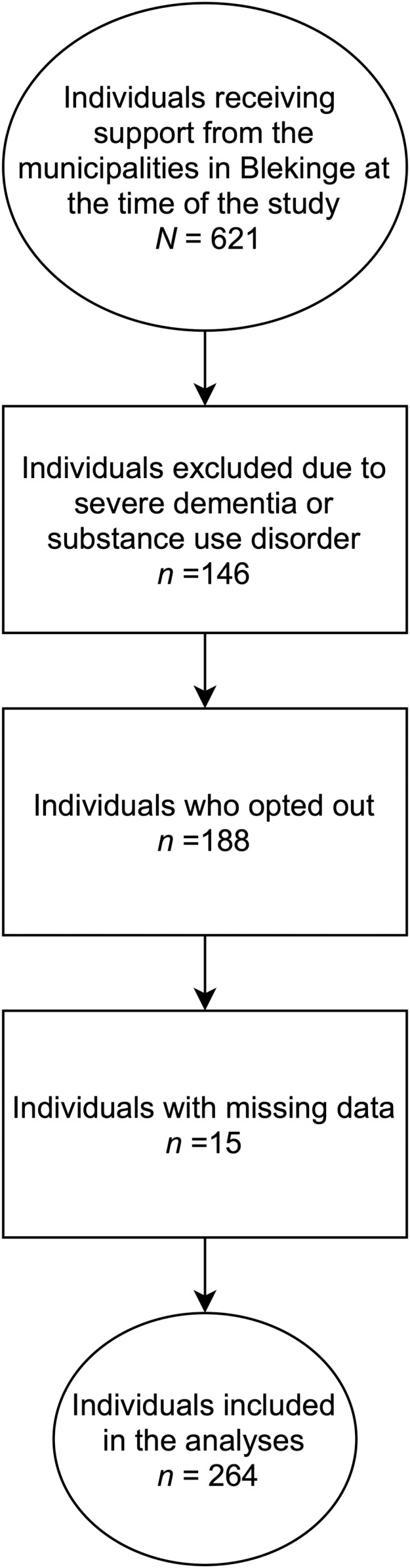
A total of 264 participants (age mean = 43.46, = 13.31) diagnosed with different types of mental illness answered to the Swedish version of the Satisfaction with Life Scale (five items, 7-point scale: 1 = , 7 = ).
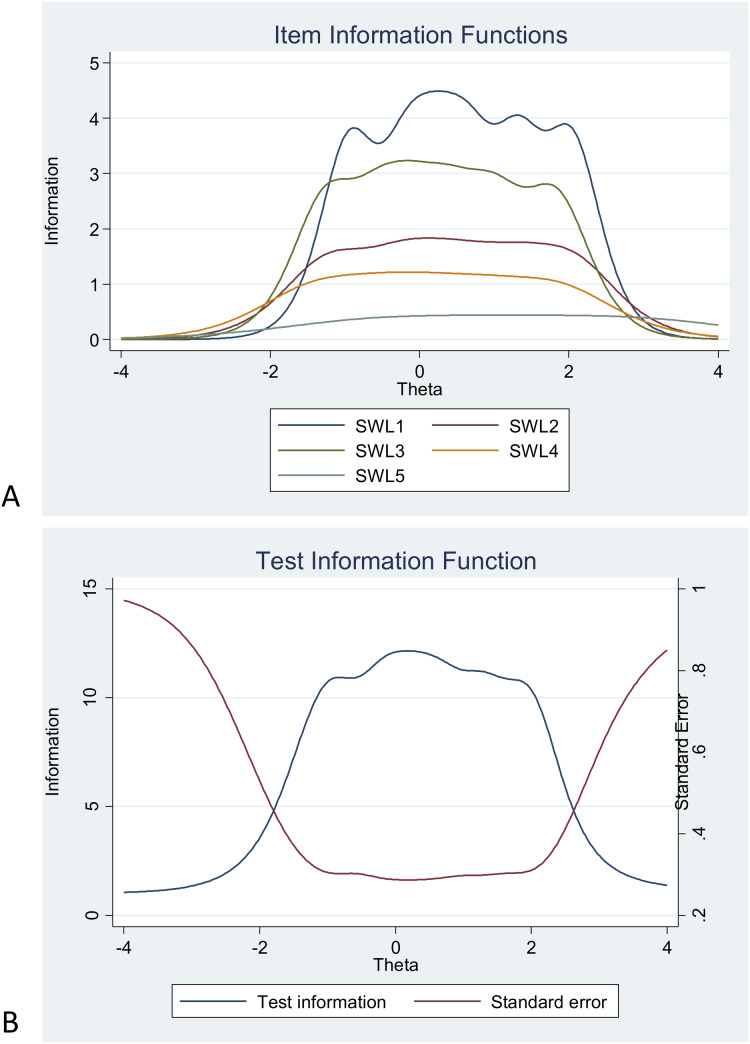
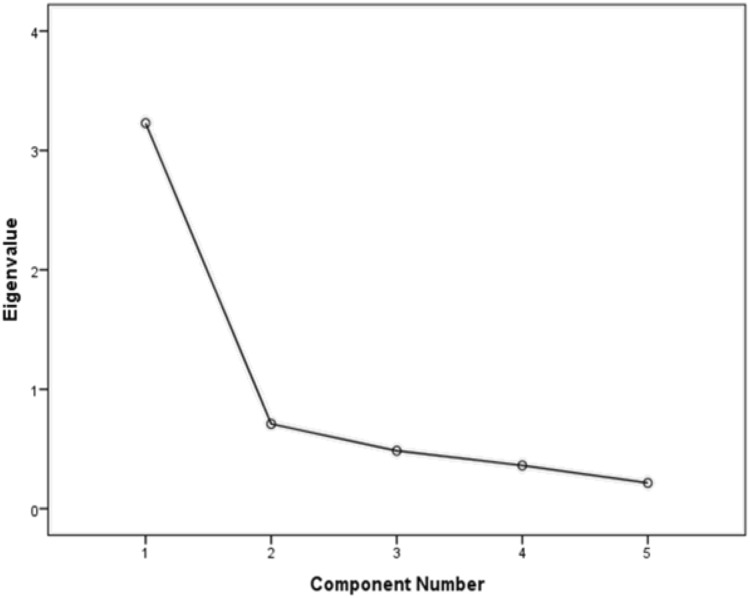
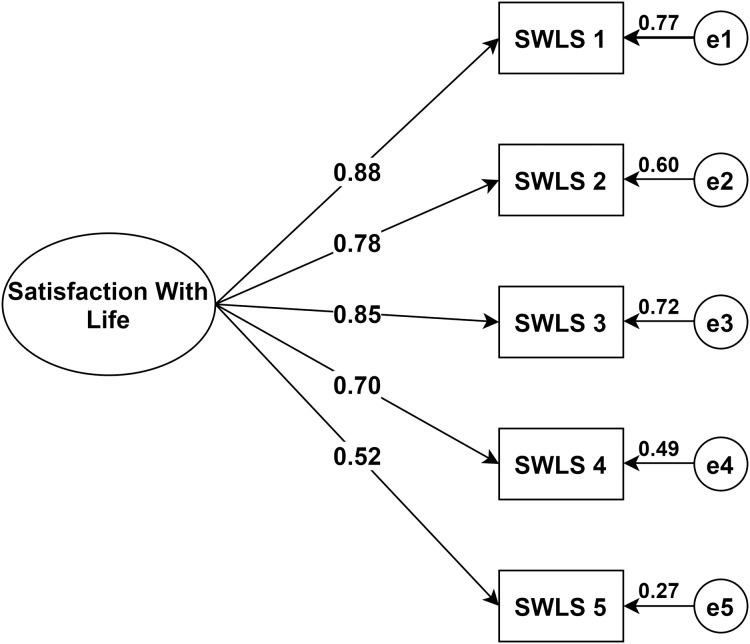
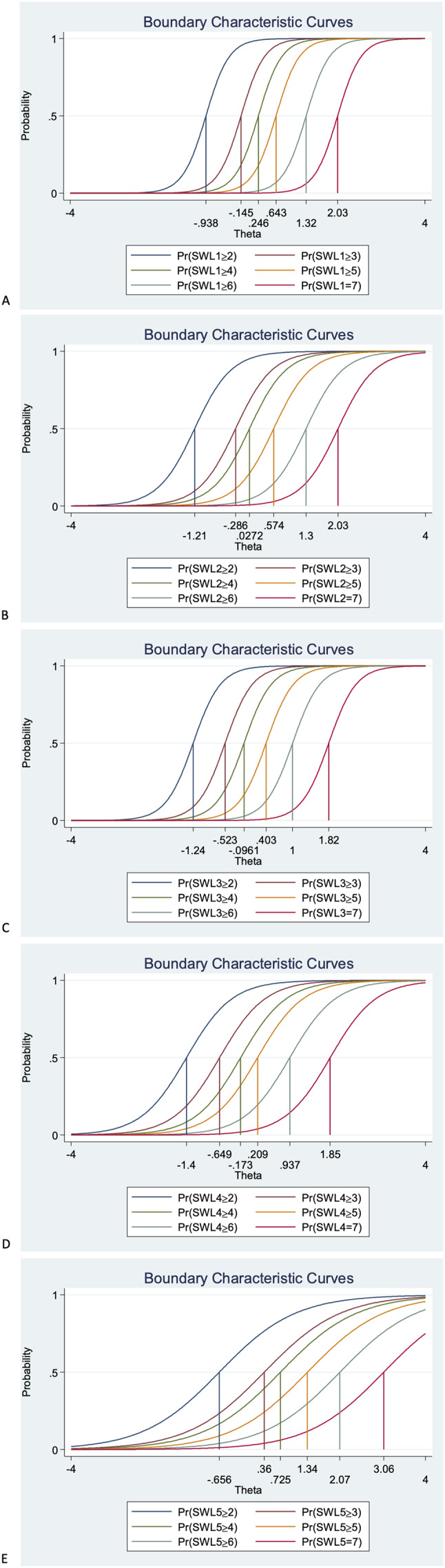
We found positive and significant relationships between the five items of the scale ( ranging from 0.37 to 0.75), good reliability ( = 0.86), and that the one-factor solution had best goodness of fit (loadings between 0.52-0.88, < 0.001). Additionally, there were no significant differences in comparative fit indexes regarding gender and occupation status. All items had high discrimination values (between 1.95-3.81), but item 5 ("If I could live my life over, I would change almost nothing"); which had a moderate discrimination value (1.17) and the highest estimated difficulty on response 7 (3.06). Moreover, item 2 ("The conditions of my life are excellent") had less discrimination and redundant difficulty with both item 1 ("In most ways my life is close to my ideal"; 2.03) on response 7 and with item 3 ("I am satisfied with my life"; -1.21) on response 1. The five items together provided good information, with especial good reliability and small standard error within -1.00 up to about 2.00 and the highest amount of test information at 0.00 of the level of life satisfaction within this population.
Consistent with previous research, the scale had good reliability and provided good information across most of the latent trait range. In addition, within this population, sociodemographic factors such as gender and occupation status do not influence how individuals respond to the items in the scale. However, the items couldn't measure extreme levels of low/high life satisfaction. We suggest replication of these findings, the test of additional items, and the modification of items 2 and 5 in order to use the scale among individuals with mental illness.
对有心理健康问题的个体进行健康评估通常涉及对幸福感缺失(如焦虑、抑郁)的测量。然而,健康被定义为身体、心理和社会幸福感的一种状态,而不仅仅是没有疾病(世界卫生组织,1948年,2001年)。因此,为了在21世纪应对精神疾病,我们不仅需要开发预防、识别和治疗精神疾病的方法,还需要开发促进、识别和维持幸福感的方法。在此背景下,三十多年的主观幸福感研究已促成了对人类生活积极方面的测量方法的发展,如生活满意度量表(迪纳等人,1985年)。我们的目的是使用经典测验理论(CTT)和项目反应理论(IRT)来研究生活满意度量表在瑞典患有精神疾病的人群中的心理测量特性。
共有264名被诊断患有不同类型精神疾病的参与者(平均年龄 = 43.46,标准差 = 13.31)回答了瑞典版的生活满意度量表(五个项目,7分量表:1 = ,7 = )。
我们发现该量表的五个项目之间存在正向且显著的关系(范围从0.37至0.75),具有良好的信度(克朗巴哈系数 = 0.86),并且单因素模型具有最佳的拟合优度(因子载荷在0.52 - 0.88之间,p < 0.001)。此外,在比较拟合指数方面,性别和职业状况没有显著差异。所有项目具有较高的区分度值(在1.95 - 3.81之间),但项目5(“如果我能重新过我的生活,我几乎不会改变任何事情”)具有中等区分度值(1.17),并且在回答7时估计难度最高(3.06)。此外,项目2(“我生活的条件非常好”)在回答7时与项目1(“在大多数方面我的生活接近我的理想”;2.03)以及在回答1时与项目3(“我对我的生活感到满意”; - 1.21)的区分度较低且存在冗余难度。这五个项目共同提供了良好的信息,在 - 1.00至约2.00范围内具有特别良好的信度和较小的标准误差,并且在该人群的生活满意度水平为0.00时测试信息最多。
与先前的研究一致,该量表具有良好信度,并且在大多数潜在特质范围内提供了良好的信息。此外,在该人群中,性别和职业状况等社会人口统计学因素不会影响个体对量表项目的回答方式。然而,这些项目无法测量极低/极高水平的生活满意度。我们建议重复这些研究结果,并测试其他项目,以及对项目2和项目5进行修改,以便在患有精神疾病的个体中使用该量表。