Torabi Somayyeh, Anjamrooz Seyed Hadi, Zeraatpisheh Zahra, Aligholi Hadi, Azari Hassan
Department of Anatomical Sciences, School of Medicine, Shiraz University of Medical Sciences, Shiraz, Iran.
Department of Neuroscience, School of Advanced Medical Sciences and Technologies, Shiraz University of Medical Sciences, Shiraz, Iran.
Anat Cell Biol. 2021 Sep 30;54(3):350-360. doi: 10.5115/acb.20.299.
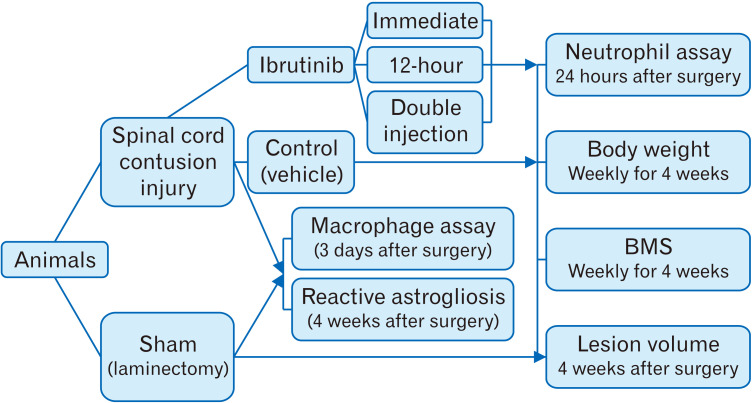
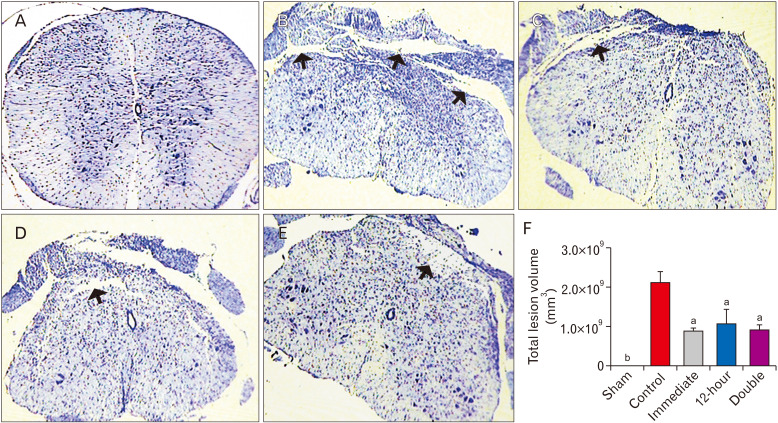
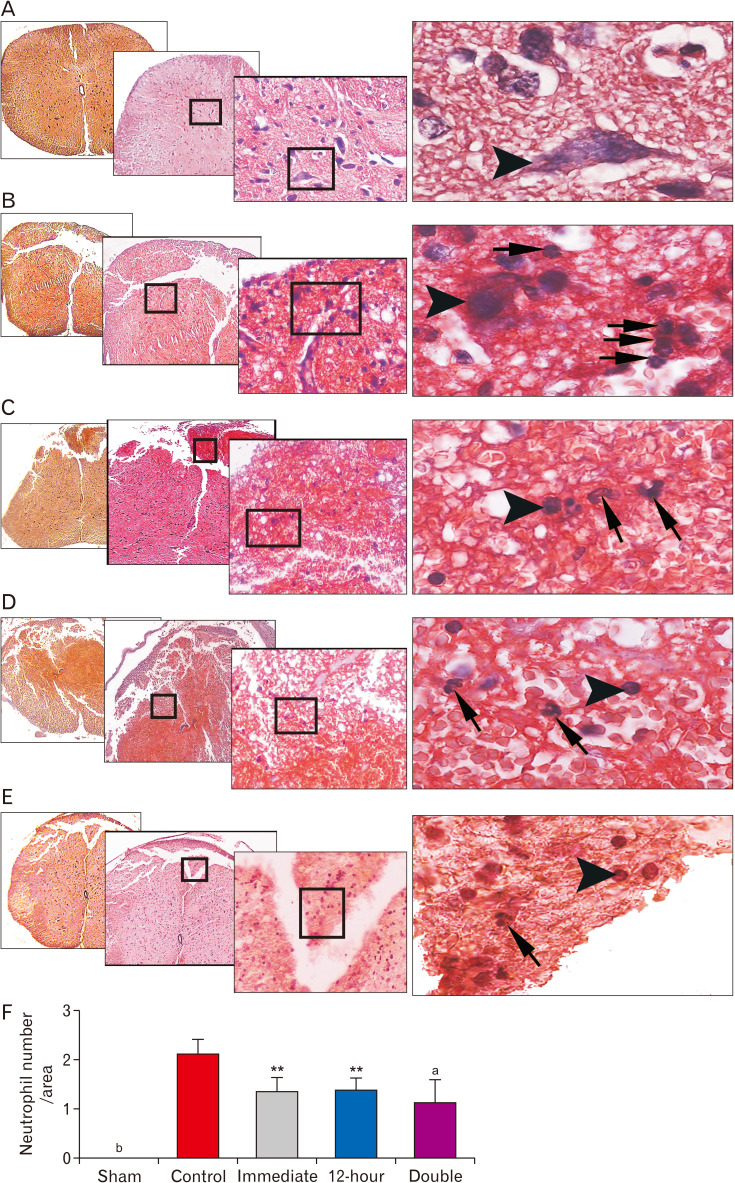
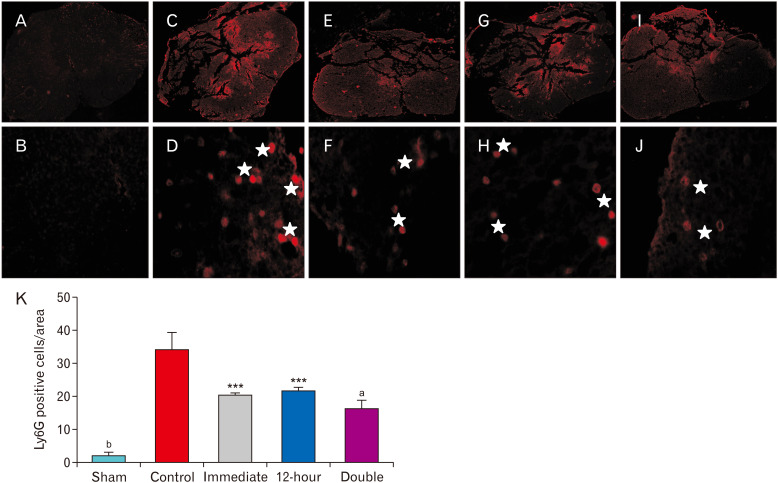
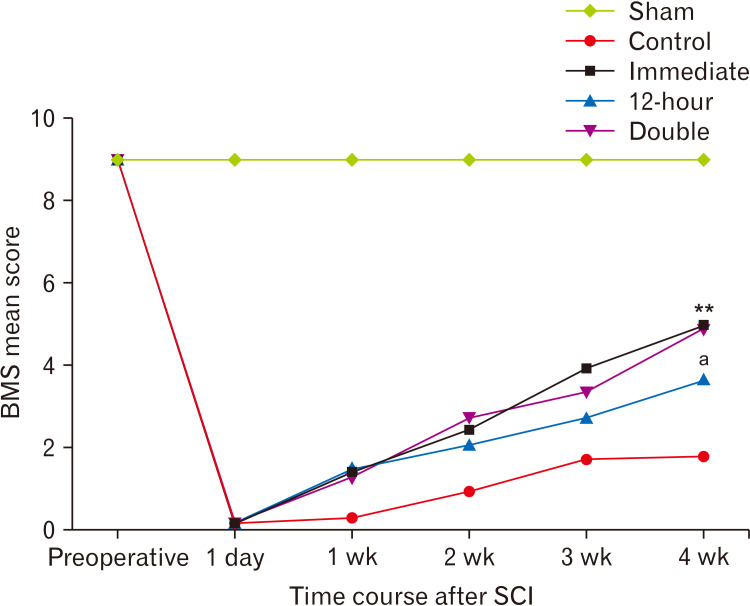
Following acute spinal cord injury (SCI), excessive recruitment of neutrophils can result in inflammation, neural tissue loss and exacerbation of neurological outcomes. Ibrutinib is a bruton's tyrosine kinase inhibitor in innate immune cells such as the neutrophils that diminishes their activation and influx to the site of injury. The present study evaluated the efficacy of ibrutinib administration in the acute phase of SCI on neural tissue preservation and locomotor recovery. Ibrutinib was delivered intravenously at 3.125 mg/kg either immediately, 12 hours after, or both immediately and 12 hours after SCI induction in adult male C57BL/6 mice. Neutrophil influx into the lesion area was evaluated 24 hours following SCI using light microscopy and immunohistochemistry methods. Animals' body weight changes were recorded, and their functional motor recovery was assessed based on the Basso mouse scale during 28 days after treatment. Finally, spinal cord lesion volume was estimated by an unbiased stereological method. While animals' weight in the control group started to increase one week after injury, it stayed unchanged in treatment groups. However, the double injection of ibrutinib led to a significantly lower body weight compared to the control group at 4 weeks post-injury. Mean neutrophil counts per visual field and the lesion volume were significantly decreased in all ibrutinib-treated groups. In addition, ibrutinib significantly improved locomotor functional recovery in all treated groups, especially in immediate and double-injection groups. Neural tissue protection and locomotor functional recovery suggest ibrutinib treatment as a potent immunotherapeutic intervention for traumatic SCI that warrants clinical testing.
急性脊髓损伤(SCI)后,中性粒细胞过度募集可导致炎症、神经组织损失及神经功能结局恶化。依鲁替尼是一种在中性粒细胞等固有免疫细胞中发挥作用的布鲁顿酪氨酸激酶抑制剂,可减少其激活及向损伤部位的流入。本研究评估了依鲁替尼在SCI急性期给药对神经组织保护和运动功能恢复的疗效。在成年雄性C57BL/6小鼠中,于脊髓损伤诱导后即刻、12小时后或即刻及12小时后静脉注射3.125mg/kg依鲁替尼。在脊髓损伤后24小时,采用光学显微镜和免疫组织化学方法评估中性粒细胞向损伤区域的流入情况。记录动物体重变化,并在治疗后28天内根据巴索小鼠量表评估其运动功能恢复情况。最后,采用无偏倚立体学方法估计脊髓损伤体积。对照组动物体重在损伤后一周开始增加,而治疗组体重保持不变。然而,与对照组相比,损伤后4周时,依鲁替尼双次注射组体重显著降低。在所有依鲁替尼治疗组中,每个视野的平均中性粒细胞计数和损伤体积均显著降低。此外,依鲁替尼在所有治疗组中均显著改善了运动功能恢复,尤其是即刻注射组和双次注射组。神经组织保护和运动功能恢复表明,依鲁替尼治疗作为一种有效的免疫治疗干预措施,可用于创伤性SCI,值得进行临床试验。