Department of Microbiology and Clinical Immunology, Faculty of Veterinary Medicine, University of Warmia and Mazury in Olsztyn, Oczapowskiego Street 13, 10-719, Olsztyn, Poland.
Department of Fish Pathology and Immunology, Stanisław Sakowicz Inland Fisheries Institute, Olsztyn, Poland.
BMC Vet Res. 2021 May 25;17(1):198. doi: 10.1186/s12917-021-02905-x.
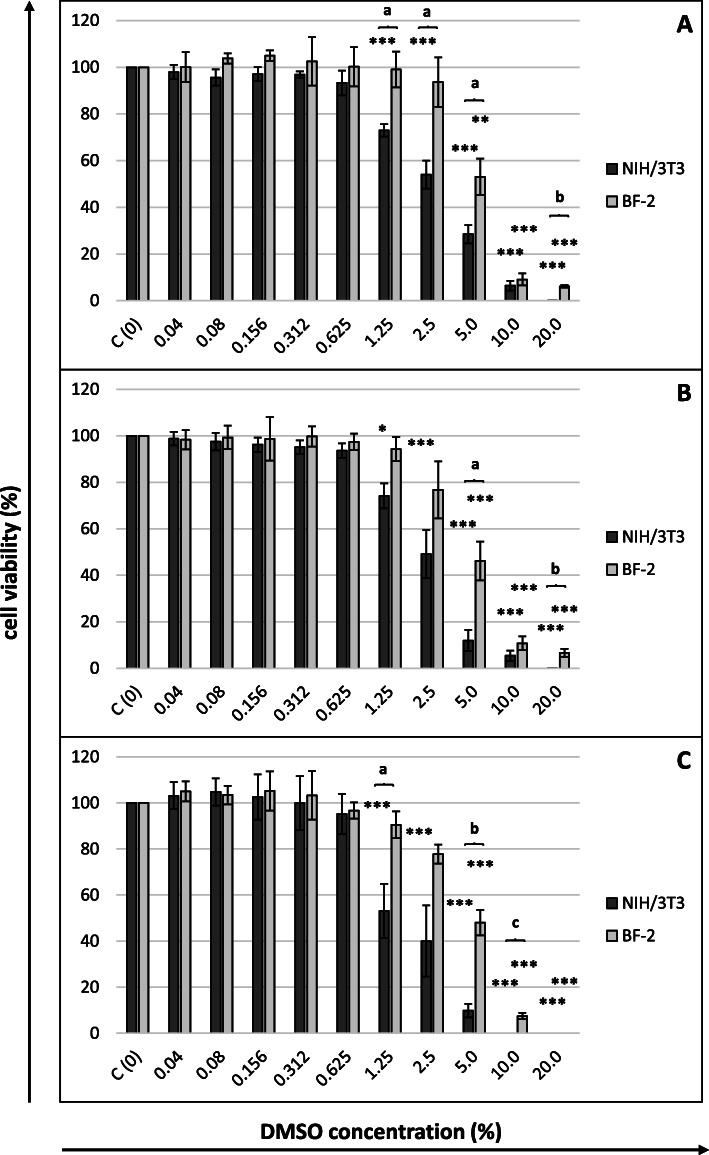
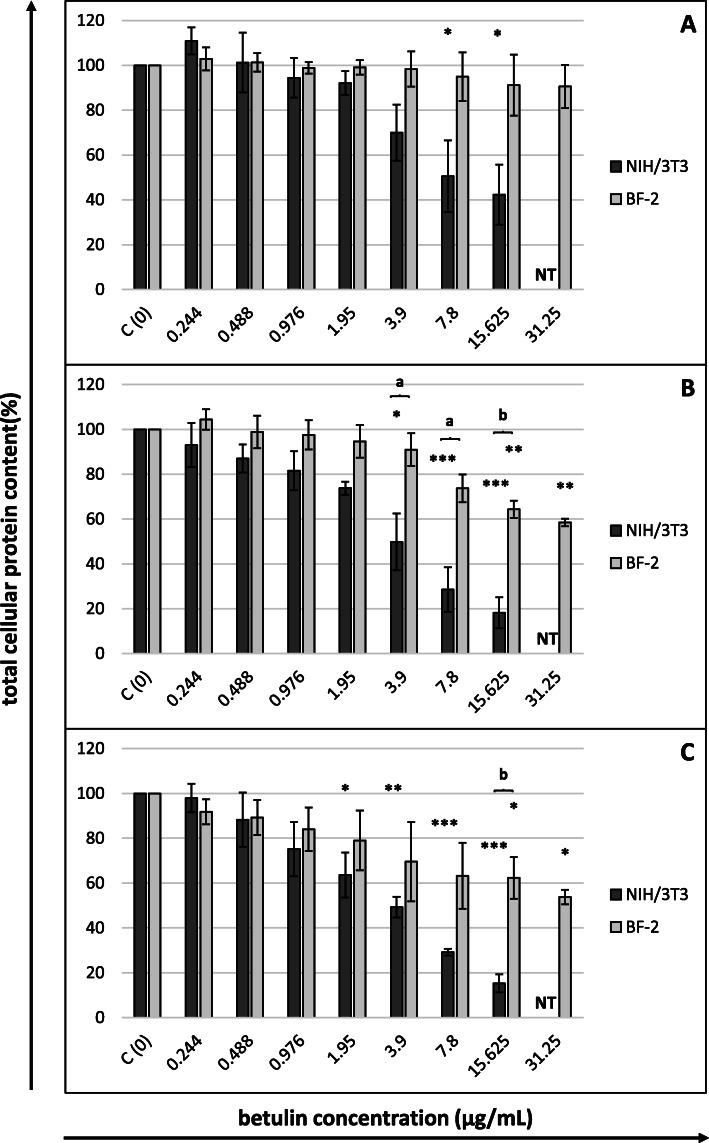
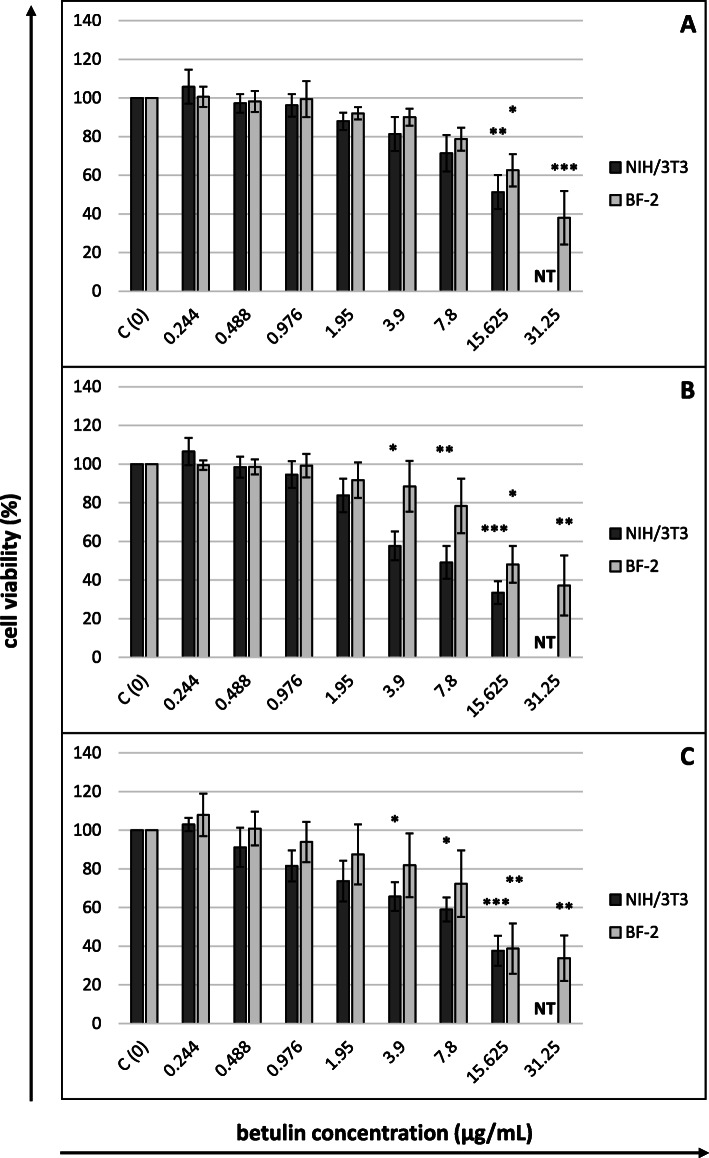
Betulin, a natural pentacyclic triterpene with the lupane structure that is present in significant amounts in the outer bark of birch, is known for its broad array of biological and pharmacological properties. Betulin has attracted attention as a potential, natural-origin antimicrobial substance. The literature describes it as selectively toxic to neoplastic cells but safe for normal cells. The research aim was to evaluate the basal cytotoxicity of betulin towards fish (BF-2) and murine (NIH/3T3) fibroblasts. We used four colorimetric tests that provide a preliminary evaluation of possible mechanisms of the cytotoxicity of a compound to assess the degree of the toxicity of betulin after 24, 48 and 72 h of incubation with cells: the MTT assay (mitochondrial activity assessment), the NRU assay (lysosomal membrane integrity assessment), the LDH assay (cellular membrane integrity assessment) and the SRB assay (total cellular protein content determination).
The results revealed an exceptionally high sensitivity of mitochondria to the effect of betulin, with the other endpoints being less sensitive. Although murine fibroblasts were more vulnerable to the toxic effect of betulin than fish fibroblasts, the betulin CC values for both cell lines were comparable with analogous IC values determined by other researchers in studies involving cancerous cells.
The results indicate the need to verify the claim about the selective toxicity of betulin towards malignant cells and to conduct safety/toxicity tests before any potential therapeutic use of betulin in veterinary medicine.
白桦树皮中含有大量具有羽扇豆烷结构的天然五环三萜白桦脂醇,其具有广泛的生物学和药理学特性。白桦脂醇作为一种有潜力的天然来源的抗菌物质而受到关注。文献描述其对肿瘤细胞具有选择性毒性,但对正常细胞安全。本研究旨在评估白桦脂醇对鱼类(BF-2)和鼠类(NIH/3T3)成纤维细胞的基础细胞毒性。我们使用了四种比色试验,这些试验提供了对化合物细胞毒性可能机制的初步评估,以评估白桦脂醇在与细胞孵育 24、48 和 72 小时后的毒性程度:MTT 法(线粒体活性评估)、NRU 法(溶酶体膜完整性评估)、LDH 法(细胞膜完整性评估)和 SRB 法(总细胞蛋白含量测定)。
结果显示,线粒体对白桦脂醇的作用异常敏感,而其他终点则不那么敏感。虽然鼠类成纤维细胞比鱼类成纤维细胞对白桦脂醇的毒性作用更敏感,但两种细胞系的白桦脂醇 CC 值与其他研究人员在涉及癌细胞的研究中确定的类似 IC 值相当。
结果表明,有必要验证白桦脂醇对恶性细胞具有选择性毒性的说法,并在兽医医学中任何潜在的治疗用途之前进行安全性/毒性测试。