Department of Emergency and Critical Care Medicine, Guangdong Provincial People's Hospital, Guangdong Academy of Medical Sciences, Guangzhou, 510080, China.
Department of Cardiology, Guangdong Provincial People's Hospital, Guangdong Academy of Medical Sciences, Guangdong Provincial Cardiovascular Institute, Guangzhou, 510080, China.
Nutr J. 2021 May 25;20(1):46. doi: 10.1186/s12937-021-00702-8.
Could nutritional status serve as prognostic factors for coronavirus disease 2019 (COVID-19)? The present study evaluated the clinical and nutritional characteristics of COVID-19 patients and explored the relationship between risk for malnutrition at admission and in-hospital mortality.
A retrospective, observational study was conducted in two hospitals in Hubei, China. Confirmed cases of COVID-19 were typed as mild/moderate, severe, or critically ill. Clinical data and in-hospital death were collected. The risk for malnutrition was assessed using the geriatric nutritional risk index (GNRI), the prognostic nutritional index (PNI), and the Controlling Nutritional Status (CONUT) via objective parameters at admission.
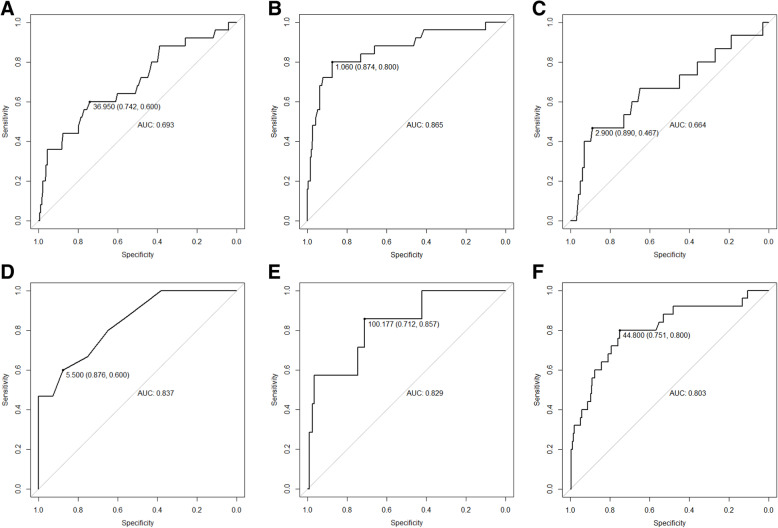
Two hundred ninety-five patients were enrolled, including 66 severe patients and 41 critically ill patients. Twenty-five deaths were observed, making 8.47% in the whole population and 37.88% in the critically ill subgroup. Patients had significant differences in nutrition-related parameters and inflammatory biomarkers among three types of disease severity. Patients with lower GNRI and PNI, as well as higher CONUT scores, had a higher risk of in-hospital mortality. The receiver operating characteristic curves demonstrated the good prognostic implication of GNRI and CONUT score. The multivariate logistic regression showed that baseline nutritional status, assessed by GNRI, PNI, or CONUT score, was a prognostic indicator for in-hospital mortality.
Despite variant screening tools, poor nutritional status was associated with in-hospital death in patients infected with COVID-19. This study highlighted the importance of nutritional screening at admission and the new insight of nutritional monitoring or therapy.
营养状况能否作为 2019 年冠状病毒病(COVID-19)的预后因素?本研究评估了 COVID-19 患者的临床和营养特征,并探讨了入院时营养不良风险与住院期间死亡率之间的关系。
本研究采用回顾性、观察性方法,在两家位于中国湖北的医院进行。将确诊的 COVID-19 病例分为轻症/普通型、重症和危重症。收集临床数据和住院期间死亡情况。采用老年营养风险指数(GNRI)、预后营养指数(PNI)和基于客观参数的控制营养状态(CONUT)评估入院时的营养不良风险。
共纳入 295 例患者,其中重症患者 66 例,危重症患者 41 例。观察到 25 例死亡,总人群的死亡率为 8.47%,危重症亚组的死亡率为 37.88%。三组疾病严重程度的患者在营养相关参数和炎症生物标志物方面存在显著差异。GNRI 和 PNI 较低、CONUT 评分较高的患者住院期间死亡风险较高。受试者工作特征曲线显示 GNRI 和 CONUT 评分具有良好的预后意义。多变量逻辑回归显示,入院时的营养状况(通过 GNRI、PNI 或 CONUT 评分评估)是住院期间死亡率的预后指标。
尽管筛查工具不同,但 COVID-19 感染患者的营养状况较差与住院期间死亡相关。本研究强调了入院时进行营养筛查的重要性,以及营养监测或治疗的新见解。