Department of Critical Care Medicine, Hubei Provincial Hospital of Traditional Chinese Medicine, Wuhan, China; Hubei Province Academy of Traditional Chinese Medicine, Wuhan, China.
Department of Critical Care Medicine, Renmin Hospital of Wuhan University, Wuhan, China.
Clin Nutr. 2021 Apr;40(4):2154-2161. doi: 10.1016/j.clnu.2020.09.040. Epub 2020 Oct 1.
To evaluate the nutritional risk and therapy in severe and critical patients with COVID-19.
A total of 523 patients enrolled from four hospitals in Wuhan, China. The inclusion time was from January 2, 2020 to February 15. Clinical characteristics and laboratory values were obtained from electronic medical records, nursing records, and related examinations.
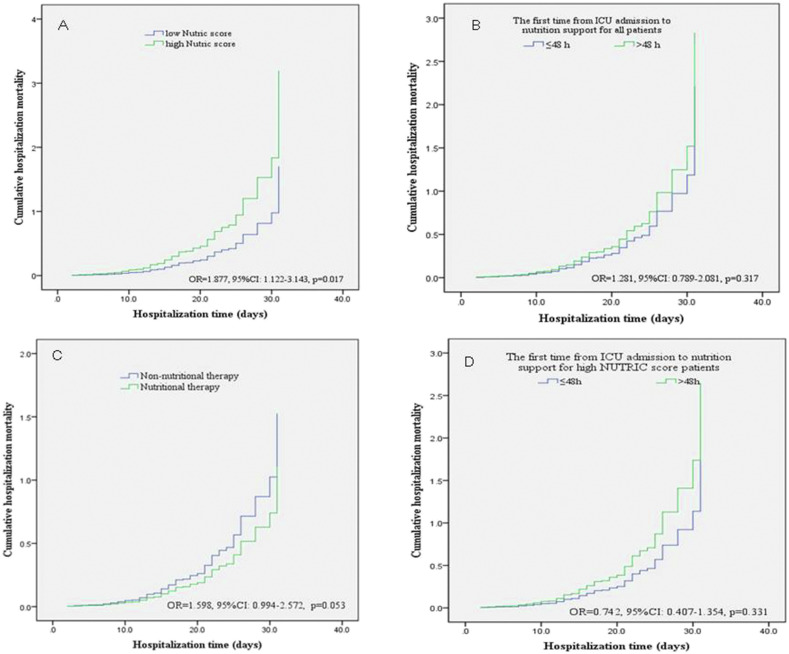
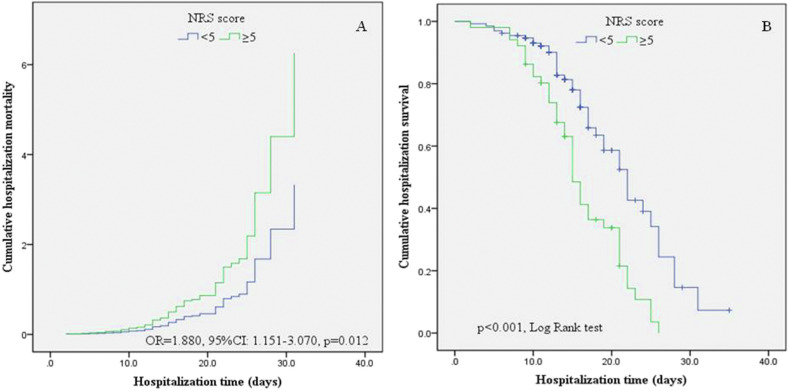
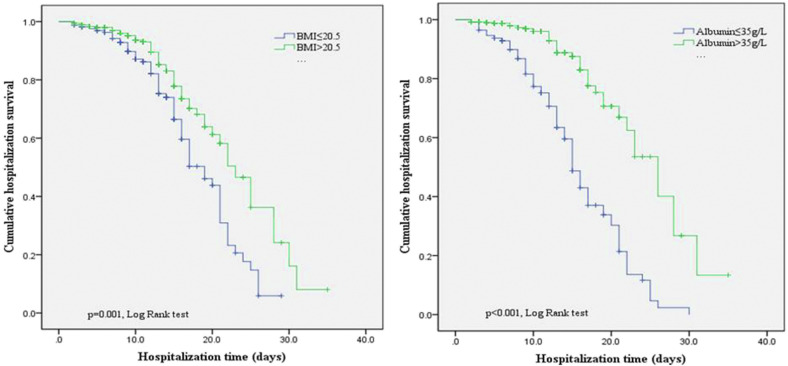
Of these patients, 211 (40.3%) were admitted to the ICU and 115 deaths (22.0%). Patients admitted to the ICU had lower BMI and plasma protein levels. The median Nutrition risk in critically ill (NUTRIC) score of 211 patients in the ICU was 5 (4, 6) and Nutritional Risk Screening (NRS) score was 5 (3, 6). The ratio of parenteral nutrition (PN) therapy in non-survivors was greater than that in survivors, and the time to start nutrition therapy was later than that in survivors. The NUTRIC score can independently predict the risk of death in the hospital (OR = 1.197, 95%CI: 1.091-1.445, p = 0.006) and high NRS score patients have a higher risk of poor outcome in the ICU (OR = 1.880, 95%CI: 1.151-3.070, p = 0.012). After adjusted age and sex, for each standard deviation increase in BMI, the risk of in-hospital death was reduced by 13% (HR = 0.871, 95%CI: 0.795-0.955, p = 0.003), and the risk of ICU transfer was reduced by 7% (HR = 0.932, 95%CI:0.885-0.981, p = 0.007). The in-hospital survival time of patients with albumin level ≤35 g/L was significantly decreased (15.9 d, 95% CI: 13.7-16.3, vs 24.2 d, 95% CI: 22.3-29.7, p < 0.001).
Severe and critical patients with COVID-19 have a high risk of malnutrition. Low BMI and protein levels were significantly associated with adverse events. Early nutritional risk screening and therapy for patients with COVID-19 are necessary.
评估 COVID-19 重症和危重症患者的营养风险和治疗情况。
本研究共纳入 2020 年 1 月 2 日至 2 月 15 日期间来自中国武汉 4 家医院的 523 例患者。临床特征和实验室值来自电子病历、护理记录和相关检查。
其中 211 例(40.3%)患者入住 ICU,115 例死亡(22.0%)。入住 ICU 的患者 BMI 和血浆蛋白水平较低。211 例 ICU 患者的重症营养风险指数(NUTRIC)中位数为 5(4,6),营养风险筛查(NRS)评分为 5(3,6)。非幸存者接受肠外营养(PN)治疗的比例大于幸存者,开始营养治疗的时间晚于幸存者。NUTRIC 评分可独立预测住院死亡风险(OR=1.197,95%CI:1.091-1.445,p=0.006),高 NRS 评分患者 ICU 预后不良的风险更高(OR=1.880,95%CI:1.151-3.070,p=0.012)。校正年龄和性别后,BMI 每增加 1 个标准差,住院死亡风险降低 13%(HR=0.871,95%CI:0.795-0.955,p=0.003),ICU 转出风险降低 7%(HR=0.932,95%CI:0.885-0.981,p=0.007)。白蛋白水平≤35 g/L 的患者住院生存率明显降低(15.9 d,95%CI:13.7-16.3,vs 24.2 d,95%CI:22.3-29.7,p<0.001)。
COVID-19 重症和危重症患者存在较高的营养不良风险。低 BMI 和蛋白水平与不良事件显著相关。COVID-19 患者早期进行营养风险筛查和治疗是必要的。