Department of Ophthalmology and Visual Sciences, University of Texas Medical Branch, 301 University Boulevard, Galveston, TX, 77555-0144, USA.
Department of Biochemistry and Molecular Biology, University of Texas Medical Branch, 301 University Boulevard, Galveston, TX, 77555-0144, USA.
Acta Neuropathol Commun. 2021 May 25;9(1):97. doi: 10.1186/s40478-021-01195-6.
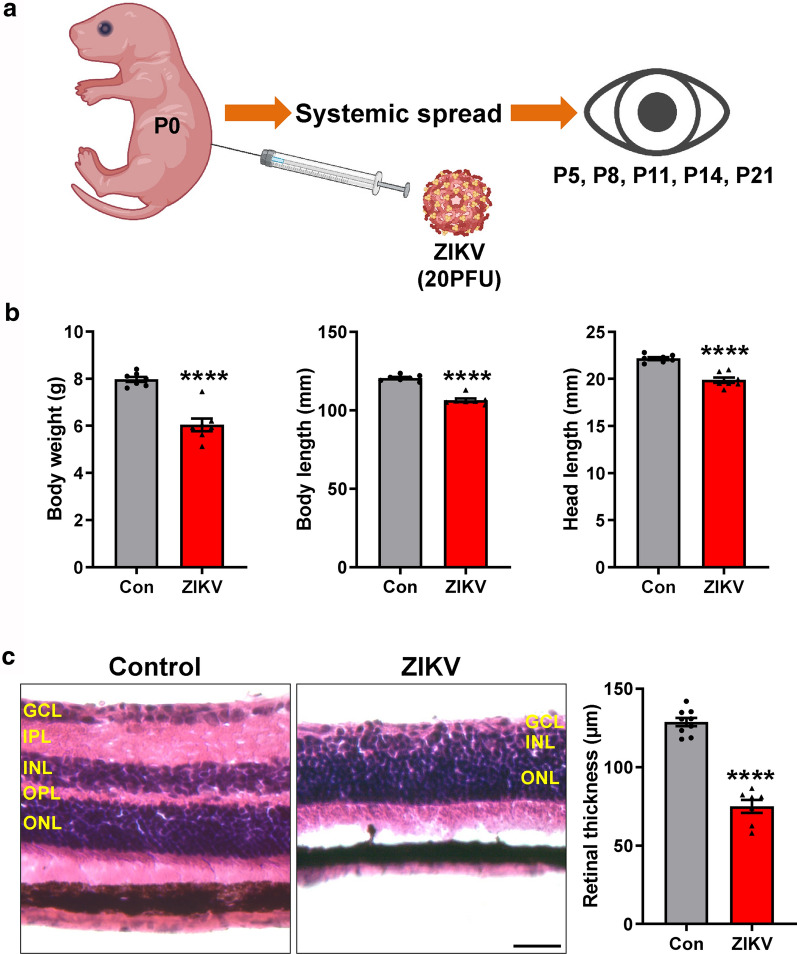
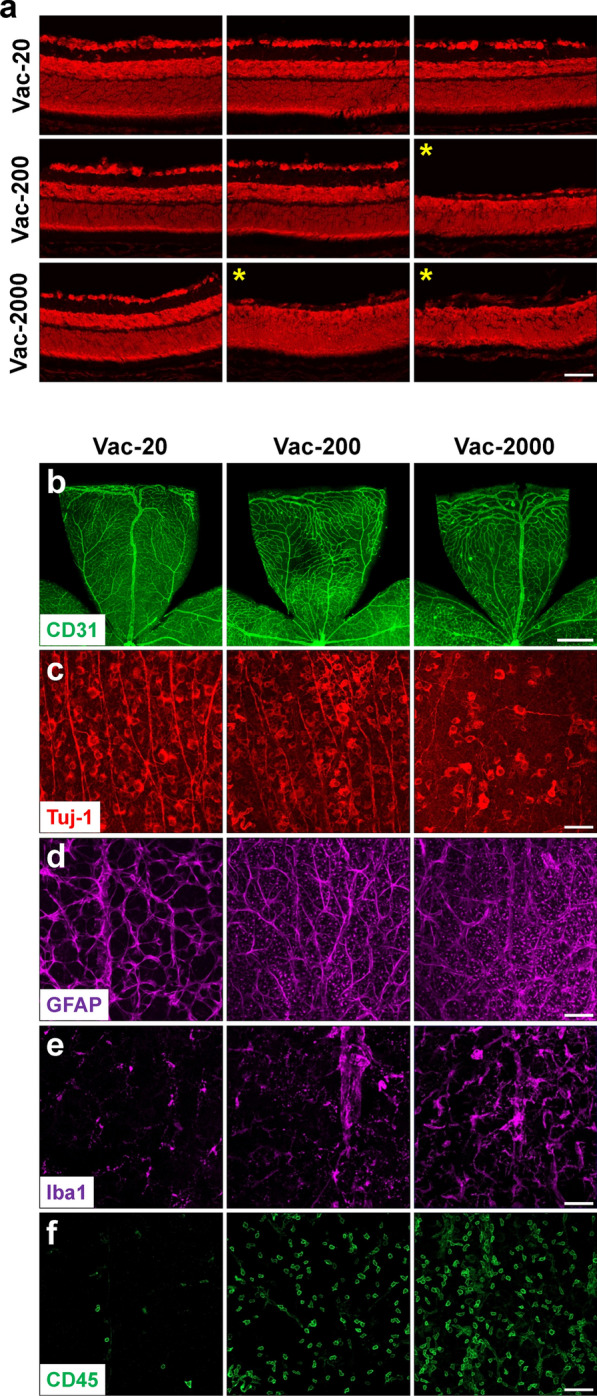
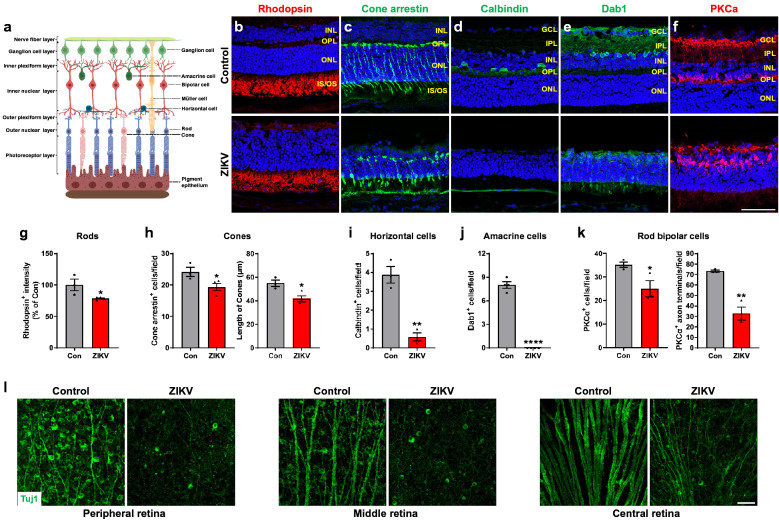
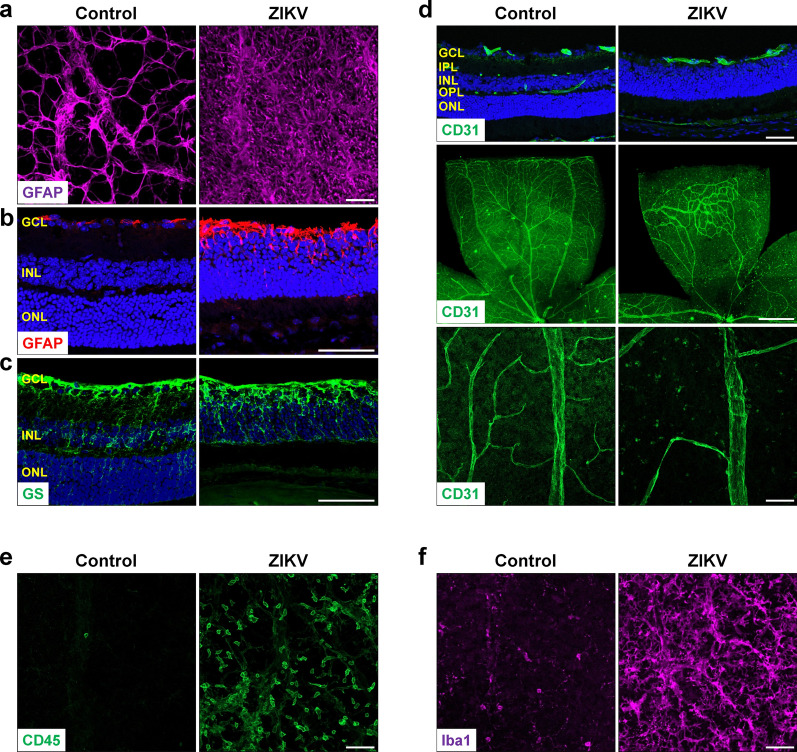
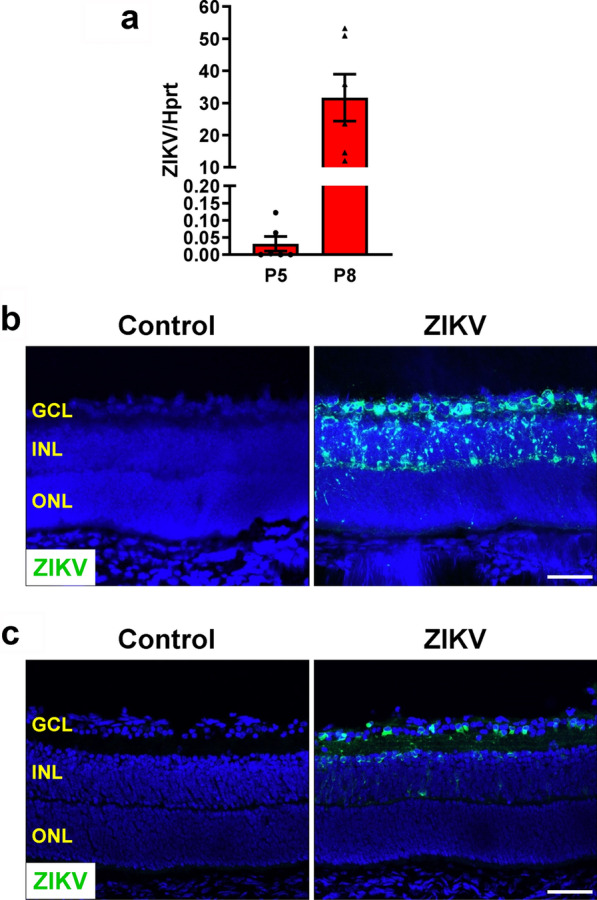
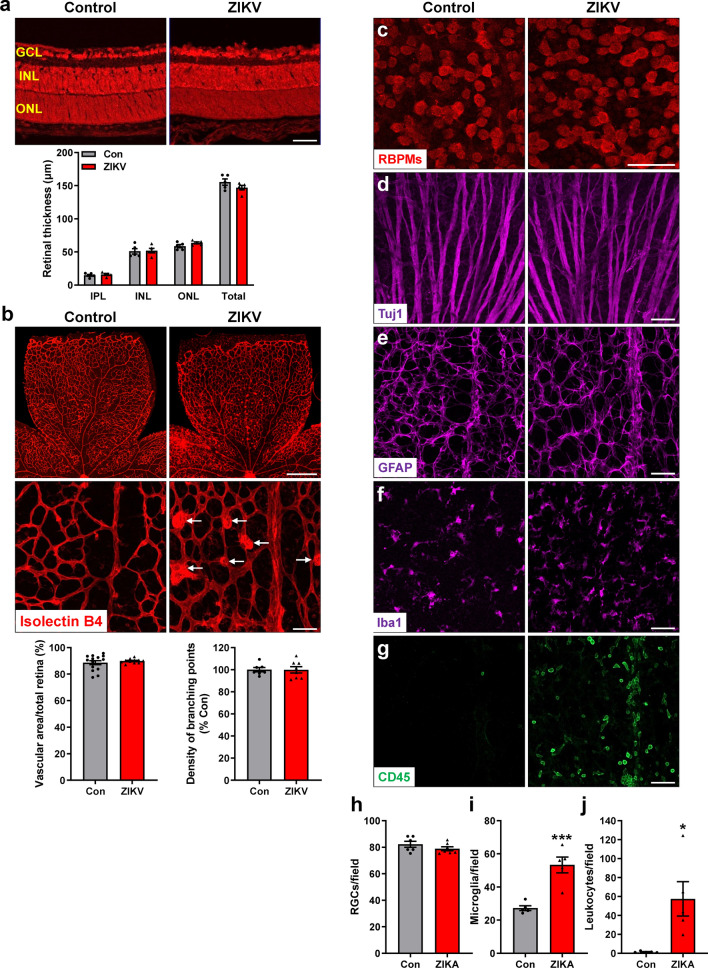
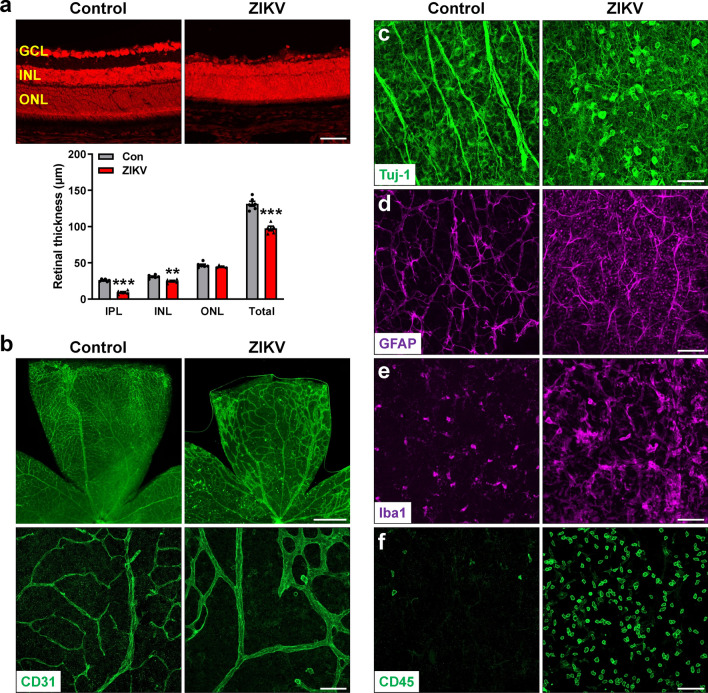
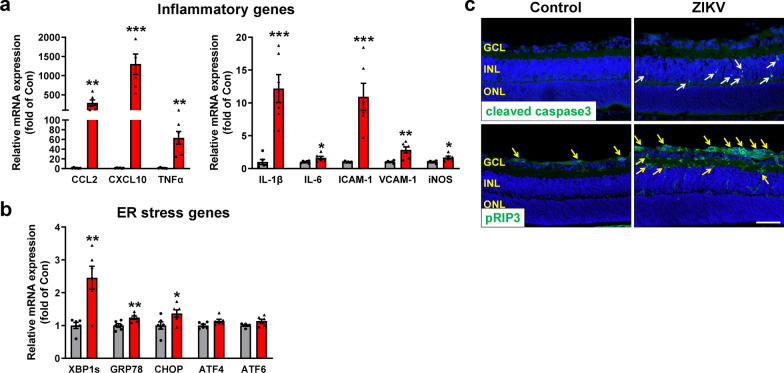
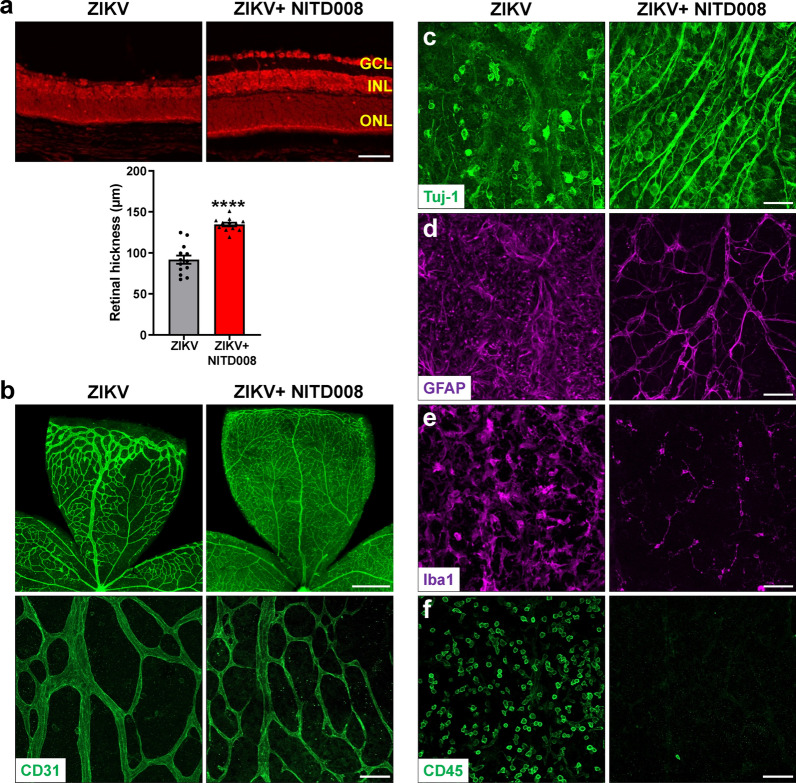
Zika virus (ZIKV), a mosquito-borne flavivirus, can cause severe eye disease and even blindness in newborns. However, ZIKV-induced retinal lesions have not been studied in a comprehensive way, mechanisms of ZIKV-induced retinal abnormalities are unknown, and no therapeutic intervention is available to treat or minimize the degree of vision loss in patients. Here, we developed a novel mouse model of ZIKV infection to evaluate its impact on retinal structure. ZIKV (20 plaque-forming units) was inoculated into neonatal wild type C57BL/6J mice at postnatal day (P) 0 subcutaneously. Retinas of infected mice and age-matched controls were collected at various ages, and retinal structural alterations were analyzed. We found that ZIKV induced progressive neuronal and vascular damage and retinal inflammation starting from P8. ZIKV-infected retina exhibited dramatically decreased thickness with loss of neurons, initial neovascular tufts followed by vessel dilation and degeneration, increased microglia and leukocyte recruitment and activation, degeneration of astrocyte network and gliosis. The above changes may involve inflammation and endoplasmic reticulum stress-mediated cell apoptosis and necroptosis. Moreover, we evaluated the efficacy of preclinical drugs and the safety of ZIKV vaccine candidate in this mouse model. We found that ZIKV-induced retinal abnormalities could be blocked by a selective flavivirus inhibitor NITD008 and a live-attenuated ZIKV vaccine candidate could potentially induce retinal abnormalities. Overall, we established a novel mouse model and provide a direct causative link between ZIKV and retinal lesion in vivo, which warrants further investigation of the underlying mechanisms of ZIKV-induced retinopathy and the development of effective therapeutics.
寨卡病毒(ZIKV)是一种蚊媒黄病毒,可导致新生儿严重的眼部疾病甚至失明。然而,尚未全面研究 ZIKV 引起的视网膜病变,ZIKV 引起的视网膜异常的机制尚不清楚,也没有治疗干预措施可用于治疗或最小化患者视力丧失的程度。在这里,我们开发了一种新型 ZIKV 感染的小鼠模型来评估其对视网膜结构的影响。ZIKV(20 个噬菌斑形成单位)在出生后第 0 天(P)通过皮下途径接种到新生野生型 C57BL/6J 小鼠中。在不同年龄时收集感染小鼠和年龄匹配的对照的视网膜,并分析视网膜结构改变。我们发现 ZIKV 从 P8 开始诱导进行性神经元和血管损伤以及视网膜炎症。ZIKV 感染的视网膜表现出明显的厚度减小,伴有神经元丧失、最初的新生血管丛,随后是血管扩张和退化、小胶质细胞和白细胞募集和激活增加以及星形胶质细胞网络变性和神经胶质增生。上述变化可能涉及炎症和内质网应激介导的细胞凋亡和坏死性凋亡。此外,我们在该小鼠模型中评估了临床前药物的疗效和 ZIKV 疫苗候选物的安全性。我们发现,选择性黄病毒抑制剂 NITD008 可阻断 ZIKV 诱导的视网膜异常,而活减毒 ZIKV 疫苗候选物可能会潜在地引起视网膜异常。总体而言,我们建立了一种新型小鼠模型,并在体内提供了 ZIKV 与视网膜病变之间的直接因果关系,这需要进一步研究 ZIKV 诱导的视网膜病变的潜在机制和开发有效的治疗方法。