Department of Reproductive Biology, National Center for Child Health and Development Research Institute, Tokyo, Japan.
Department of Computer Science, Federal University of Bahia, Salvador, Brazil.
NPJ Syst Biol Appl. 2021 May 25;7(1):22. doi: 10.1038/s41540-021-00183-9.
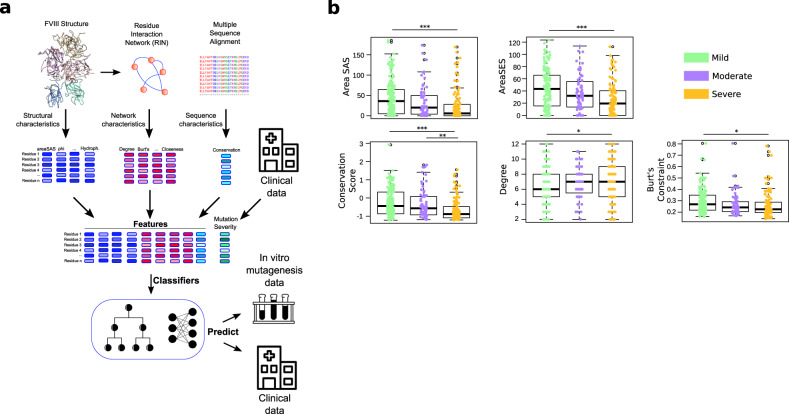
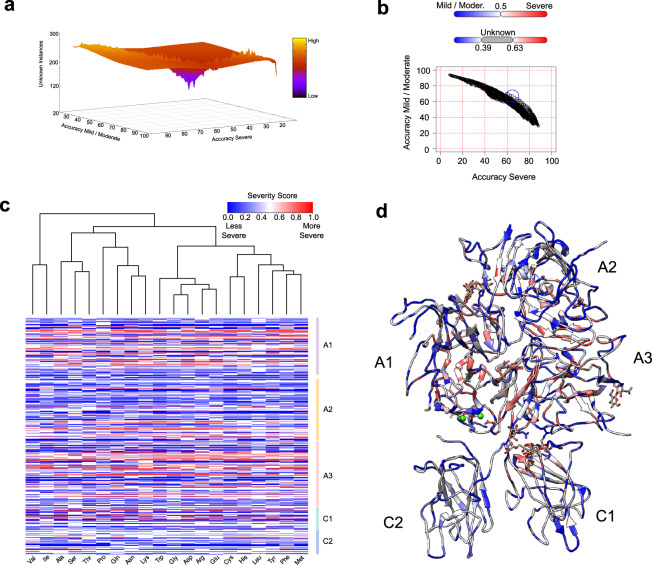
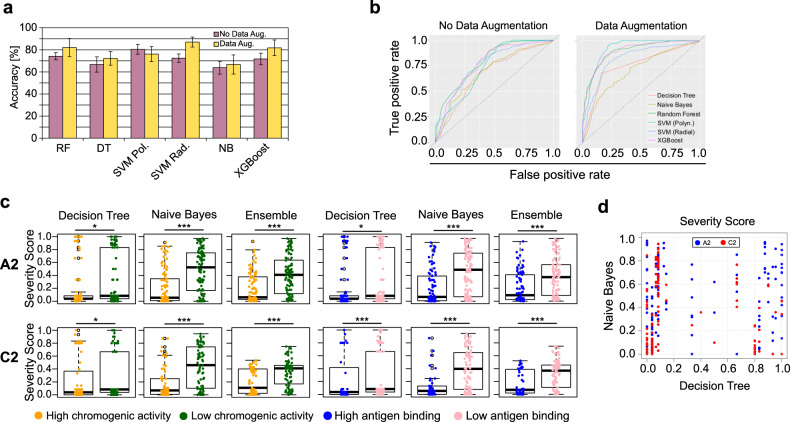
Hemophilia A is a relatively rare hereditary coagulation disorder caused by a defective F8 gene resulting in a dysfunctional Factor VIII protein (FVIII). This condition impairs the coagulation cascade, and if left untreated, it causes permanent joint damage and poses a risk of fatal intracranial hemorrhage in case of traumatic events. To develop prophylactic therapies with longer half-lives and that do not trigger the development of inhibitory antibodies, it is essential to have a deep understanding of the structure of the FVIII protein. In this study, we explored alternative ways of representing the FVIII protein structure and designed a machine-learning framework to improve the understanding of the relationship between the protein structure and the disease severity. We verified a close agreement between in silico, in vitro and clinical data. Finally, we predicted the severity of all possible mutations in the FVIII structure - including those not yet reported in the medical literature. We identified several hotspots in the FVIII structure where mutations are likely to induce detrimental effects to its activity. The combination of protein structure analysis and machine learning is a powerful approach to predict and understand the effects of mutations on the disease outcome.
血友病 A 是一种相对罕见的遗传性凝血障碍,由 F8 基因缺陷导致 FVIII 蛋白功能障碍引起。这种情况会损害凝血级联反应,如果不治疗,会导致永久性关节损伤,并在创伤事件时存在致命性颅内出血的风险。为了开发半衰期更长且不会引发抑制性抗体产生的预防性治疗方法,深入了解 FVIII 蛋白结构至关重要。在这项研究中,我们探索了替代的 FVIII 蛋白结构表示方法,并设计了一个机器学习框架,以提高对蛋白质结构与疾病严重程度之间关系的理解。我们验证了计算、体外和临床数据之间的紧密一致性。最后,我们预测了 FVIII 结构中所有可能突变的严重程度——包括尚未在医学文献中报道的突变。我们确定了 FVIII 结构中的几个热点区域,这些区域的突变很可能对其活性产生有害影响。蛋白质结构分析和机器学习的结合是一种预测和理解突变对疾病结果影响的强大方法。