Stickeler Elmar, Aktas Bahriye, Behrens Annika, Belleville Erik, Ditsch Nina, Fasching Peter A, Fehm Tanja N, Hartkopf Andreas D, Jackisch Christian, Janni Wolfgang, Kolberg-Liedtke Cornelia, Kolberg Hans-Christian, Lüftner Diana, Lux Michael P, Müller Volkmar, Schneeweiss Andreas, Schütz Florian, Schulmeyer Carla E, Tesch Hans, Thomssen Christoph, Uleer Christoph, Untch Michael, Welslau Manfred, Wöckel Achim, Wurmthaler Lena A, Würstlein Rachel, Thill Marc
Department of Gynecology and Obstetrics, RWTH University Hospital Aachen, Aachen, Germany.
Klinik und Poliklinik für Gynäkologie, Universitätsklinikum Leipzig, Leipzig, Germany.
Geburtshilfe Frauenheilkd. 2021 May;81(5):526-538. doi: 10.1055/a-1464-0953. Epub 2021 May 3.
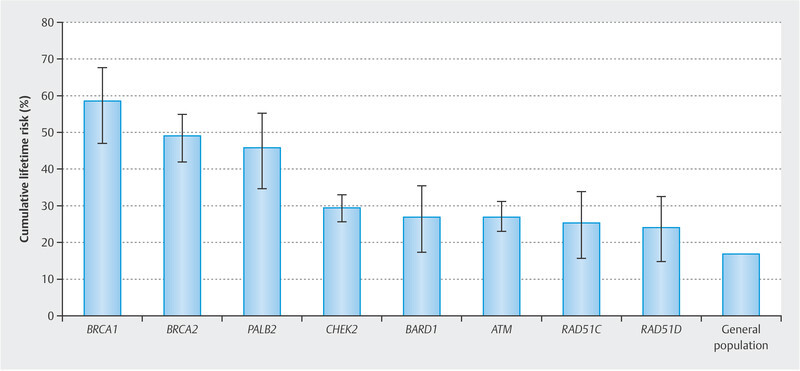
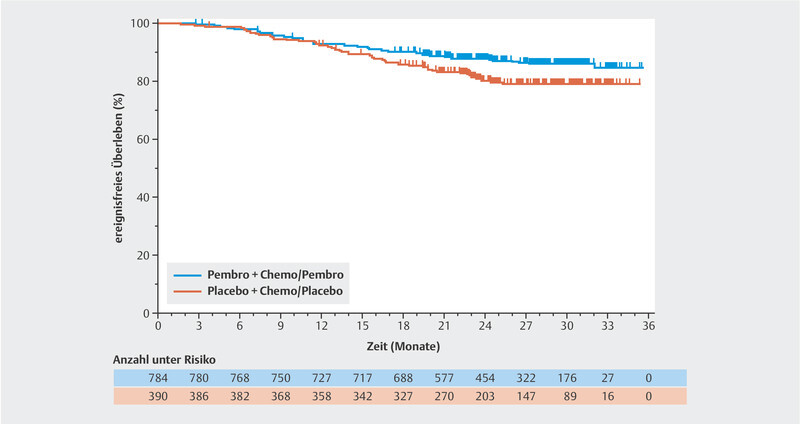
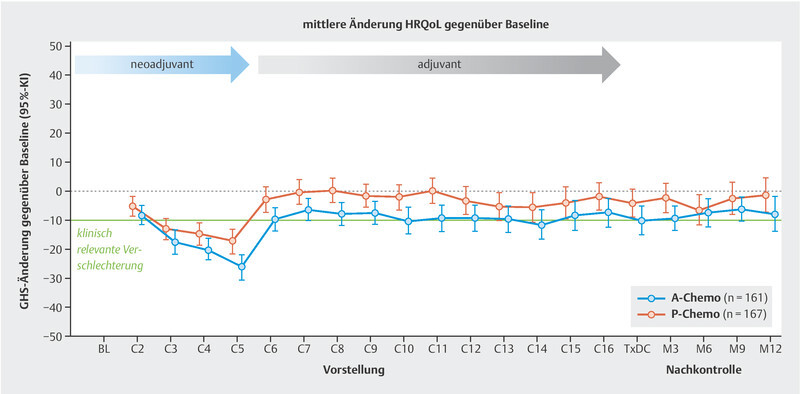
This review summarises not only the latest evidence on prevention, but also the current research on the treatment of early-stage breast cancer patients. Recent years have seen a growing body of evidence on the risk of high- and moderate-penetrance breast cancer susceptibility genes. A large international consortium has now been able to further refine the answer to the question of the significance of the so-called panel genes. Moreover, the data on treatment selection regarding endocrine efficacy and the decision for or against chemotherapy have also been advanced markedly. There is also new data on adjuvant CDK4/6 (cyclin-dependent kinase 4/6) inhibitors, which are standard in first-line treatment in patients with metastatic HER2-negative, hormone receptor-positive (HR+) breast cancer. For other therapies such as immune checkpoint inhibitors, which have successfully improved the rate of pathologic complete response (pCR) in neoadjuvant treatment settings for patients with triple-negative breast cancer (TNBC), there is a growing understanding of the quality of life and side effects. This is especially important in situations where patients could possibly be cured without such a regimen.
本综述不仅总结了预防方面的最新证据,还总结了早期乳腺癌患者治疗方面的当前研究。近年来,关于高和中度穿透性乳腺癌易感基因风险的证据越来越多。一个大型国际联盟现在已经能够进一步细化所谓的专家组基因意义问题的答案。此外,关于内分泌疗效的治疗选择以及化疗与否的决定的数据也有了显著进展。关于辅助性细胞周期蛋白依赖性激酶4/6(CDK4/6)抑制剂也有新数据,其在转移性HER2阴性、激素受体阳性(HR+)乳腺癌患者的一线治疗中是标准治疗方法。对于其他疗法,如免疫检查点抑制剂,其已成功提高了三阴性乳腺癌(TNBC)患者新辅助治疗中的病理完全缓解(pCR)率,人们对生活质量和副作用的认识也在不断提高。在患者可能无需这种治疗方案就能治愈的情况下,这一点尤为重要。