Sassine Jad, Pazos Manuel, Breukink Eefjan, Vollmer Waldemar
Centre for Bacterial Cell Biology, Biosciences Institute, Faculty of Medical Sciences, Newcastle University, Newcastle upon Tyne, UK.
Membrane Biochemistry and Biophysics, Bijvoet Centre of Biomolecular Research, Department of Chemistry, Faculty of Science, Utrecht University, Utrecht, Netherlands.
Cell Surf. 2021 May 1;7:100053. doi: 10.1016/j.tcsw.2021.100053. eCollection 2021 Dec.
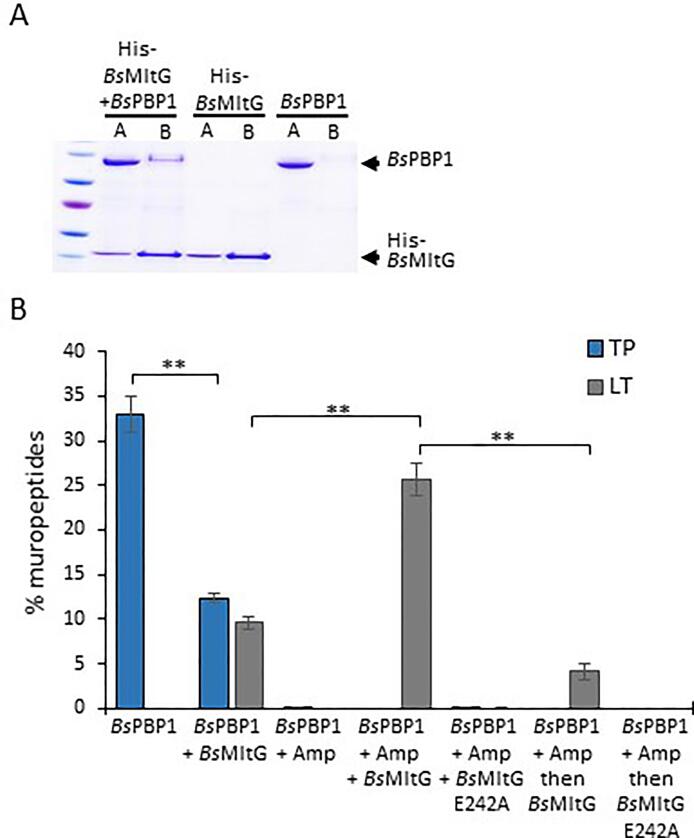
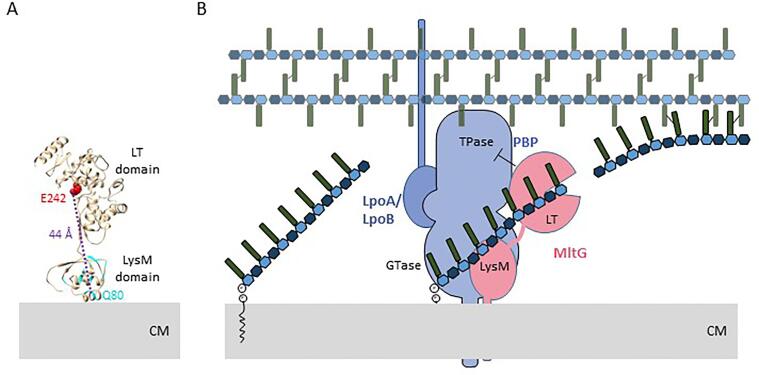
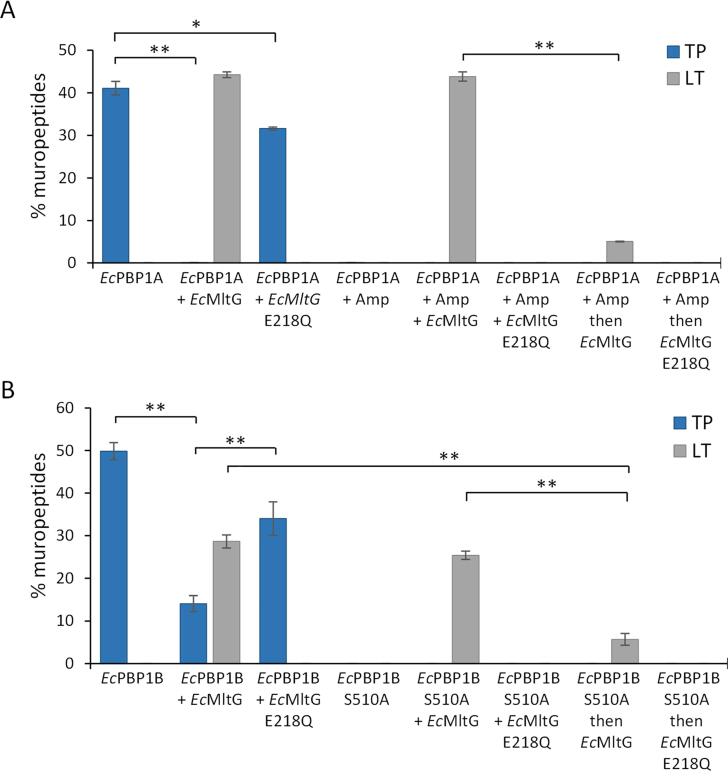
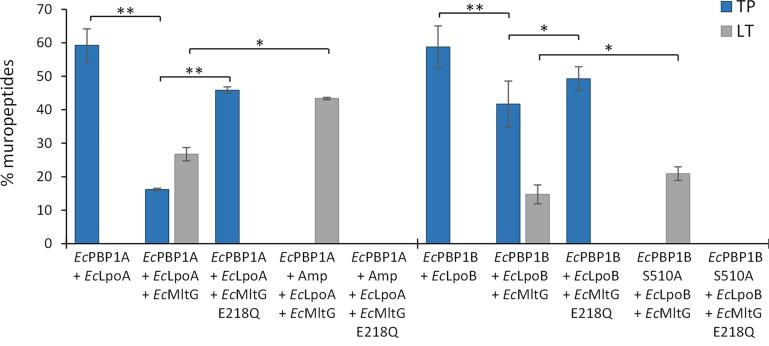
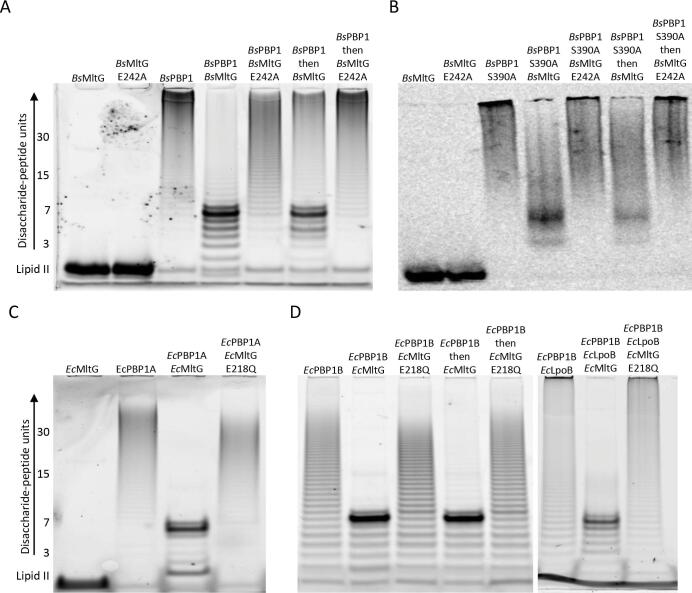
Bacteria encase their cytoplasmic membrane with peptidoglycan (PG) to maintain the shape of the cell and protect it from bursting. The enlargement of the PG layer is facilitated by the coordinated activities of PG synthesising and -cleaving enzymes. In , the cytoplasmic membrane-bound lytic transglycosylase MltG associates with PG synthases and was suggested to terminate the polymerisation of PG glycan strands. Using pull-down and surface plasmon resonance, we detected interactions between MltG from and two PG synthases; the class A PBP1 and the class B PBP2B. Using PG synthesis assays with radio-labelled or fluorophore-labelled -type and/or -type lipid II, we showed that both, MltG and MltG, are lytic tranglycosylases and that their activity is higher during ongoing glycan strand polymerisation. MltG competed with the transpeptidase activity of class A PBPs, but had no effect on their glycosyltransferase activity, and produced glycan strands with a length of 7 disaccharide units from cleavage in the nascent strands. We hypothesize that MltG cleaves the nascent strands to produce short glycan strands that are used in the cell for a yet unknown process.
细菌用肽聚糖(PG)包裹其细胞质膜,以维持细胞形状并防止其破裂。PG合成酶和裂解酶的协同作用促进了PG层的扩大。在[具体内容缺失]中,细胞质膜结合的溶菌转糖基酶MltG与PG合成酶相关联,并被认为可终止PG聚糖链的聚合。通过下拉实验和表面等离子体共振,我们检测到[具体来源缺失]的MltG与两种PG合成酶之间的相互作用;A类PBP1和B类PBP2B。使用放射性标记或荧光团标记的[具体类型缺失]型和/或[具体类型缺失]型脂质II进行PG合成测定,我们表明MltG和MltG都是溶菌转糖基酶,并且它们的活性在聚糖链聚合过程中更高。MltG与A类PBPs的转肽酶活性竞争,但对其糖基转移酶活性没有影响,并通过切割新生链产生长度为7个二糖单位的聚糖链。我们假设MltG切割新生链以产生短聚糖链,这些短聚糖链在细胞中用于一个尚不清楚的过程。