Institute for Stroke and Dementia Research, University Hospital, Ludwig Maximilians University Munich, Munich, Germany.
German Center for Neurodegenerative Diseases, Munich, Germany.
J Exp Med. 2021 Aug 2;218(8). doi: 10.1084/jem.20202411. Epub 2021 May 26.
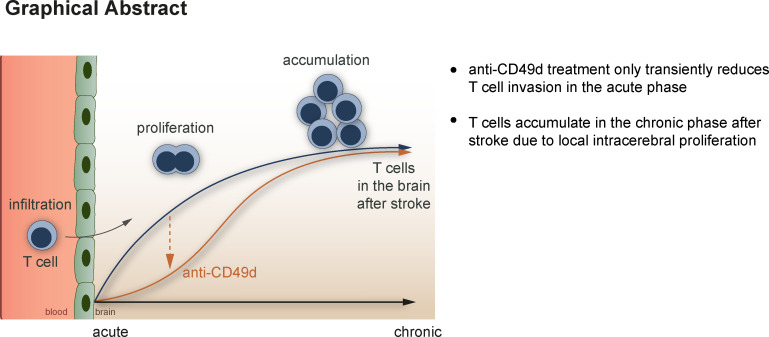
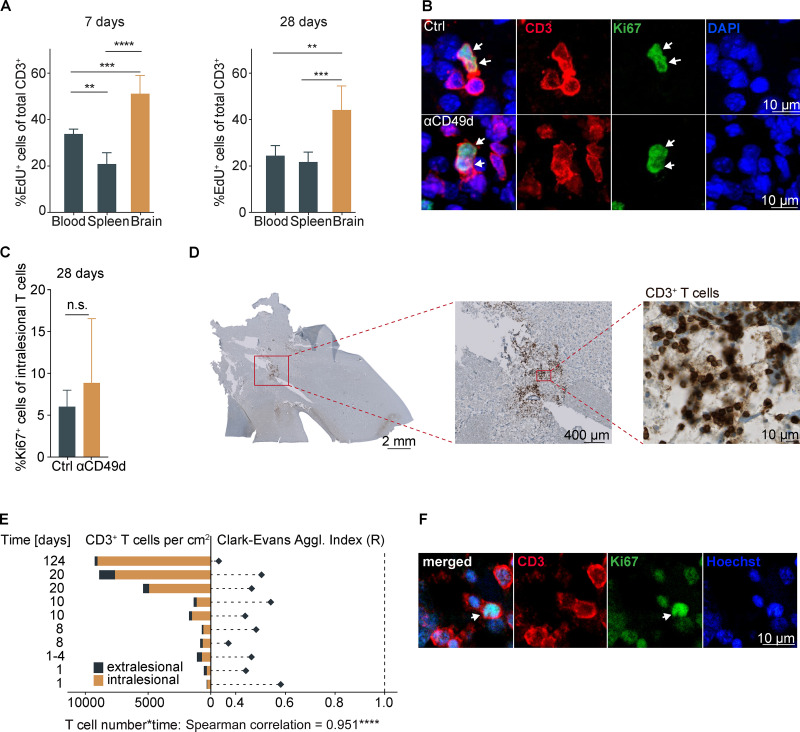
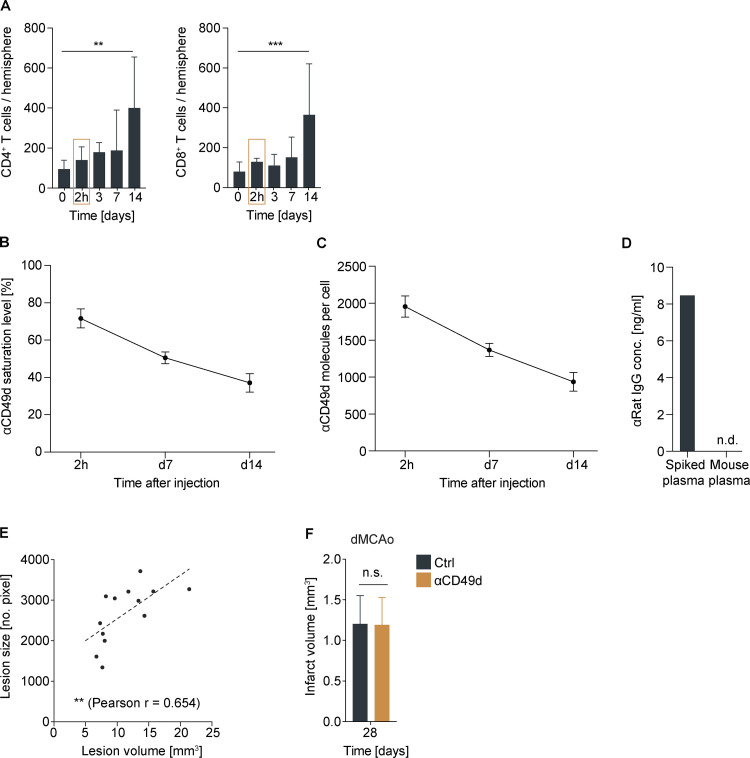
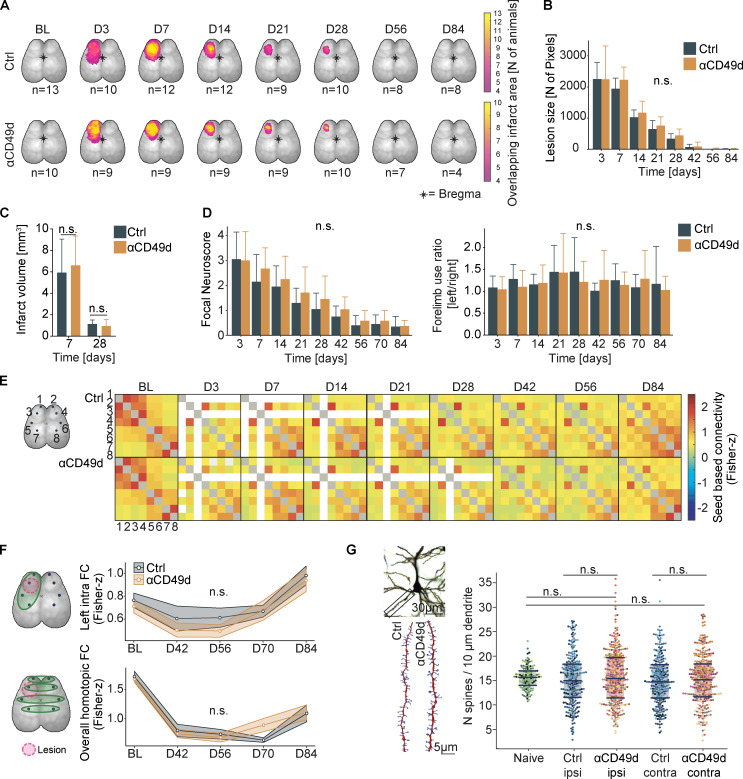
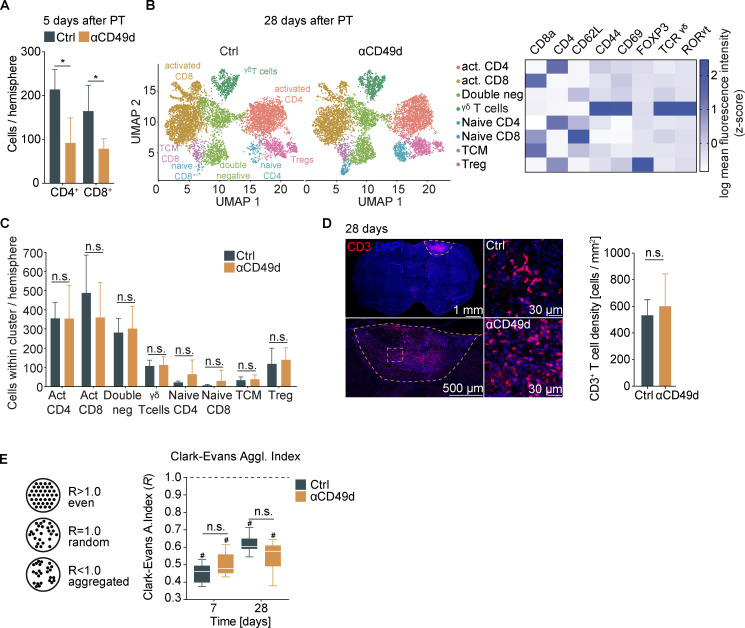
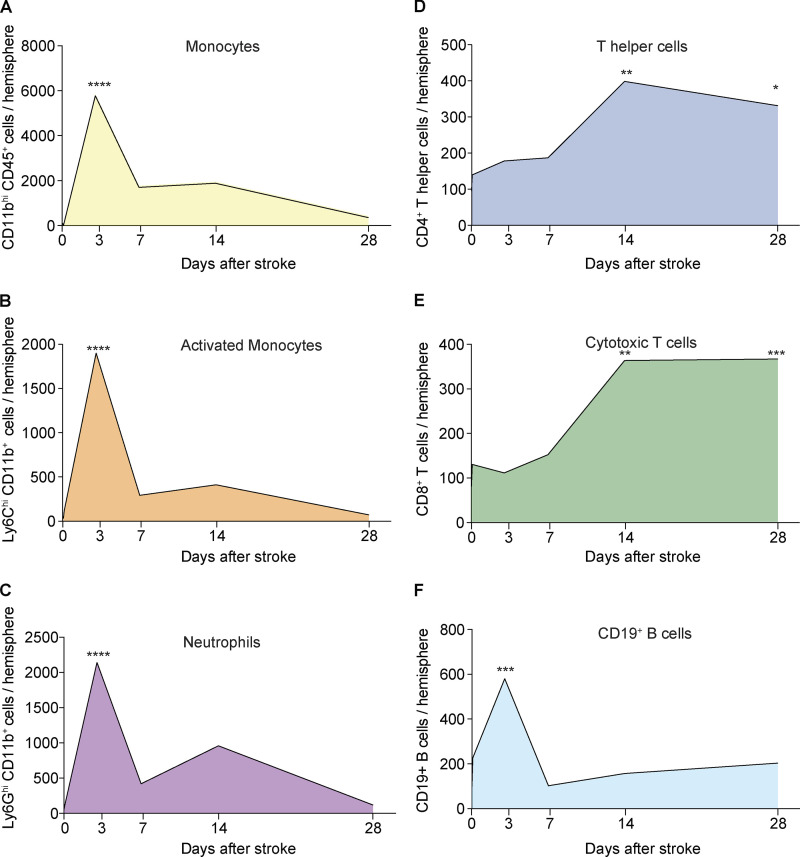
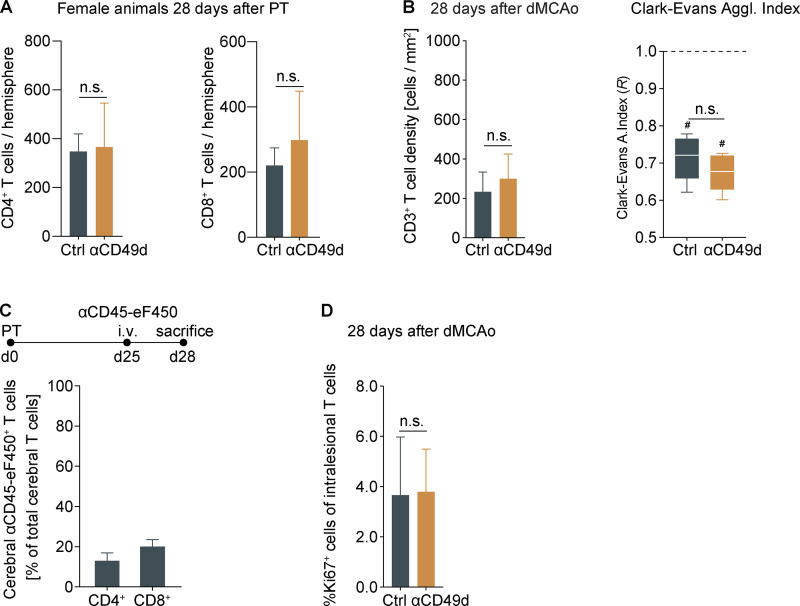
Neuroinflammation is an emerging focus of translational stroke research. Preclinical studies have demonstrated a critical role for brain-invading lymphocytes in post-stroke pathophysiology. Reducing cerebral lymphocyte invasion by anti-CD49d antibodies consistently improves outcome in the acute phase after experimental stroke models. However, clinical trials testing this approach failed to show efficacy in stroke patients for the chronic outcome 3 mo after stroke. Here, we identify a potential mechanistic reason for this phenomenon by detecting chronic T cell accumulation-evading the systemic therapy-in the post-ischemic brain. We observed a persistent accumulation of T cells in mice and human autopsy samples for more than 1 mo after stroke. Cerebral T cell accumulation in the post-ischemic brain was driven by increased local T cell proliferation rather than by T cell invasion. This observation urges re-evaluation of current immunotherapeutic approaches, which target circulating lymphocytes for promoting recovery after stroke.
神经炎症是转化性中风研究的一个新兴焦点。临床前研究表明,脑内浸润淋巴细胞在中风后的病理生理学中起着关键作用。用抗 CD49d 抗体减少脑内淋巴细胞浸润,在实验性中风模型的急性期后始终能改善预后。然而,临床试验未能证明该方法对中风后 3 个月的慢性结局有效。在这里,我们通过检测中风后大脑中逃避系统性治疗的慢性 T 细胞积累,确定了这一现象的潜在机制原因。我们观察到中风后 1 个多月,小鼠和人类尸检样本中 T 细胞持续积累。缺血后大脑中的脑 T 细胞积累是由局部 T 细胞增殖而不是 T 细胞浸润驱动的。这一观察结果促使我们重新评估当前的免疫治疗方法,这些方法针对循环淋巴细胞,以促进中风后的恢复。