Department of Medicine, University of California, San Francisco (UCSF), San Francisco, CA, United States of America.
School of Medicine, Emory University and Grady Healthcare System, Atlanta, GA, United States of America.
PLoS One. 2021 May 26;16(5):e0252338. doi: 10.1371/journal.pone.0252338. eCollection 2021.
Food insecurity and intimate partner violence (IPV) are associated with suboptimal HIV prevention and treatment outcomes, yet limited research has explored how food insecurity and IPV intersect to influence HIV-related behaviors. To fill this gap, we conducted a qualitative study with women living with or at risk for HIV in the United States.
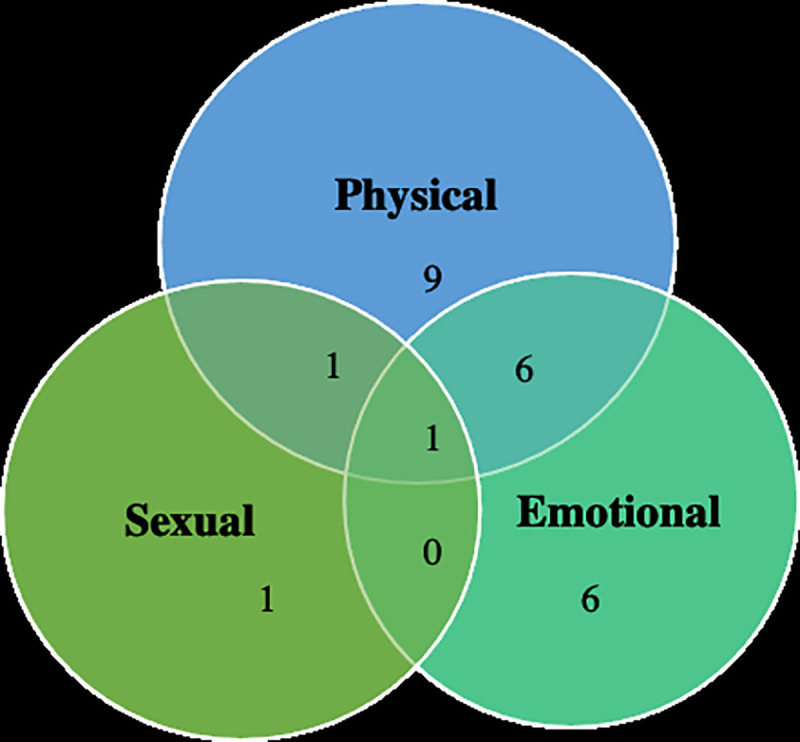
We conducted 24 in-depth interviews with women enrolled in the San Francisco and Atlanta sites of the Women's Interagency HIV study (WIHS). Participants were purposively sampled so half were living with HIV and all reported food insecurity and IPV in the past year. Semi-structured interviews explored experiences with food insecurity and IPV, how these experiences might be related and influence HIV risk and treatment behaviors. Analysis was guided by an inductive-deductive approach.
A predominant theme centered on how food insecurity and IPV co-occur with poor mental health and substance use to influence HIV-related behaviors. Women described how intersecting experiences of food insecurity and IPV negatively affected their mental health, with many indicating using substances to "feel no pain". Substance use, in turn, was described to perpetuate food insecurity, IPV, and poor mental health in a vicious cycle, ultimately facilitating HIV risk behaviors and preventing HIV treatment adherence.
Food insecurity, IPV, poor mental health and substance use intersect and negatively influence HIV prevention and treatment behaviors. Findings offer preliminary evidence of a syndemic that goes beyond the more widely studied "SAVA" (substance use, AIDS, and violence) syndemic, drawing attention to additional constructs of mental health and food insecurity. Quantitative research must further characterize the extent and size of this syndemic. Policies that address the social and structural drivers of this syndemic, including multi-level and trauma-informed approaches, should be implemented and evaluated to assess their impact on this syndemic and its negative health effects.
食物不安全和亲密伴侣暴力(IPV)与不理想的 HIV 预防和治疗结果相关,但是很少有研究探索食物不安全和 IPV 如何相互作用影响与 HIV 相关的行为。为了填补这一空白,我们对美国的 HIV 感染者或感染者高危人群进行了一项定性研究。
我们对参加旧金山和亚特兰大地区妇女艾滋病研究机构(WIHS)的女性进行了 24 次深入访谈。参与者是经过有目的抽样的,其中一半人患有 HIV,所有人都报告在过去一年中存在食物不安全和 IPV。半结构化访谈探讨了与食物不安全和 IPV 相关的经历,以及这些经历如何相互作用并影响 HIV 风险和治疗行为。分析受到了归纳演绎方法的指导。
一个主要的主题是食物不安全和 IPV 如何与心理健康不佳和物质使用共同发生,从而影响与 HIV 相关的行为。女性描述了食物不安全和 IPV 交叉经历如何对她们的心理健康产生负面影响,许多人表示使用物质来“感觉不到痛苦”。反过来,物质使用被描述为使食物不安全、IPV 和心理健康不佳的恶性循环永久化,最终促进了 HIV 风险行为并阻碍了 HIV 治疗的依从性。
食物不安全、IPV、心理健康不佳和物质使用相互交叉,对 HIV 预防和治疗行为产生负面影响。研究结果初步证明了一种综合征的存在,这种综合征超越了更为广泛研究的“SAVA”(物质使用、艾滋病和暴力)综合征,引起了对心理健康和食物不安全等其他结构的关注。定量研究必须进一步描述这种综合征的程度和范围。必须实施和评估解决这种综合征的社会和结构性驱动因素的政策,包括多层次和创伤知情的方法,以评估它们对这种综合征及其对健康的负面影响的影响。