Department of Material Engineering, Faculty of Textile, Technical University of Liberec, Liberec, 46117, Czech Republic.
Sci Rep. 2021 May 26;11(1):11032. doi: 10.1038/s41598-021-90516-9.
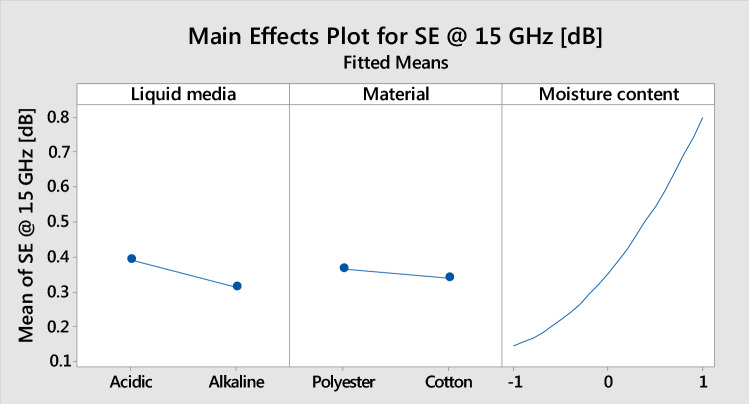
Electromagnetically shielding textile materials, especially in professional or ordinary clothing, are used to protect an implanted pacemaker in the body. Alternatively, traditional textiles are known for their non-conductivity and transparency to an electromagnetic field. The main goal of this work was to determine whether the high moisture content (sweat) of the traditional textile structure significantly affects the resulting ability of the material to shield the electromagnetic field. Specifically, whether sufficient wetting of the traditional textile material can increase its electrical conductivity to match the electrically conductive textiles determined for shielding of the electromagnetic field. In this study, cotton and polyester knitted fabric samples were used, and two liquid medias were applied to the samples to simulate human sweating. The experiment was designed to analyse the factors that have a significant effect on the shielding effectiveness that was measured according to ASTM D4935. The following factors have a significant effect on the electromagnetic shielding effectiveness of moisturised fabric: squeezing pressure, drying time and type of liquid media. Additionally, the increase of electromagnetic shielding was up to 1 dB at 1.5 GHz frequency at the highest level of artificial sweat moisturised sample.
电磁屏蔽纺织品材料,尤其是在专业或普通服装中,用于保护体内植入的起搏器。而传统纺织品以其对电磁场的非导电性和透明性而闻名。这项工作的主要目的是确定传统纺织品结构的高水分含量(汗水)是否会显著影响材料产生电磁屏蔽的能力。具体来说,传统纺织品材料是否可以充分润湿,以提高其电导率,使其与确定用于电磁屏蔽的导电纺织品相匹配。在这项研究中,使用了棉和聚酯针织面料样品,并将两种液体介质应用于样品,以模拟人体出汗。该实验旨在分析对根据 ASTM D4935 测量的屏蔽效能有显著影响的因素。对润湿织物的电磁屏蔽效能有显著影响的因素有:挤压压力、干燥时间和液体介质的类型。此外,在最高水平的人工汗润湿样品中,在 1.5GHz 频率下,电磁屏蔽的增加高达 1dB。