Jones Bradley R, Joy Jeffrey B
BC Centre for Excellence in HIV/AIDS, 608-1081 Burrard Street, Vancouver, BC V6Z 1Y6, Canada.
Virus Evol. 2020 Nov 23;6(2):veaa089. doi: 10.1093/ve/veaa089. eCollection 2020 Jul.
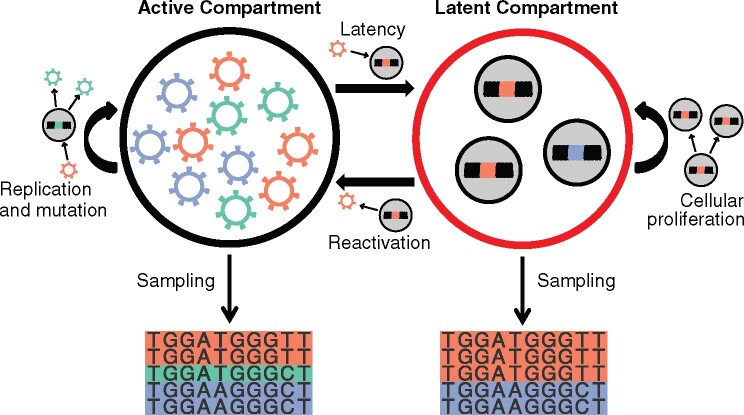
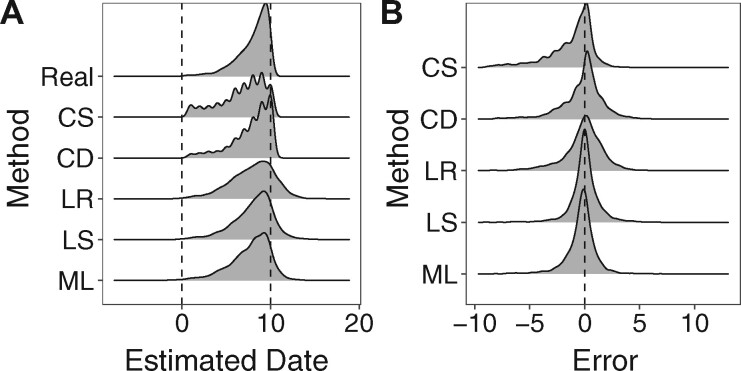
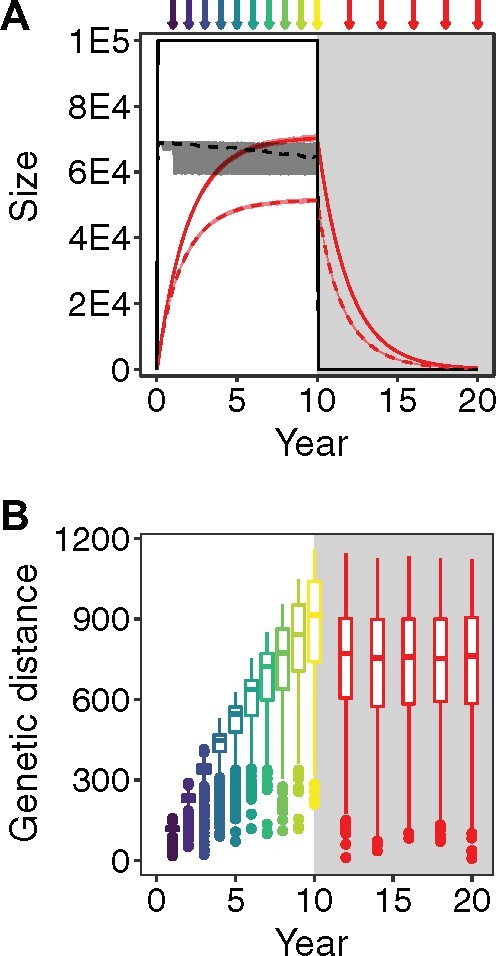
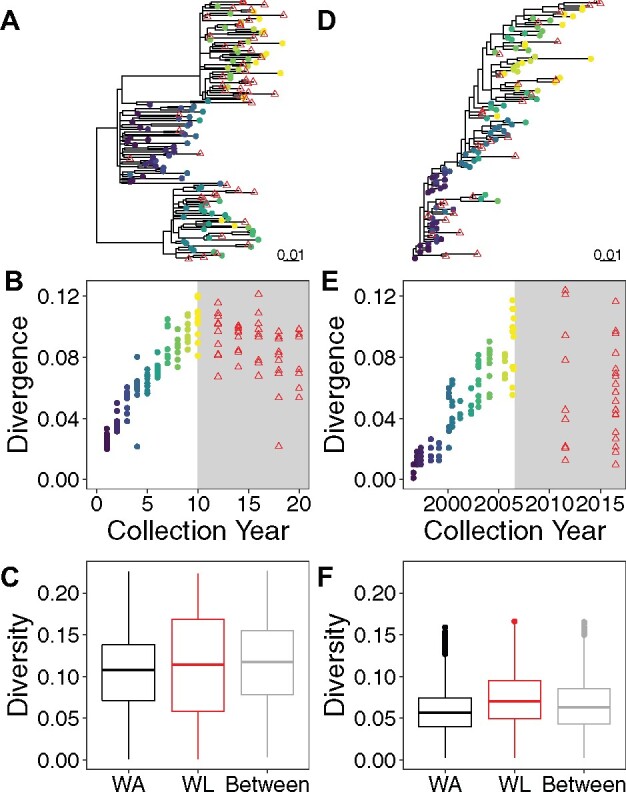
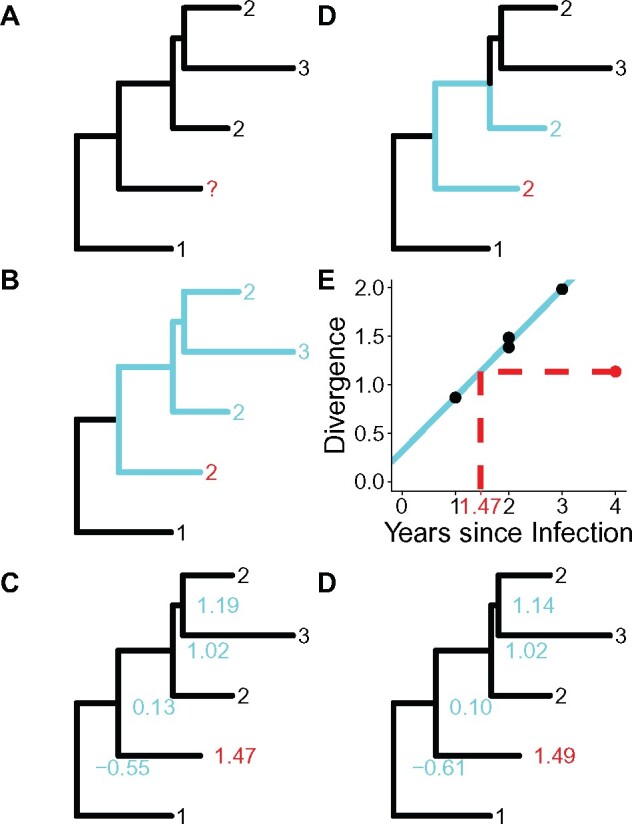
The complexities of viral evolution can be difficult to elucidate. Software simulating viral evolution provides powerful tools for exploring hypotheses of viral systems, especially in situations where thorough empirical data are difficult to obtain or parameters of interest are difficult to measure. Human immunodeficiency virus 1 (HIV-1) infection has no durable cure; this is primarily due to the virus' ability to integrate into the genome of host cells, where it can remain in a transcriptionally latent state. An effective cure strategy must eliminate every copy of HIV-1 in this 'persistent reservoir' because proviruses can reactivate, even decades later, to resume an active infection. However, many features of the persistent reservoir remain unclear, including the temporal dynamics of HIV-1 integration frequency and the longevity of the resulting reservoir. Thus, sophisticated analyses are required to measure these features and determine their temporal dynamics. Here, we present software that is an extension of SANTA-SIM to include multiple compartments of viral populations. We used the resulting software to create a model of HIV-1 within host evolution that incorporates the persistent HIV-1 reservoir. This model is composed of two compartments, an active compartment and a latent compartment. With this model, we compared five different date estimation methods (Closest Sequence, Clade, Linear Regression, Least Squares, and Maximum Likelihood) to recover the integration dates of genomes in our model's HIV-1 reservoir. We found that the Least Squares method performed the best with the highest concordance (0.80) between real and estimated dates and the lowest absolute error (all pairwise tests: < 0.01). Our software is a useful tool for validating bioinformatics software and understanding the dynamics of the persistent HIV-1 reservoir.
病毒进化的复杂性可能难以阐明。模拟病毒进化的软件为探索病毒系统假说提供了强大工具,特别是在难以获得全面实证数据或难以测量感兴趣参数的情况下。人类免疫缺陷病毒1型(HIV-1)感染尚无持久治愈方法;这主要是由于该病毒能够整合到宿主细胞基因组中,并在其中保持转录潜伏状态。有效的治愈策略必须消除这个“持续储存库”中HIV-1的每一个拷贝,因为前病毒即使在几十年后仍可重新激活,恢复活跃感染。然而,持续储存库的许多特征仍不清楚,包括HIV-1整合频率的时间动态以及由此产生的储存库的寿命。因此,需要进行复杂分析来测量这些特征并确定其时间动态。在这里,我们展示了一种软件,它是SANTA-SIM的扩展,包括病毒群体的多个区室。我们使用所得软件创建了一个宿主进化过程中HIV-1的模型,该模型纳入了持续的HIV-1储存库。这个模型由两个区室组成,一个活跃区室和一个潜伏区室。利用这个模型,我们比较了五种不同的日期估计方法(最接近序列法、进化枝法、线性回归法、最小二乘法和最大似然法),以恢复我们模型中HIV-1储存库中基因组的整合日期。我们发现最小二乘法表现最佳,实际日期与估计日期之间的一致性最高(0.80),绝对误差最低(所有成对检验:<0.01)。我们的软件是验证生物信息学软件和理解持续HIV-1储存库动态的有用工具。