Azizi Hossein, NiaziTabar Amirreza, Mohammadi Atiyeh, Skutella Thomas
Department of Nanobiotechnology, Faculty of Biotechnology, Amol University of Special Modern Technologies, Amol, Iran.
Institute for Anatomy and Cell Biology, Medical Faculty, University of Heidelberg, Heidelberg, Germany.
J Reprod Infertil. 2021 Apr-Jun;22(2):85-91. doi: 10.18502/jri.v22i2.5793.
In mammals, spermatogenesis is the main process for male fertility that is initiated by spermatogonial stem cells (SSCs) proliferation. SSCs are unipotent progenitor cells accountable for transferring the genetic information to the following generation by differentiating to haploid cells during spermato-and spermiogenesis. DEAD-box helicase 4 (DDX4) is a specific germ cell marker and its expression pattern is localized to, spermatocytes, and spermatids. The expression in the SSCs on the basement membrane of the seminiferous tubules is low.
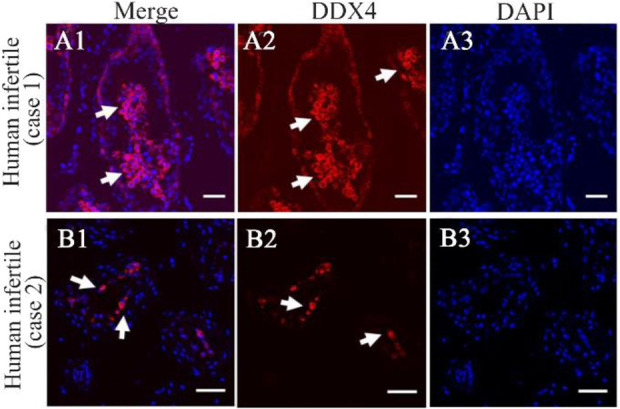
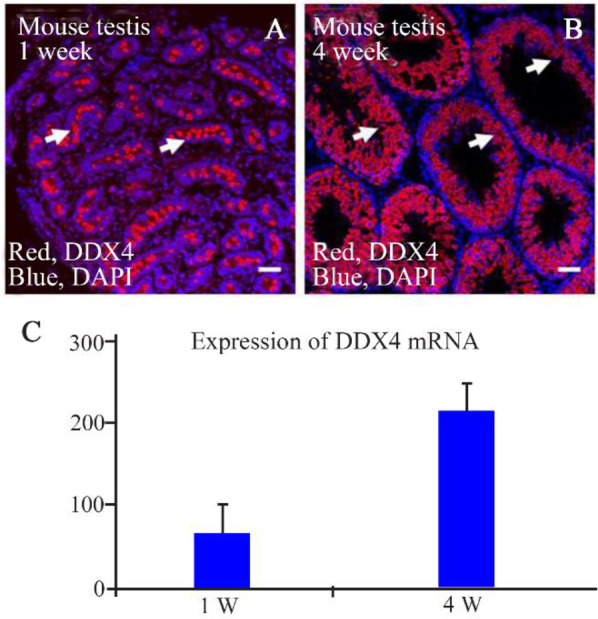
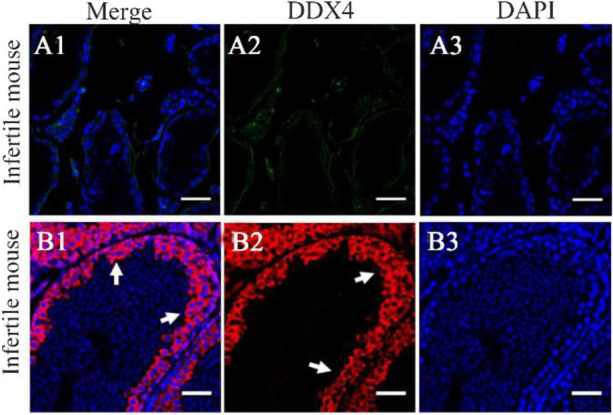
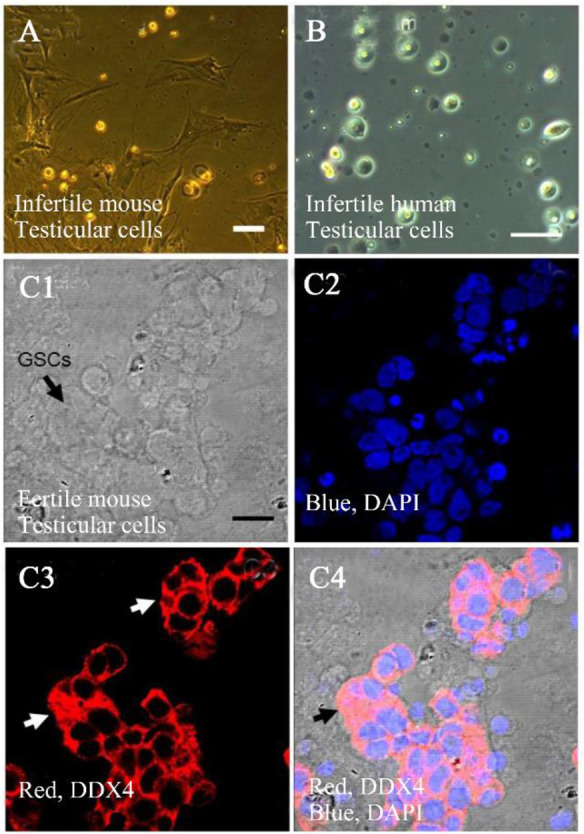
Immunohistochemistry (IHC) and Fluidigm reverse transcriptase-polymerase chain reaction (RT-PCR) were used to analyze the expression of DDX4 in testis tissue of fertile and sterile mice and human cases with non-obstructive azoospermia.
Our immunohistochemical findings of fertile and busulfan-treated mice showed expression of DDX4 in the basal and luminal compartment of seminiferous tubules of fertile mice whereas no expression was detected in busulfan-treated mice. The immunohistochemical analysis of two human cases with different levels of non-obstructive azoospermia revealed more luminal DDX4 positive cells.
Our findings indicate that DDX4 might be a valuable germ cell marker for analyzing the pathology of germ cell tumors and infertility as global urological problems.
在哺乳动物中,精子发生是男性生育的主要过程,由精原干细胞(SSCs)增殖启动。SSCs是单能祖细胞,负责在精子发生和精子形成过程中分化为单倍体细胞,从而将遗传信息传递给下一代。DEAD盒解旋酶4(DDX4)是一种特异性生殖细胞标志物,其表达模式定位于精母细胞和精子细胞。在生精小管基底膜上的SSCs中表达较低。
采用免疫组织化学(IHC)和Fluidigm逆转录聚合酶链反应(RT-PCR)分析DDX4在生育力正常和不育小鼠以及非梗阻性无精子症人类病例睾丸组织中的表达。
我们对生育力正常和白消安处理小鼠的免疫组织化学研究结果显示,生育力正常小鼠的生精小管基底和管腔部分有DDX4表达,而白消安处理的小鼠未检测到表达。对两例不同程度非梗阻性无精子症人类病例的免疫组织化学分析显示,管腔中DDX4阳性细胞更多。
我们的研究结果表明,作为全球性泌尿外科问题,DDX4可能是分析生殖细胞肿瘤病理和不育症的一种有价值的生殖细胞标志物。