Gassei Kathrin, Sheng Yi, Fayomi Adetunji, Mital Payal, Sukhwani Meena, Lin Chih-Cheng, Peters Karen A, Althouse Andrew, Valli Hanna, Orwig Kyle E
Department of Obstetrics, Gynecology and Reproductive Sciences and Magee-Womens Research Institute, University of Pittsburgh School of Medicine, Pittsburgh, USA.
Sawai Man Singh Medical College and Hospital, Jaipur, India.
Biol Reprod. 2017 Mar 1;96(3):707-719. doi: 10.1095/biolreprod.116.142828.
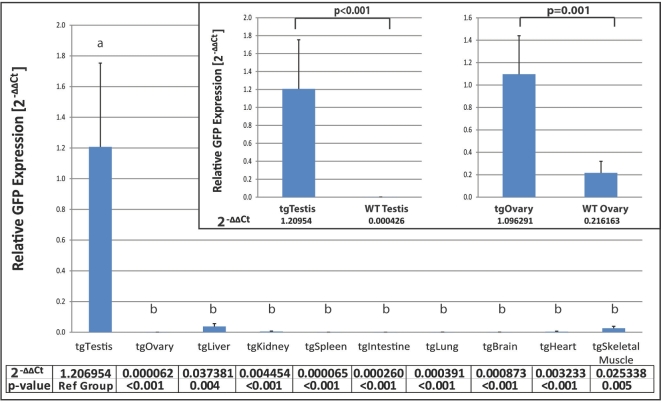
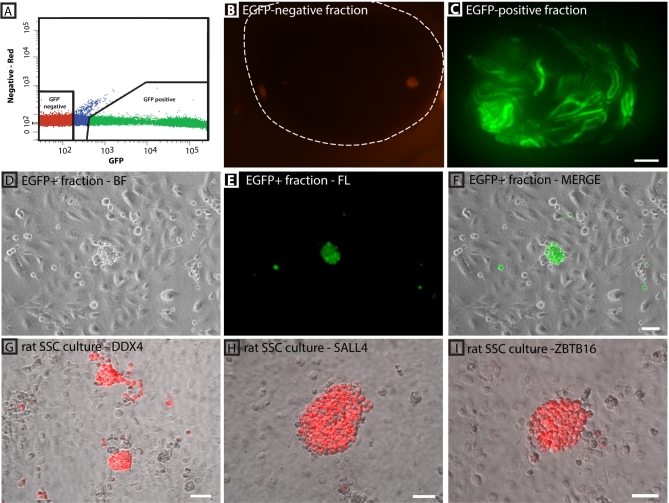
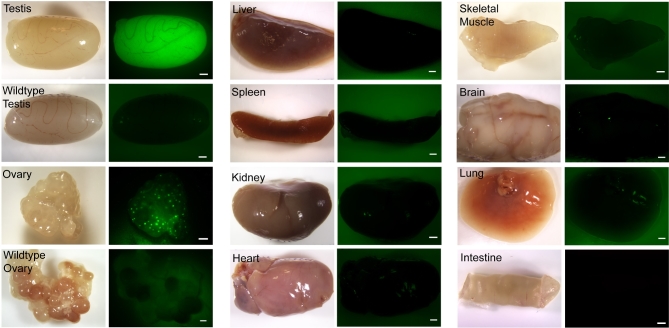
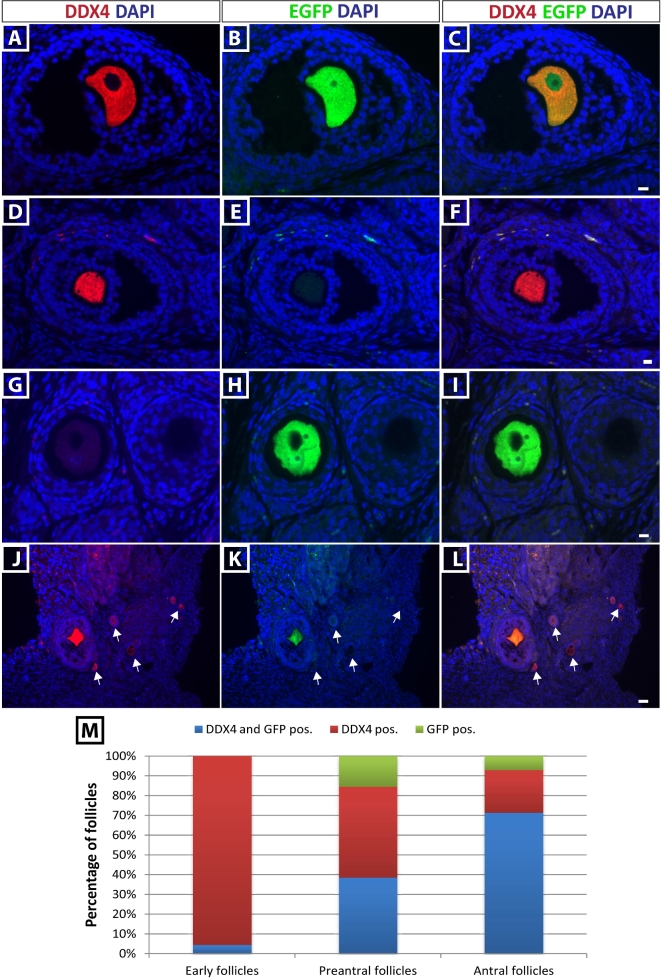
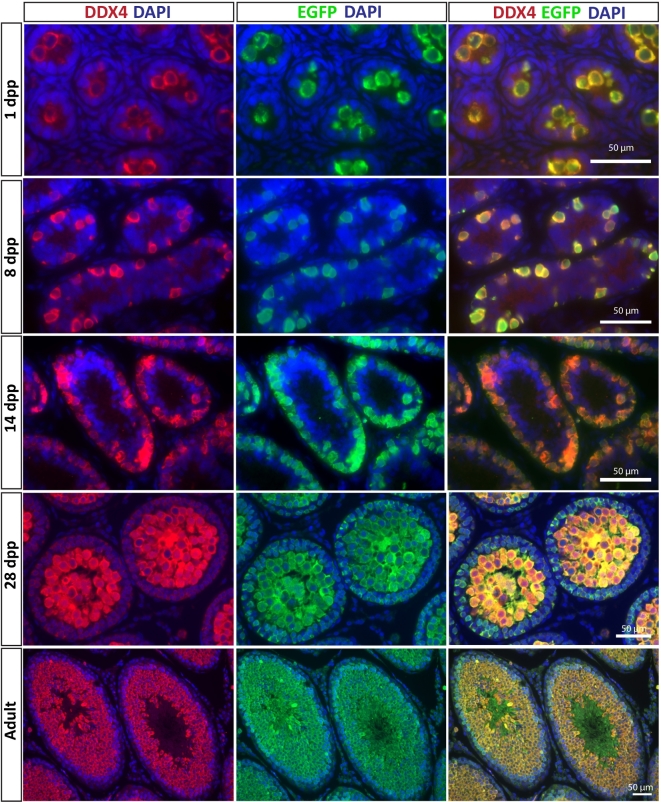
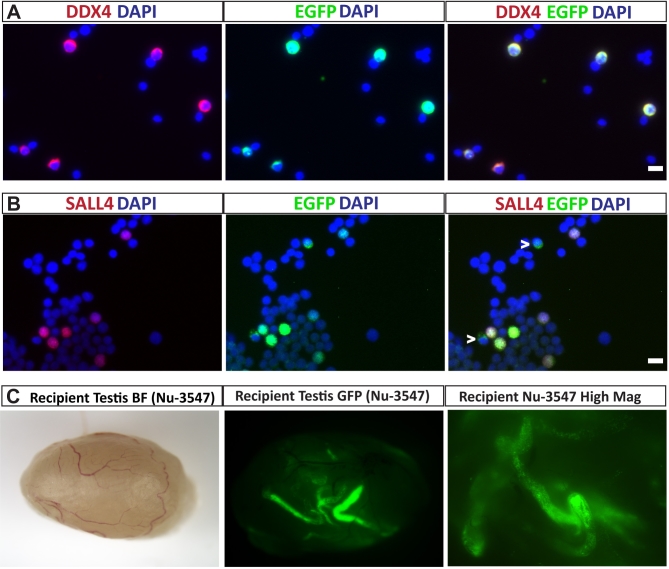
Spermatogonial stem cells (SSC) are essential for spermatogenesis and male fertility. In addition, these adult tissue stem cells can be used as vehicles for germline modification in animal models and may have application for treating male infertility. To facilitate the investigation of SSCs and germ lineage development in rats, we generated a DEAD-box helicase 4 (DDX4) (VASA) promoter-enhanced green fluorescent protein (EGFP) reporter transgenic rat. Quantitative real-time polymerase chain reaction and immunofluorescence confirmed that EGFP was expressed in the germ cells of the ovaries and testes and was absent in somatic cells and tissues. Germ cell transplantation demonstrated that the EGFP-positive germ cell population from DDX4-EGFP rat testes contained SSCs capable of establishing spermatogenesis in experimentally infertile mouse recipient testes. EGFP-positive germ cells could be easily isolated by fluorescence-activated cells sorting, while simultaneously removing testicular somatic cells from DDX4-EGFP rat pup testes. The EGFP-positive fraction provided an optimal cell suspension to establish rat SSC cultures that maintained long-term expression of zinc finger and BTB domain containing 16 (ZBTB16) and spalt-like transcription factor 4 (SALL4), two markers of mouse SSCs that are conserved in rats. The novel DDX4-EGFP germ cell reporter rat described here combined with previously described GCS-EGFP rats, rat SSC culture and gene editing tools will improve the utility of the rat model for studying stem cells and germ lineage development.
精原干细胞(SSC)对于精子发生和男性生育能力至关重要。此外,这些成体组织干细胞可作为动物模型中生殖系修饰的载体,可能对治疗男性不育症有应用价值。为便于研究大鼠的精原干细胞和生殖系发育,我们构建了一种由DEAD盒解旋酶4(DDX4)(VASA)启动子增强的绿色荧光蛋白(EGFP)报告基因转基因大鼠。定量实时聚合酶链反应和免疫荧光证实,EGFP在卵巢和睾丸的生殖细胞中表达,而在体细胞和组织中不表达。生殖细胞移植表明,来自DDX4-EGFP大鼠睾丸的EGFP阳性生殖细胞群体包含能够在实验性不育小鼠受体睾丸中建立精子发生的精原干细胞。通过荧光激活细胞分选可以轻松分离出EGFP阳性生殖细胞,同时从DDX4-EGFP大鼠幼崽睾丸中去除睾丸体细胞。EGFP阳性部分提供了一种最佳细胞悬液,用于建立大鼠精原干细胞培养物,该培养物可长期维持锌指和BTB结构域包含16(ZBTB16)以及类spalt转录因子4(SALL4)的表达,这两种小鼠精原干细胞标记物在大鼠中是保守的。本文描述的新型DDX4-EGFP生殖细胞报告基因大鼠与先前描述过的GCS-EGFP大鼠、大鼠精原干细胞培养和基因编辑工具相结合,将提高大鼠模型在研究干细胞和生殖系发育方面的实用性。