Putnins Matthew, Androulakis Ioannis P
Biomecdical Engineering Department, Rutgers University, Piscataway, NJ, USA.
Chemical & Biochemical Engineering Department, Rutgers University, Piscataway, NJ, USA.
Heliyon. 2021 May 15;7(5):e06997. doi: 10.1016/j.heliyon.2021.e06997. eCollection 2021 May.
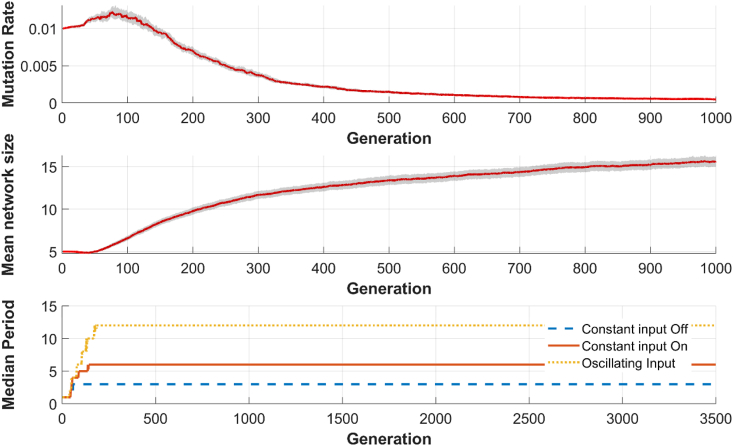
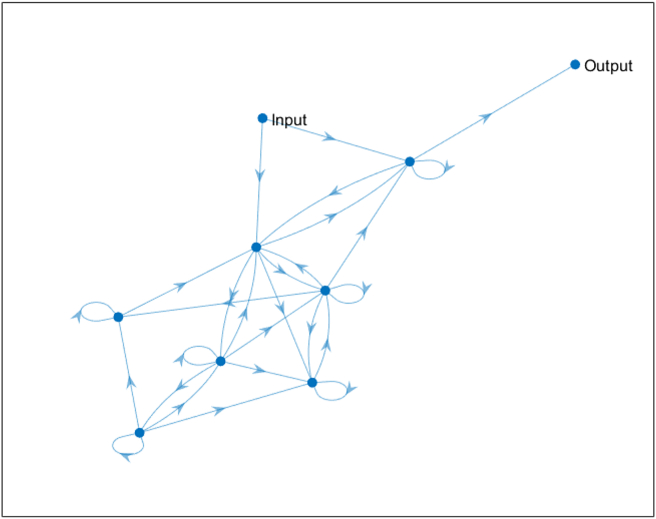
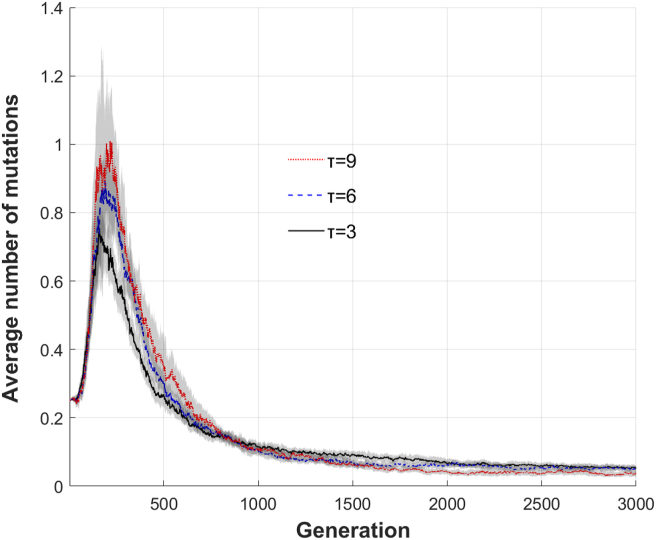
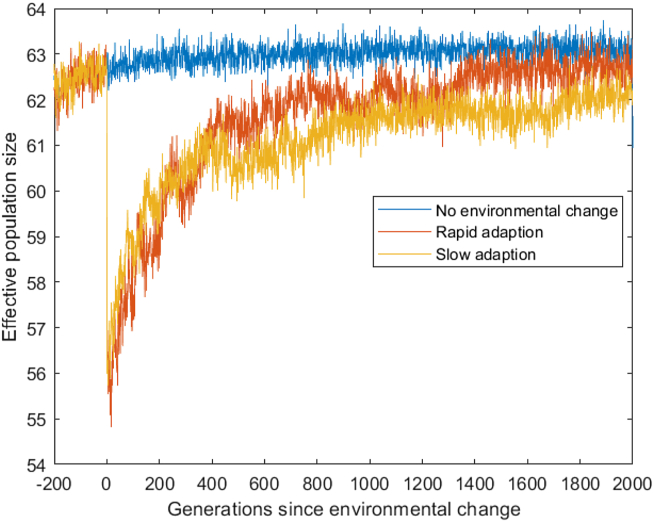
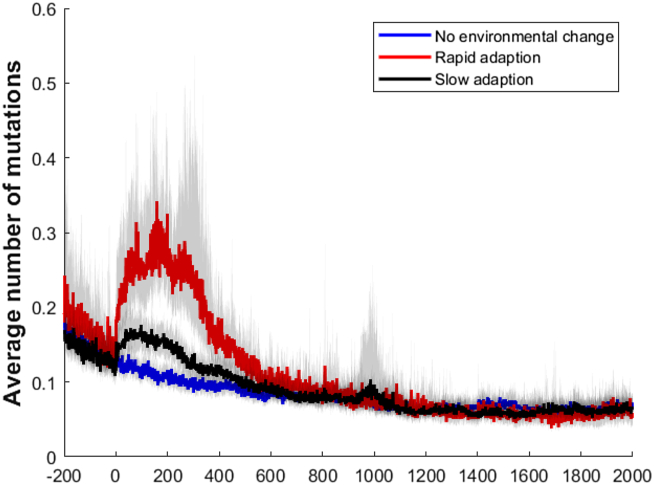
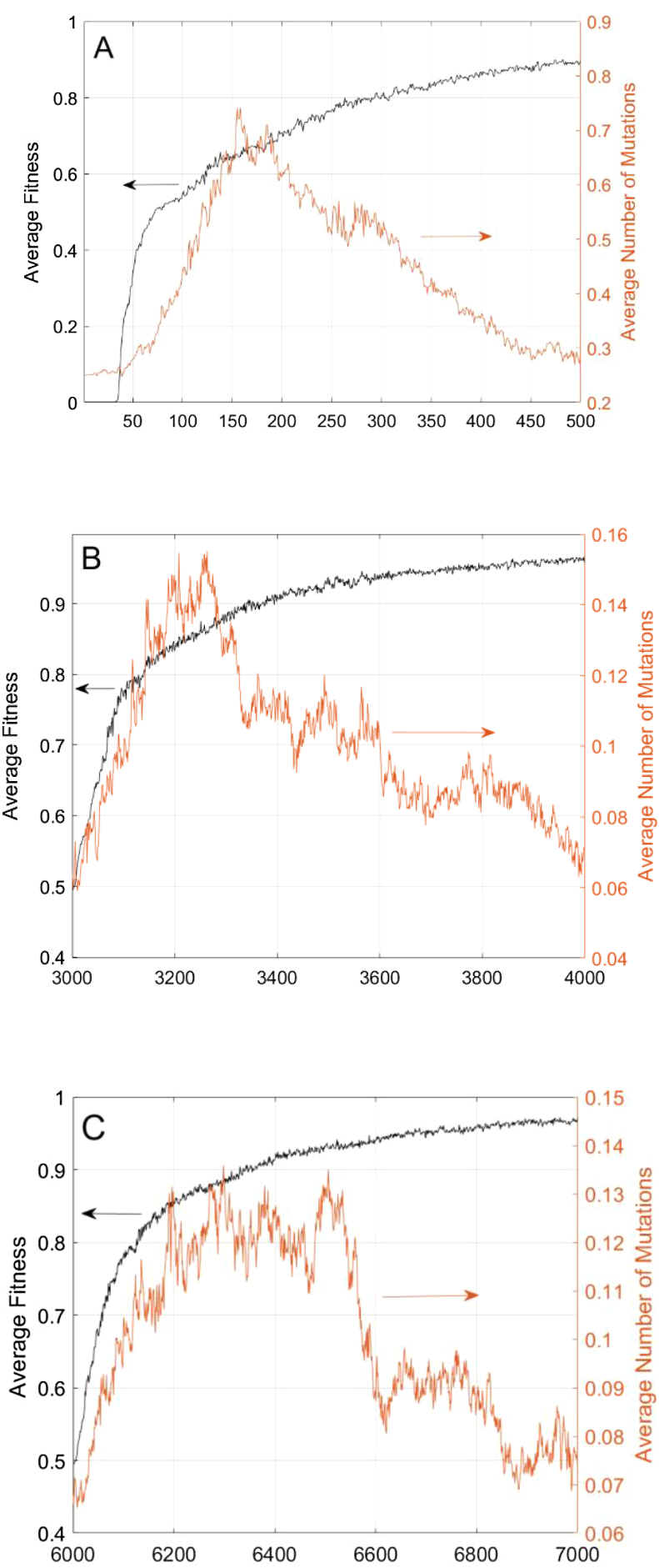
The evolution of complex genetic networks is shaped over the course of many generations through multiple mechanisms. These mechanisms can be broken into two predominant categories: adaptive forces, such as natural selection, and non-adaptive forces, such as recombination, genetic drift, and random mutation. Adaptive forces are influenced by the environment, where individuals better suited for their ecological niche are more likely to reproduce. This adaptive force results in a selective pressure which creates a bias in the reproduction of individuals with beneficial traits. Non-adaptive forces, in contrast, are not influenced by the environment: Random mutations occur in offspring regardless of whether they improve the fitness of the offspring. Both adaptive and non-adaptive forces play critical roles in the development of a species over time, and both forces are intrinsically linked to one another. We hypothesize that even under a simple sexual reproduction model, selective pressure will result in changes in the mutation rate and genome size. We tested this hypothesis by evolving Boolean networks using a modified genetic algorithm. Our results demonstrate that changes in environmental signals can result in selective pressure which affects mutation rate.
复杂遗传网络的进化是在许多代的过程中通过多种机制形成的。这些机制可分为两个主要类别:适应性力量,如自然选择,以及非适应性力量,如重组、遗传漂变和随机突变。适应性力量受环境影响,更适合其生态位的个体更有可能繁殖。这种适应性力量会产生一种选择压力,从而在具有有益性状的个体繁殖中产生偏差。相比之下,非适应性力量不受环境影响:无论后代的突变是否提高其适应性,随机突变都会在后代中发生。随着时间的推移,适应性和非适应性力量在物种发展中都起着关键作用,并且这两种力量本质上相互关联。我们假设,即使在简单的有性生殖模型下,选择压力也会导致突变率和基因组大小的变化。我们通过使用改进的遗传算法进化布尔网络来检验这一假设。我们的结果表明,环境信号的变化会导致影响突变率的选择压力。