Clinical and Translational Neuroscience Section, Laboratory of Behavioral Neuroscience, National Institute on Aging (NIA), National Institutes of Health (NIH), Baltimore, Maryland, United States of America.
Clinical Genetics Branch, Division of Cancer Epidemiology and Genetics, National Cancer Institute, National Institutes of Health, Bethesda, Maryland, United States of America.
PLoS Med. 2021 May 27;18(5):e1003615. doi: 10.1371/journal.pmed.1003615. eCollection 2021 May.
While Alzheimer disease (AD) and vascular dementia (VaD) may be accelerated by hypercholesterolemia, the mechanisms underlying this association are unclear. We tested whether dysregulation of cholesterol catabolism, through its conversion to primary bile acids (BAs), was associated with dementia pathogenesis.
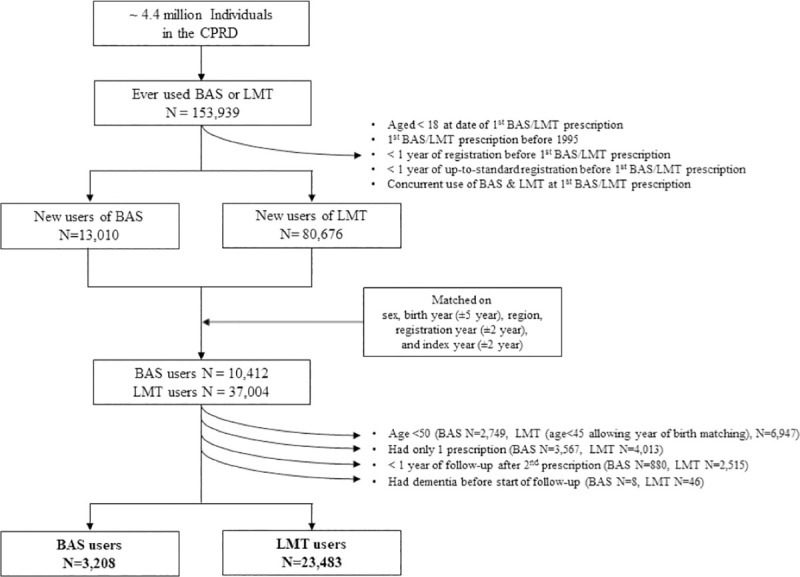
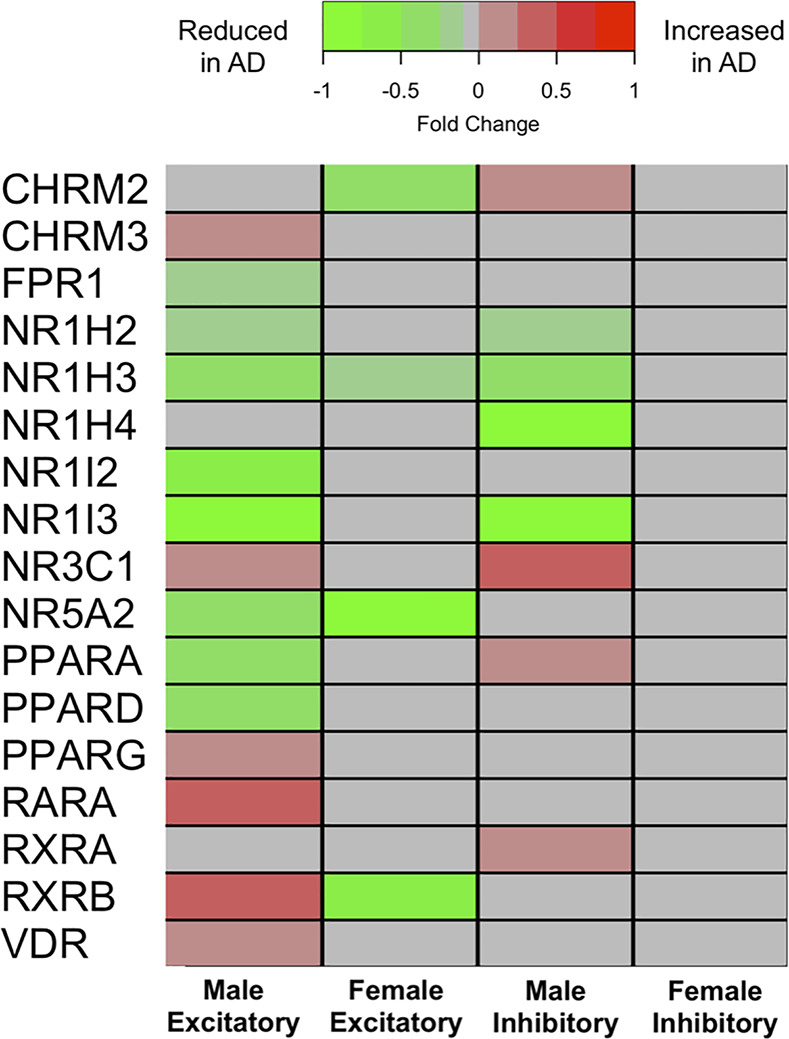
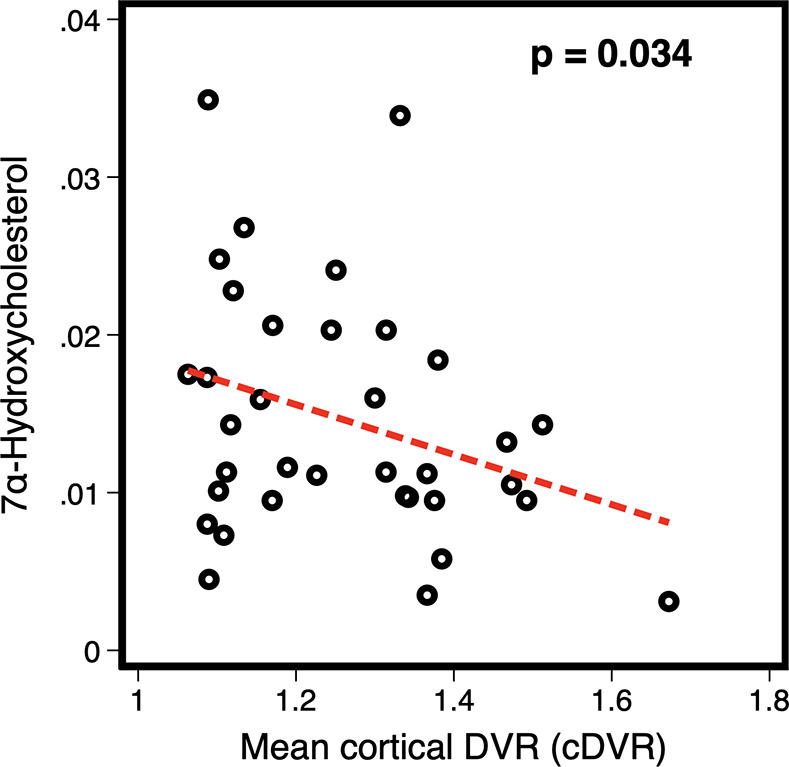
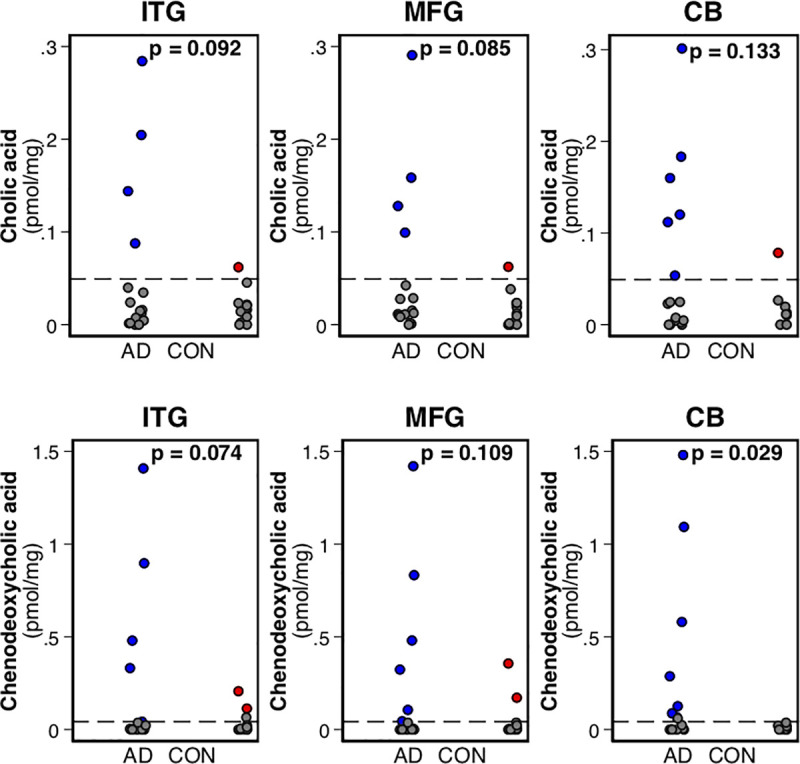
We used a 3-step study design to examine the role of the primary BAs, cholic acid (CA), and chenodeoxycholic acid (CDCA) as well as their principal biosynthetic precursor, 7α-hydroxycholesterol (7α-OHC), in dementia. In Step 1, we tested whether serum markers of cholesterol catabolism were associated with brain amyloid accumulation, white matter lesions (WMLs), and brain atrophy. In Step 2, we tested whether exposure to bile acid sequestrants (BAS) was associated with risk of dementia. In Step 3, we examined plausible mechanisms underlying these findings by testing whether brain levels of primary BAs and gene expression of their principal receptors are altered in AD. Step 1: We assayed serum concentrations CA, CDCA, and 7α-OHC and used linear regression and mixed effects models to test their associations with brain amyloid accumulation (N = 141), WMLs, and brain atrophy (N = 134) in the Baltimore Longitudinal Study of Aging (BLSA). The BLSA is an ongoing, community-based cohort study that began in 1958. Participants in the BLSA neuroimaging sample were approximately 46% male with a mean age of 76 years; longitudinal analyses included an average of 2.5 follow-up magnetic resonance imaging (MRI) visits. We used the Alzheimer's Disease Neuroimaging Initiative (ADNI) (N = 1,666) to validate longitudinal neuroimaging results in BLSA. ADNI is an ongoing, community-based cohort study that began in 2003. Participants were approximately 55% male with a mean age of 74 years; longitudinal analyses included an average of 5.2 follow-up MRI visits. Lower serum concentrations of 7α-OHC, CA, and CDCA were associated with higher brain amyloid deposition (p = 0.041), faster WML accumulation (p = 0.050), and faster brain atrophy mainly (false discovery rate [FDR] p = <0.001-0.013) in males in BLSA. In ADNI, we found a modest sex-specific effect indicating that lower serum concentrations of CA and CDCA were associated with faster brain atrophy (FDR p = 0.049) in males.Step 2: In the Clinical Practice Research Datalink (CPRD) dataset, covering >4 million registrants from general practice clinics in the United Kingdom, we tested whether patients using BAS (BAS users; 3,208 with ≥2 prescriptions), which reduce circulating BAs and increase cholesterol catabolism, had altered dementia risk compared to those on non-statin lipid-modifying therapies (LMT users; 23,483 with ≥2 prescriptions). Patients in the study (BAS/LMT) were approximately 34%/38% male and with a mean age of 65/68 years; follow-up time was 4.7/5.7 years. We found that BAS use was not significantly associated with risk of all-cause dementia (hazard ratio (HR) = 1.03, 95% confidence interval (CI) = 0.72-1.46, p = 0.88) or its subtypes. We found a significant difference between the risk of VaD in males compared to females (p = 0.040) and a significant dose-response relationship between BAS use and risk of VaD (p-trend = 0.045) in males.Step 3: We assayed brain tissue concentrations of CA and CDCA comparing AD and control (CON) samples in the BLSA autopsy cohort (N = 29). Participants in the BLSA autopsy cohort (AD/CON) were approximately 50%/77% male with a mean age of 87/82 years. We analyzed single-cell RNA sequencing (scRNA-Seq) data to compare brain BA receptor gene expression between AD and CON samples from the Religious Orders Study and Memory and Aging Project (ROSMAP) cohort (N = 46). ROSMAP is an ongoing, community-based cohort study that began in 1994. Participants (AD/CON) were approximately 56%/36% male with a mean age of 85/85 years. In BLSA, we found that CA and CDCA were detectable in postmortem brain tissue samples and were marginally higher in AD samples compared to CON. In ROSMAP, we found sex-specific differences in altered neuronal gene expression of BA receptors in AD. Study limitations include the small sample sizes in the BLSA cohort and likely inaccuracies in the clinical diagnosis of dementia subtypes in primary care settings.
We combined targeted metabolomics in serum and amyloid positron emission tomography (PET) and MRI of the brain with pharmacoepidemiologic analysis to implicate dysregulation of cholesterol catabolism in dementia pathogenesis. We observed that lower serum BA concentration mainly in males is associated with neuroimaging markers of dementia, and pharmacological lowering of BA levels may be associated with higher risk of VaD in males. We hypothesize that dysregulation of BA signaling pathways in the brain may represent a plausible biologic mechanism underlying these results. Together, our observations suggest a novel mechanism relating abnormalities in cholesterol catabolism to risk of dementia.
虽然阿尔茨海默病 (AD) 和血管性痴呆 (VaD) 可能因高胆固醇血症而加速,但这种关联的机制尚不清楚。我们测试了胆固醇分解代谢的失调,通过其转化为初级胆汁酸 (BA),是否与痴呆症的发病机制有关。
我们使用了一个三步研究设计来研究初级 BA、胆酸 (CA) 和鹅脱氧胆酸 (CDCA) 及其主要生物合成前体 7α-羟胆固醇 (7α-OHC) 在痴呆症中的作用。在步骤 1 中,我们测试了胆固醇分解代谢的血清标志物是否与大脑淀粉样蛋白积累、白质病变 (WML) 和脑萎缩有关。在步骤 2 中,我们测试了暴露于胆汁酸螯合剂 (BAS) 是否与痴呆症的风险有关。在步骤 3 中,我们通过测试 AD 中初级 BA 的脑水平和主要受体的基因表达是否改变,检验了这些发现的潜在机制。步骤 1:我们测定了血清中 CA、CDCA 和 7α-OHC 的浓度,并使用线性回归和混合效应模型来测试它们与脑淀粉样蛋白积累(BLSA 中的 N = 141)、WML 和脑萎缩(N = 134)的相关性。BLSA 是一项正在进行的基于社区的队列研究,始于 1958 年。BLSA 神经影像学样本中的参与者约 46%为男性,平均年龄为 76 岁;纵向分析包括平均 2.5 次随访磁共振成像 (MRI) 检查。我们使用阿尔茨海默病神经影像学倡议 (ADNI)(N = 1,666)验证 BLSA 中的纵向神经影像学结果。ADNI 是一项正在进行的基于社区的队列研究,始于 2003 年。参与者约 55%为男性,平均年龄为 74 岁;纵向分析包括平均 5.2 次随访 MRI 检查。在 BLSA 中,男性中血清 7α-OHC、CA 和 CDCA 浓度较低与脑淀粉样蛋白沉积较高(p = 0.041)、WML 积累较快(p = 0.050)和脑萎缩较快(错误发现率 [FDR] p <0.001-0.013)有关。在 ADNI 中,我们发现了一个适度的性别特异性效应,表明 CA 和 CDCA 血清浓度较低与男性脑萎缩较快(FDR p = 0.049)有关。步骤 2:在临床实践研究数据链 (CPRD) 数据集(涵盖来自英国普通诊所的 400 多万登记患者)中,我们测试了使用 BAS(BAS 用户;3,208 人有≥2 次处方)的患者是否与使用非他汀类降脂治疗(LMT 用户;23,483 人有≥2 次处方)相比,痴呆风险发生了改变。研究中的患者(BAS/LMT)约为 34%/38%为男性,平均年龄为 65/68 岁;随访时间为 4.7/5.7 年。我们发现,BAS 使用与全因痴呆(危险比 (HR) = 1.03,95%置信区间 (CI) = 0.72-1.46,p = 0.88)或其亚型的风险无显著相关性。我们发现,男性的 VaD 风险与女性相比存在显著差异(p = 0.040),并且男性 VaD 风险与 BAS 使用之间存在显著的剂量反应关系(p-trend = 0.045)。步骤 3:我们比较了 BLSA 尸检队列中的 AD 和对照(CON)样本中的脑 CA 和 CDCA 浓度(N = 29)。BLSA 尸检队列(AD/CON)中的参与者约为 50%/77%为男性,平均年龄为 87/82 岁。我们分析了来自宗教秩序研究和记忆与衰老项目(ROSMAP)队列的 AD 和 CON 样本的单细胞 RNA 测序(scRNA-Seq)数据,以比较脑 BA 受体基因表达。ROSMAP 是一项正在进行的基于社区的队列研究,始于 1994 年。参与者(AD/CON)约为 56%/36%为男性,平均年龄为 85/85 岁。在 BLSA 中,我们发现 CA 和 CDCA 可在死后脑组织样本中检测到,并且与 CON 样本相比,AD 样本中的含量略高。在 ROSMAP 中,我们发现 AD 中 BA 受体的神经元基因表达存在性别特异性差异。研究的局限性包括 BLSA 队列中的样本量较小,以及初级保健环境中痴呆症亚型的临床诊断可能不准确。
我们将靶向代谢组学在血清和淀粉样蛋白正电子发射断层扫描 (PET) 和大脑 MRI 与药物流行病学分析相结合,表明胆固醇分解代谢的失调可能与痴呆症的发病机制有关。我们观察到,男性中 BA 浓度较低主要与痴呆症的神经影像学标志物有关,BA 水平的降低可能与男性 VaD 的风险增加有关。我们假设,大脑中 BA 信号通路的失调可能是这些结果的一个合理的生物学机制。总的来说,我们的观察结果表明,胆固醇分解代谢的异常与痴呆症的风险之间存在一种新的机制。