Institute for Systems Biology, Seattle, WA 98109, USA.
Indiana Alzheimer Disease Center and Department of Radiology and Imaging Sciences, Indiana University School of Medicine, Indianapolis, IN, USA.
Cell Rep Med. 2020 Nov 17;1(8):100138. doi: 10.1016/j.xcrm.2020.100138.
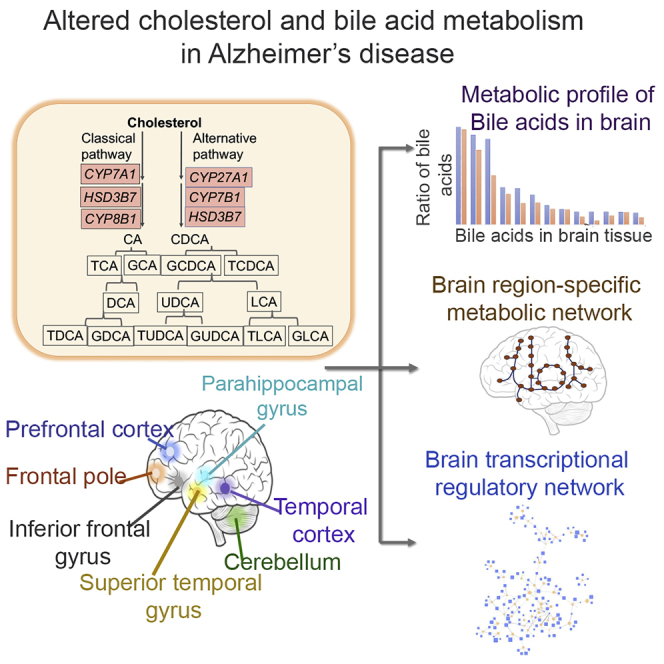
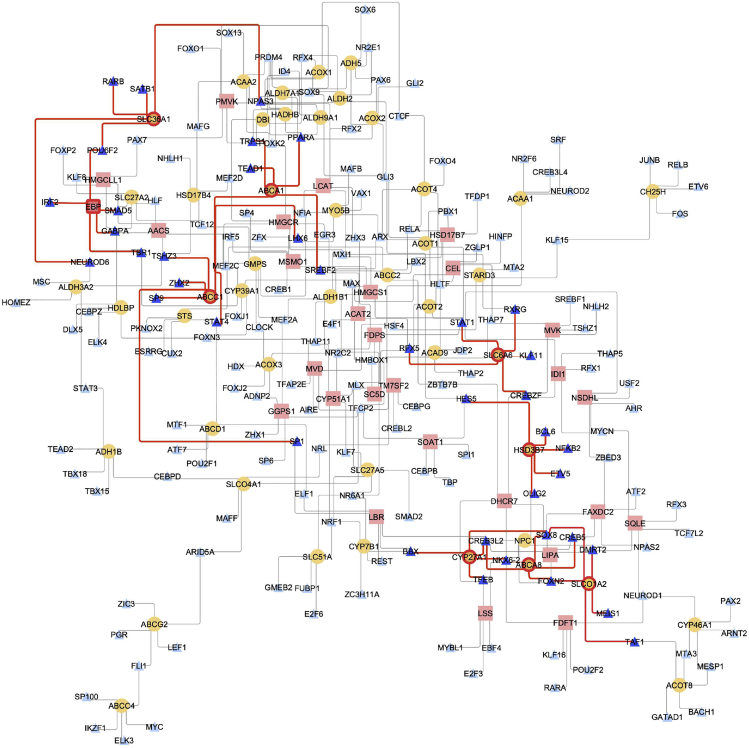
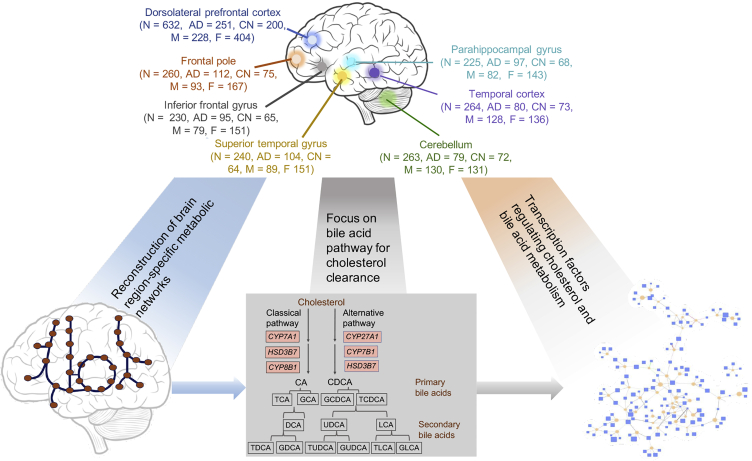
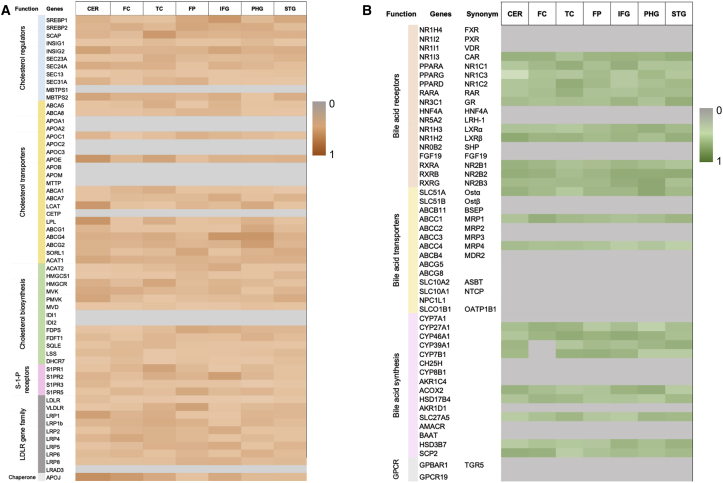
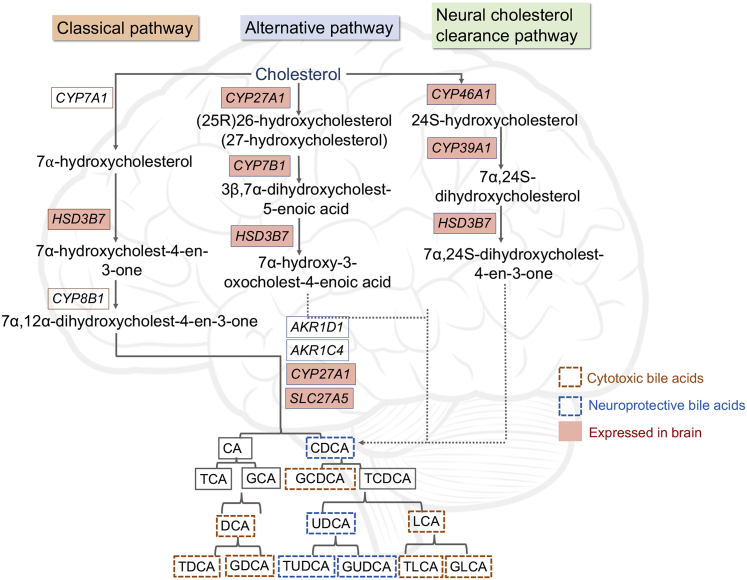
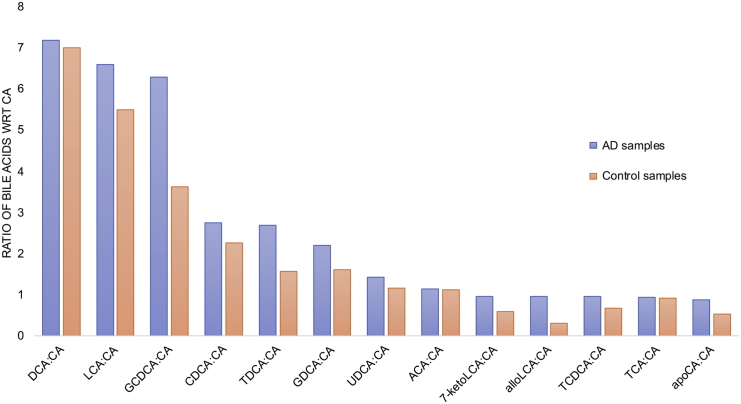
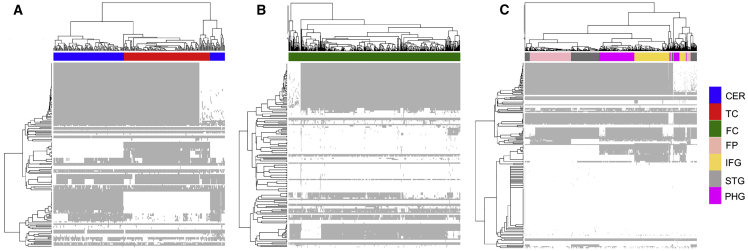
Increasing evidence suggests Alzheimer's disease (AD) pathophysiology is influenced by primary and secondary bile acids, the end product of cholesterol metabolism. We analyze 2,114 post-mortem brain transcriptomes and identify genes in the alternative bile acid synthesis pathway to be expressed in the brain. A targeted metabolomic analysis of primary and secondary bile acids measured from post-mortem brain samples of 111 individuals supports these results. Our metabolic network analysis suggests that taurine transport, bile acid synthesis, and cholesterol metabolism differ in AD and cognitively normal individuals. We also identify putative transcription factors regulating metabolic genes and influencing altered metabolism in AD. Intriguingly, some bile acids measured in brain tissue cannot be explained by the presence of enzymes responsible for their synthesis, suggesting that they may originate from the gut microbiome and are transported to the brain. These findings motivate further research into bile acid metabolism in AD to elucidate their possible connection to cognitive decline.
越来越多的证据表明,阿尔茨海默病(AD)的病理生理学受到初级和次级胆汁酸的影响,而初级和次级胆汁酸是胆固醇代谢的终产物。我们分析了 2114 份死后大脑转录组,并鉴定了在大脑中表达的替代胆汁酸合成途径中的基因。对 111 名个体死后大脑样本中初级和次级胆汁酸的靶向代谢组学分析支持了这些结果。我们的代谢网络分析表明,牛磺酸转运、胆汁酸合成和胆固醇代谢在 AD 和认知正常个体中存在差异。我们还确定了可能调节代谢基因并影响 AD 中代谢改变的转录因子。有趣的是,脑组织中测量到的一些胆汁酸不能用负责其合成的酶来解释,这表明它们可能来自肠道微生物组,并被转运到大脑。这些发现促使人们进一步研究 AD 中的胆汁酸代谢,以阐明它们与认知能力下降可能存在的联系。