University of Perugia, Italy; Institute of Labor Economics (IZA), Germany.
University of Trento, Italy; Institute of Labor Economics (IZA), Germany.
Econ Hum Biol. 2021 Aug;42:101016. doi: 10.1016/j.ehb.2021.101016. Epub 2021 May 13.
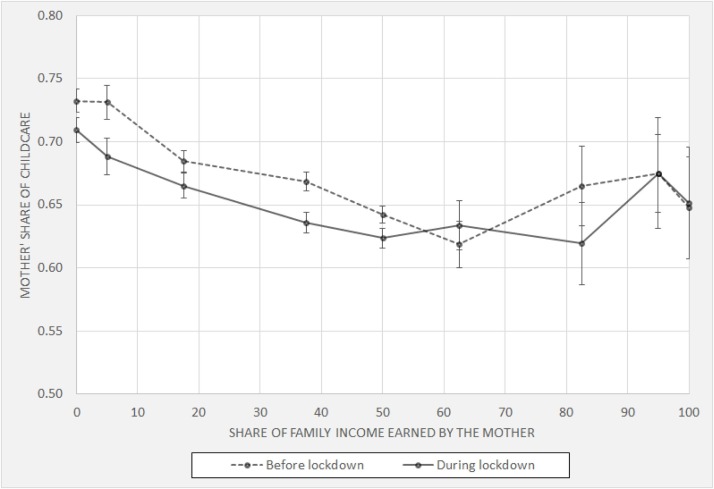
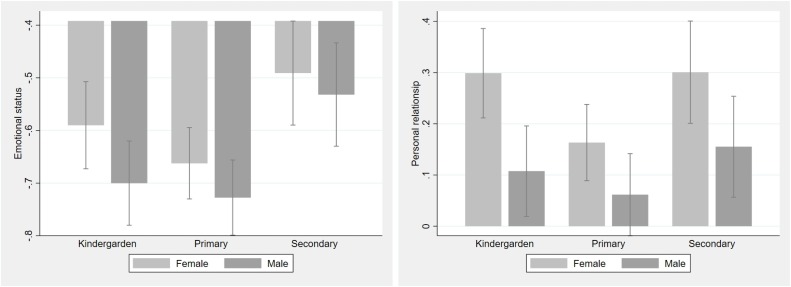
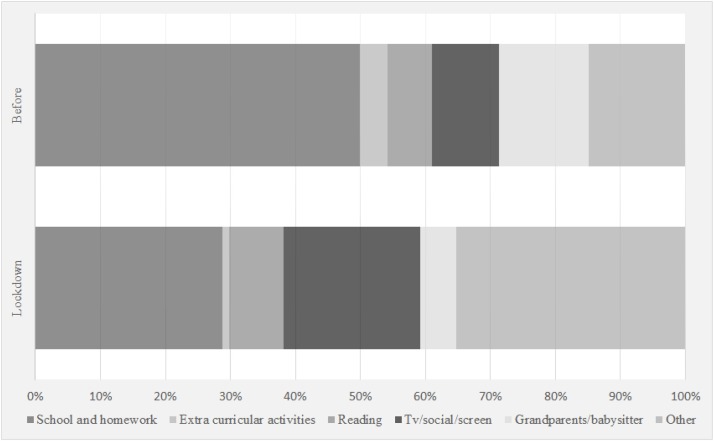
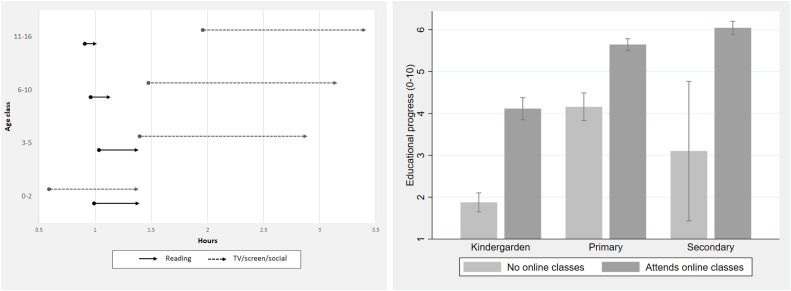
The lockdown imposed during the spring of 2020 as a result of the COVID-19 pandemic upset families lives, in addition to the health consequences of the virus, forcing parents to completely reorganize their labor, domestic work and childcare time. At the same time, school closures forced children to rearrange their lives and learning processes: in Italy, schools and nurseries were closed for four months, and the incidence and quality of distance learning activities was heterogeneous across education levels and among schools. Using real-time survey data on families with under-16 children collected in April 2020, which include information on parents' market and household work, and their perception of their children's wellbeing, we estimate how the lockdown has affected children's use of time, their emotional status and their home learning, and whether the reallocation of intrahousehold responsibilities during the lockdown played a role in this process. Changes in the parental division of household tasks and childcare, mostly induced by the labor market restrictions imposed during the lockdown, point to a greater involvement of fathers in childcare and homeschooling activities. This positive variation in fathers' involvement is accompanied by an increase in children's emotional wellbeing and by a reduction in TV and passive screen time. On the other hand, the quality of children's home learning does not appear to depend on which parent is overseeing their work, but rather on the type of distance learning activities proposed by their teachers.
2020 年春季,由于 COVID-19 大流行而实施的封锁打乱了家庭生活,除了病毒的健康后果外,还迫使父母完全重新安排他们的工作、家务和育儿时间。与此同时,学校关闭迫使孩子们重新安排他们的生活和学习过程:在意大利,学校和托儿所关闭了四个月,远程学习活动的发生率和质量在教育水平和学校之间存在差异。我们使用 2020 年 4 月收集的有关有 16 岁以下儿童的家庭的实时调查数据,这些数据包括父母的市场和家务工作信息以及他们对孩子幸福感的看法,来估计封锁如何影响孩子的时间利用、他们的情绪状态和他们的家庭学习,以及封锁期间家庭内责任的重新分配是否在这一过程中发挥了作用。由于封锁期间实施的劳动力市场限制,家庭任务和儿童保育的父母分工发生了变化,这表明父亲更多地参与儿童保育和家庭教育活动。父亲参与度的这种积极变化伴随着儿童情绪健康的提高和看电视和被动屏幕时间的减少。另一方面,儿童在家学习的质量似乎并不取决于监督他们工作的是哪一位家长,而是取决于他们的老师提出的远程学习活动的类型。