Novartis Institutes for Biomedical Research, Cambridge, MA, USA.
Massachusetts General Hospital Cancer Center, Department of Medicine, Harvard Medical School, Boston, MA, USA.
Nat Commun. 2021 May 27;12(1):3199. doi: 10.1038/s41467-021-23394-4.
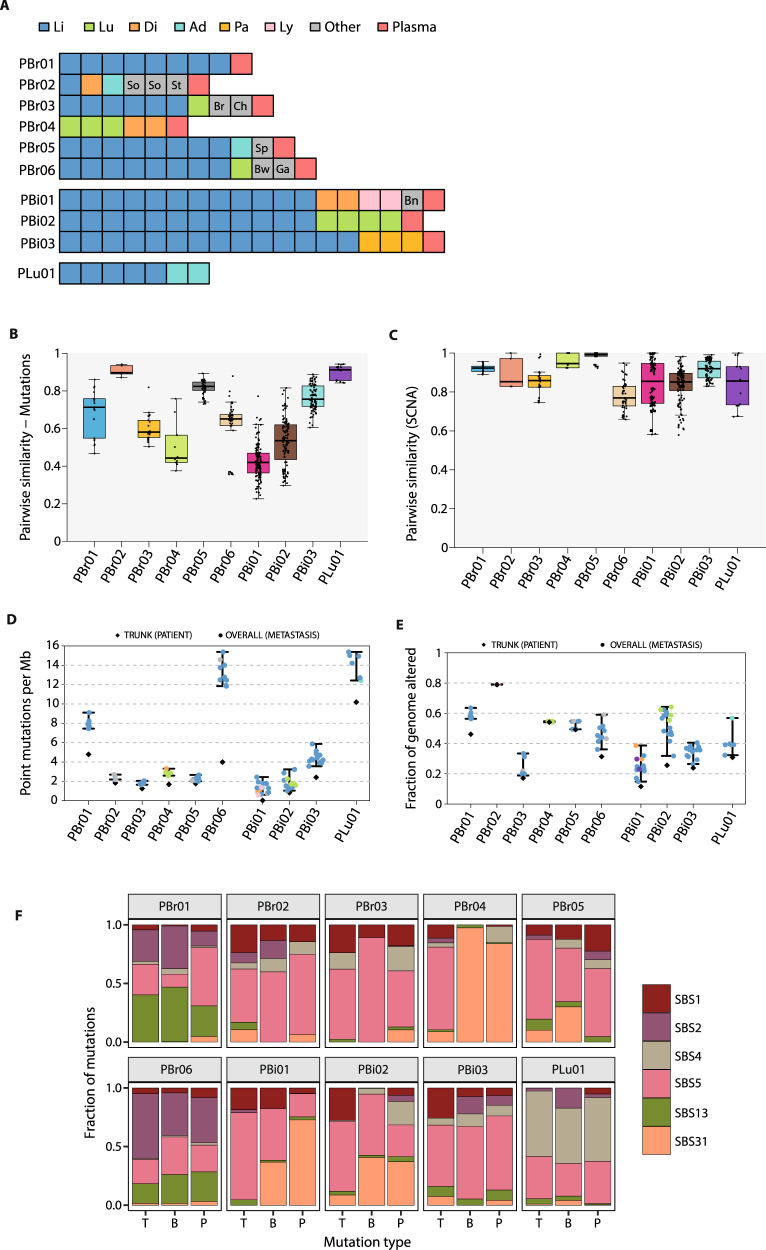
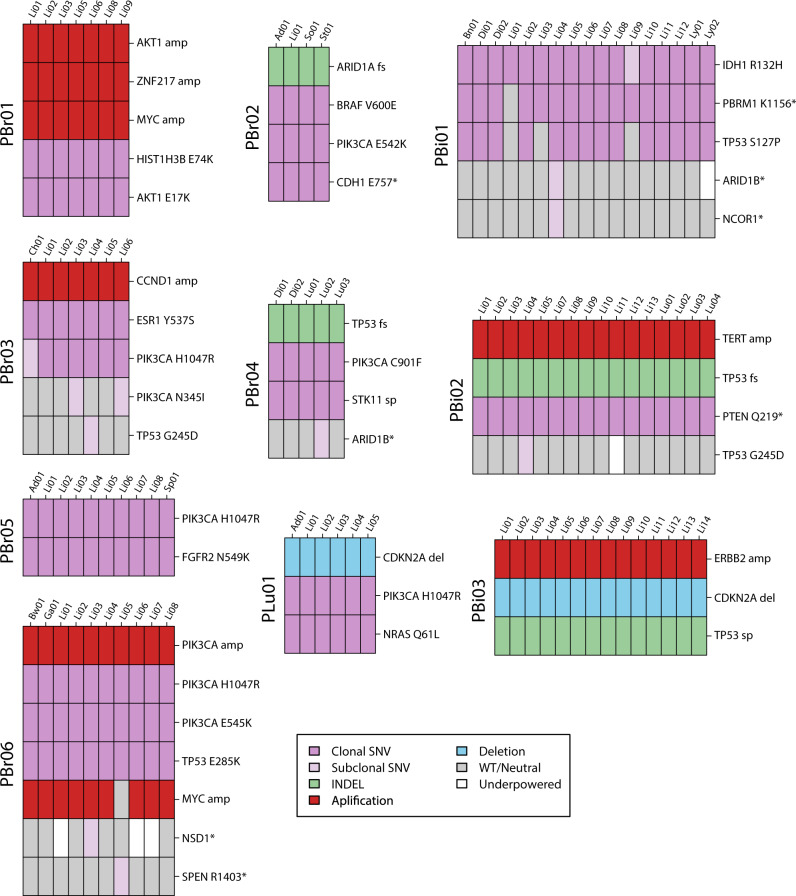
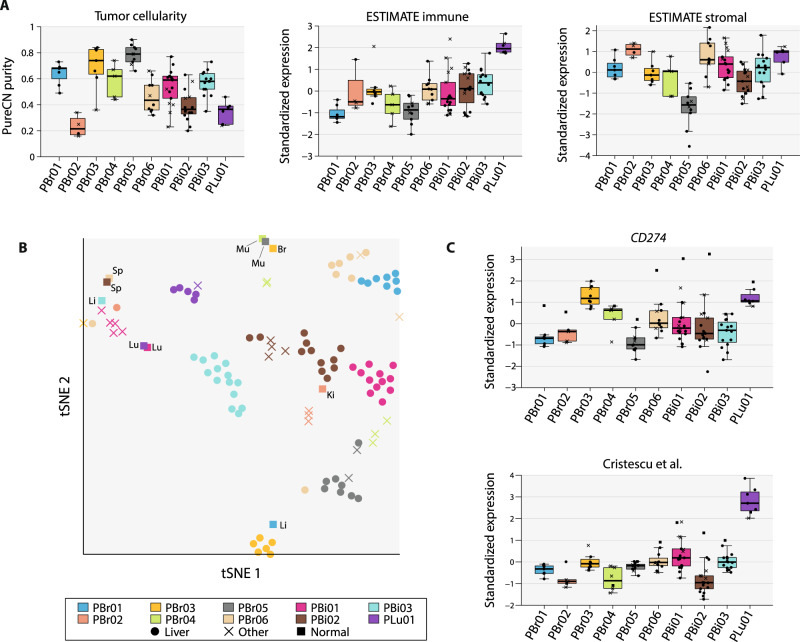
In patients with metastatic cancer, spatial heterogeneity of somatic alterations may lead to incomplete assessment of a cancer's mutational profile when analyzing a single tumor biopsy. In this study, we perform sequencing of cell-free DNA (cfDNA) and distinct metastatic tissue samples from ten rapid autopsy cases with pre-treated metastatic cancer. We show that levels of heterogeneity in genetic biomarkers vary between patients but that gene expression signatures representative of the tumor microenvironment are more consistent. Across nine patients with plasma samples available, we are able to detect 62/62 truncal and 47/121 non-truncal point mutations in cfDNA. We observe that mutation clonality in cfDNA is correlated with the number of metastatic lesions in which the mutation is detected and use this result to derive a clonality threshold to classify truncal and non-truncal driver alterations with reasonable specificity. In contrast, mutation truncality is more often incorrectly assigned when studying single tissue samples. Our results demonstrate the utility of a single cfDNA sample relative to that of single tissue samples when treating patients with metastatic cancer.
在转移性癌症患者中,体细胞改变的空间异质性可能导致在分析单个肿瘤活检时对癌症的突变谱进行不完全评估。在这项研究中,我们对十个经过预处理的转移性癌症快速尸检病例的游离 DNA(cfDNA)和不同的转移性组织样本进行了测序。我们表明,遗传生物标志物的异质性水平在患者之间存在差异,但代表肿瘤微环境的基因表达特征更为一致。在有血浆样本的九名患者中,我们能够在 cfDNA 中检测到 62/62 个主干和 47/121 个非主干点突变。我们观察到 cfDNA 中的突变克隆性与检测到突变的转移病变数量相关,并利用该结果得出一个克隆性阈值,以合理的特异性对主干和非主干驱动突变进行分类。相比之下,当研究单个组织样本时,突变截断性更常被错误分配。我们的研究结果表明,在治疗转移性癌症患者时,与单个组织样本相比,单个 cfDNA 样本具有更大的优势。