Department of Population Health and Pathobiology, College of Veterinary Medicine, NC State University, Raleigh, NC, USA.
Department of Clinical Sciences, College of Veterinary Medicine, NC State University, Raleigh, NC, USA.
Sci Rep. 2021 May 27;11(1):11249. doi: 10.1038/s41598-021-90647-z.
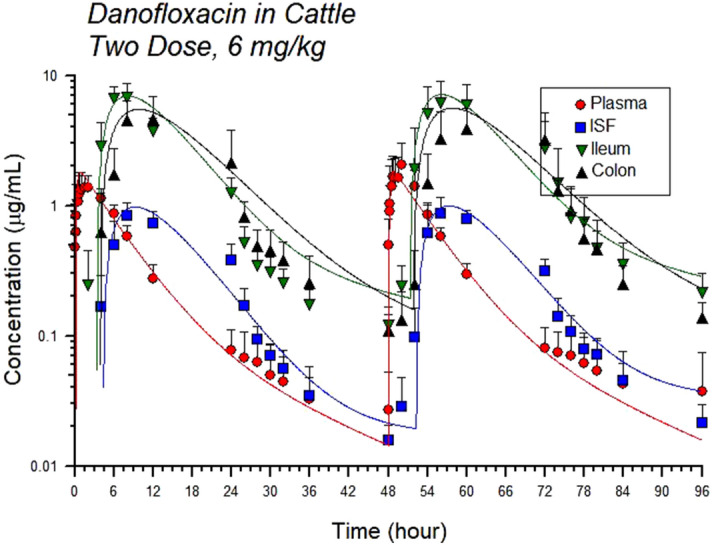
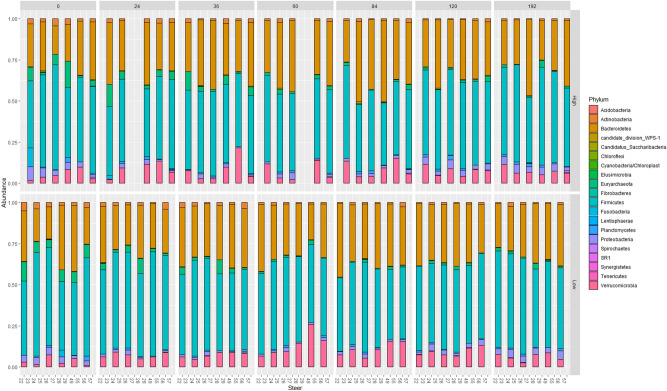
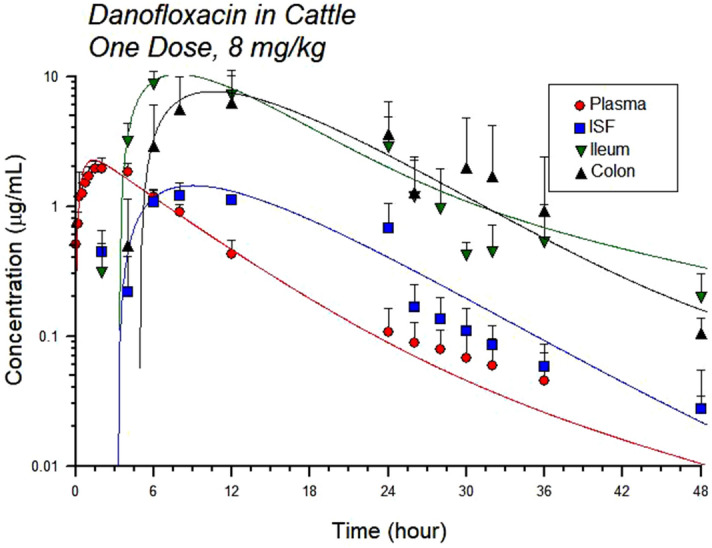
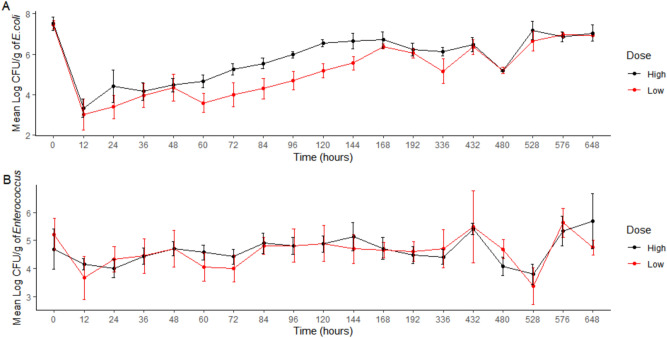
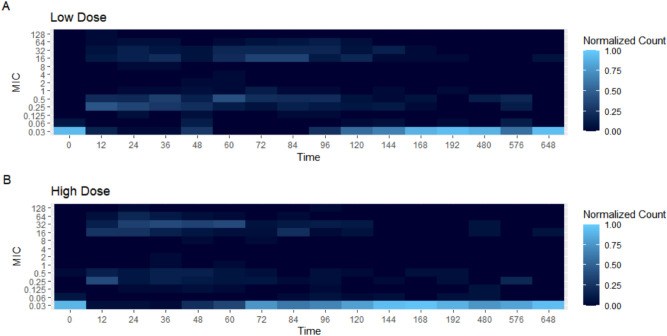
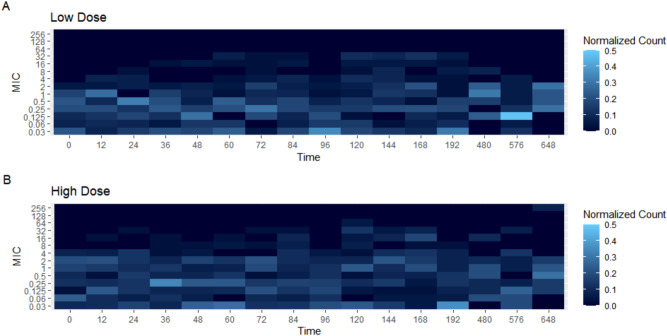
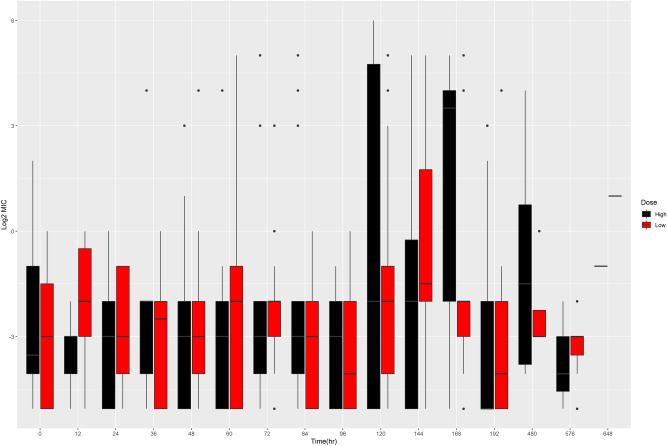
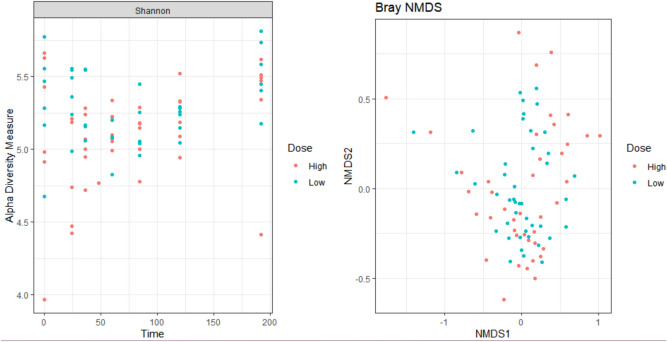
Fluoroquinolones are a class of antimicrobial commonly used in human medicine, and deemed critical by the World Health Organization. Nonetheless, two formulations are approved for the treatment of respiratory disease in beef cattle. The objective of this study was to determine the gastrointestinal pharmacokinetics and impact on enteric bacteria of cattle when receiving one of the two dosing regimens (high: 40 mg/kg SC once or low: 20 mg/kg IM q48hr) of danofloxacin, a commonly utilized synthetic fluoroquinolone in veterinary medicine. Danofloxacin was administered to 12 steers (age 7 months) fitted with intestinal ultrafiltration devices at two different dosing regimens to assess the gastrointestinal pharmacokinetics, the shifts in the gastrointestinal microbiome and the development of resistant bacterial isolates. Our results demonstrated high intestinal penetration of danofloxacin for both dosing groups, as well as, significant differences in MIC values for E. coli and Enterococcus between dosing groups at selected time points over a 38 day period. Danofloxacin treatment consistently resulted in the Euryarchaeota phyla decreasing over time, specifically due to a decrease in Methanobrevibacter. Although microbiome differences were minor between dosing groups, the low dose group had a higher number of isolates with MIC values high enough to cause clinically relevant resistance. This information would help guide veterinarians as to appropriate dosing schemes to minimize the spread of antimicrobial resistance.
氟喹诺酮类药物是一类在人类医学中常用的抗菌药物,被世界卫生组织视为关键药物。然而,有两种制剂被批准用于治疗肉牛的呼吸道疾病。本研究的目的是确定当牛接受两种达氟沙星(一种常用于兽医的合成氟喹诺酮)剂量方案(高剂量:40mg/kg SC 一次或低剂量:20mg/kg IM q48hr)之一时,其胃肠道药代动力学和对肠道细菌的影响。将达氟沙星给予 12 头安装有肠道超滤装置的阉牛,采用两种不同的剂量方案,以评估胃肠道药代动力学、胃肠道微生物组的变化以及耐药细菌分离株的产生。我们的研究结果表明,两种剂量组的达氟沙星均具有较高的肠道穿透性,并且在 38 天的时间内,在选定的时间点,大肠杆菌和肠球菌的 MIC 值在剂量组之间存在显著差异。达氟沙星治疗导致 Euryarchaeota 门的数量随着时间的推移而减少,特别是由于 Methanobrevibacter 的减少。尽管剂量组之间的微生物组差异较小,但低剂量组有更多的分离株具有足够高的 MIC 值,导致临床上相关的耐药性。这些信息将有助于指导兽医制定适当的剂量方案,以最大程度地减少抗菌药物耐药性的传播。