Ferguson Kaitlyn M, Jacob Megan E, Theriot Casey M, Callahan Benjamin J, Prange Timo, Papich Mark G, Foster Derek M
Department of Population Health and Pathobiology, College of Veterinary Medicine, NC State University, Raleigh, NC, United States.
Department of Clinical Sciences, College of Veterinary Medicine, NC State University, Raleigh, NC, United States.
Front Microbiol. 2018 Sep 19;9:2190. doi: 10.3389/fmicb.2018.02190. eCollection 2018.
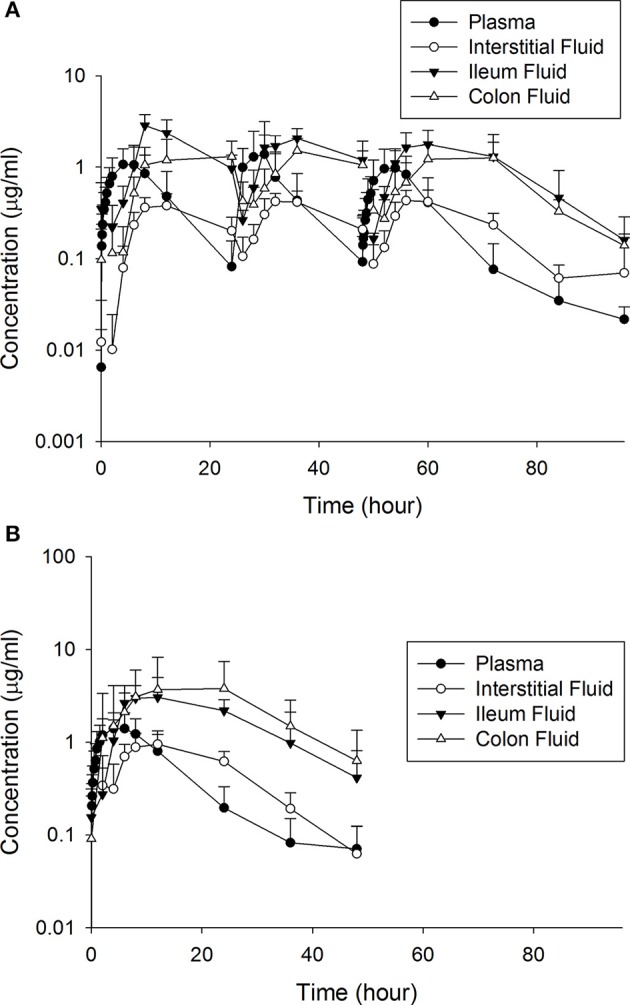
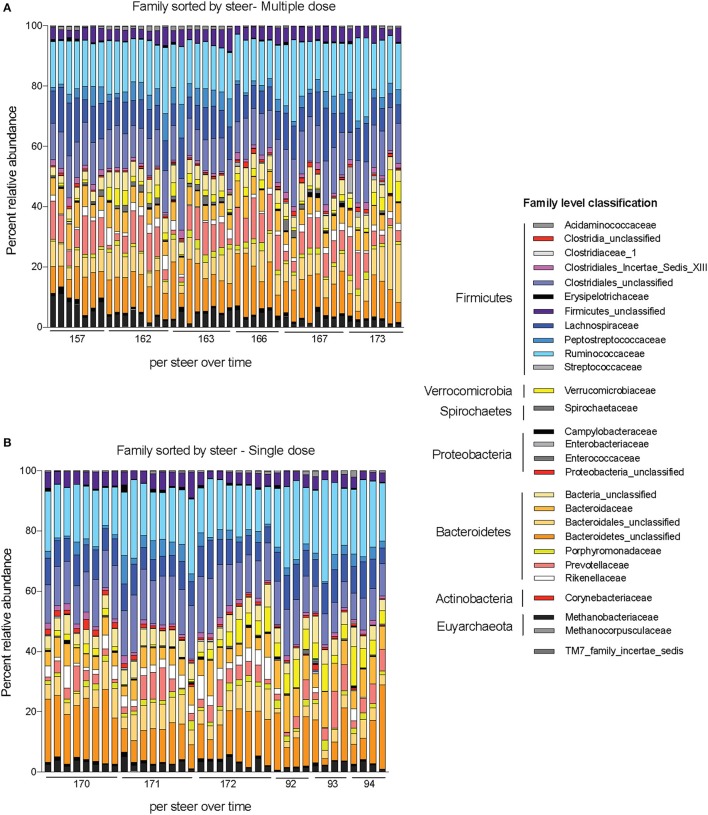
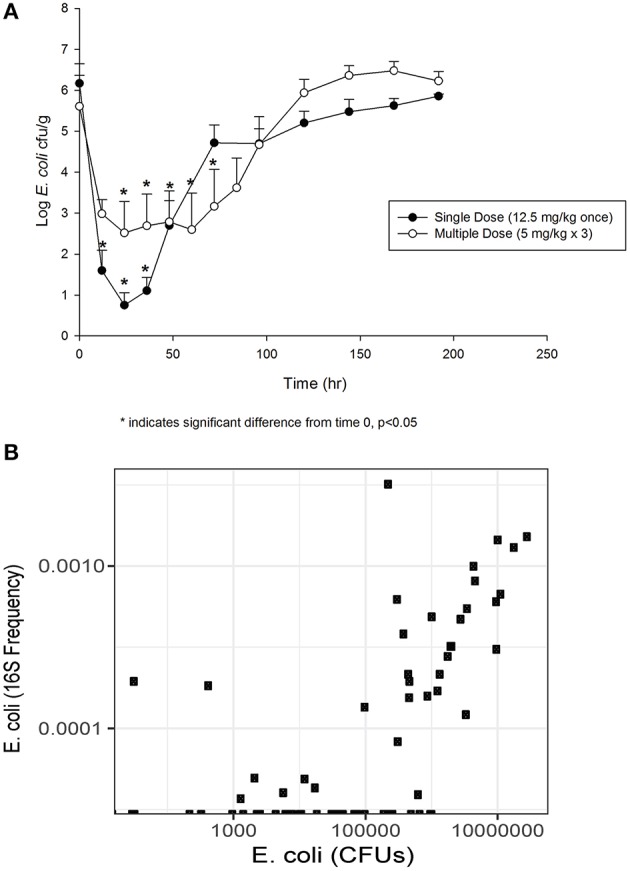
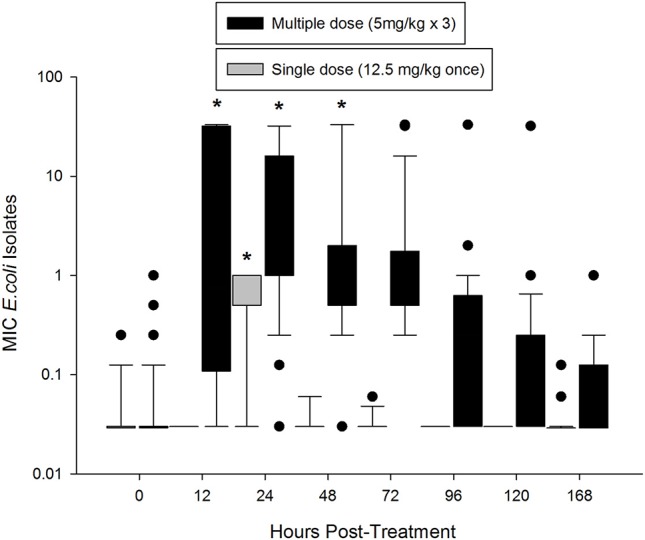
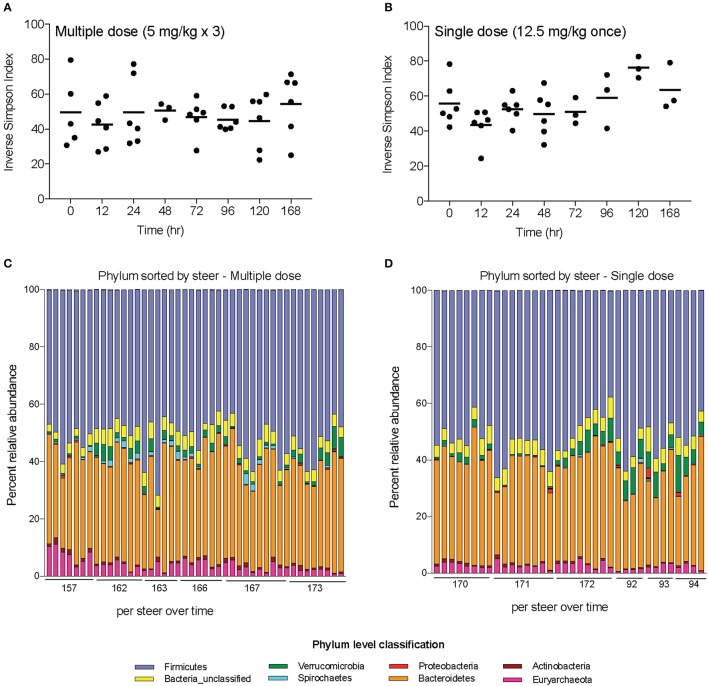
The intestinal concentrations of antimicrobial drugs that select for resistance in fecal bacteria of cattle are poorly understood. Our objective was to associate active drug concentrations in the intestine of steers with changes in the resistance profile and composition of the fecal microbiome. Steers were administered either a single dose (12.5 mg/kg) or 3 multiple doses (5 mg/kg) of enrofloxacin subcutaneously every 24 h. Enrofloxacin and ciprofloxacin concentrations in intestinal fluid were measured over 96 h, and the abundance and MIC of in culture and the composition of the fecal microbiota by 16S rRNA gene sequencing were assessed over 192 h after initial treatment. Active drug concentrations in the ileum and colon exceeded plasma and interstitial fluid concentrations, but were largely eliminated by 48 h after the last dose. The concentration of in the feces significantly decreased during peak drug concentrations, but returned to baseline by 96 h in both groups. The median MIC of isolates increased for 24 h in the single dose group, and for 48 h in the multiple dose group. The median MIC was higher in the multiple dose group when compared to the single dose group starting 12 h after the initial dose. The diversity of the fecal microbiota did not change in either treatment group, and taxa-specific changes were primarily seen in phyla commonly associated with the rumen. Both dosing regimens of enrofloxacin achieve high concentrations in the intestinal lumen, and the rapid elimination mitigates long-term impacts on fecal resistance and the microbiota.
目前对于牛粪便细菌中选择耐药性的抗菌药物在肠道内的浓度了解甚少。我们的目标是将阉牛肠道中的活性药物浓度与粪便微生物组的耐药谱和组成变化联系起来。给阉牛皮下注射单剂量(12.5毫克/千克)或每24小时3次多剂量(5毫克/千克)的恩诺沙星。在96小时内测量肠道液中的恩诺沙星和环丙沙星浓度,并在初始治疗后192小时内评估培养物中大肠埃希菌的丰度和最低抑菌浓度(MIC)以及通过16S rRNA基因测序分析粪便微生物群的组成。回肠和结肠中的活性药物浓度超过血浆和组织液浓度,但在最后一剂后48小时基本消除。在药物浓度峰值期间,粪便中大肠埃希菌的浓度显著下降,但两组在96小时时均恢复至基线水平。单剂量组中大肠埃希菌分离株的MIC中位数增加24小时,多剂量组增加48小时。从初始剂量后12小时开始,多剂量组的MIC中位数高于单剂量组。两个治疗组中粪便微生物群的多样性均未改变,特定分类群的变化主要见于通常与瘤胃相关的门。恩诺沙星的两种给药方案在肠腔内均能达到高浓度,且快速消除减轻了对粪便大肠埃希菌耐药性和微生物群的长期影响。