Department of Pharmacy, Pharmaceutical Biology, Ludwig-Maximilians-University (LMU) Munich, 81377, Munich, Germany.
Institute of Pharmacy, Paracelsus Medical University, Strubergasse 21, 5020, Salzburg, Austria.
Sci Rep. 2021 May 27;11(1):11185. doi: 10.1038/s41598-021-90801-7.
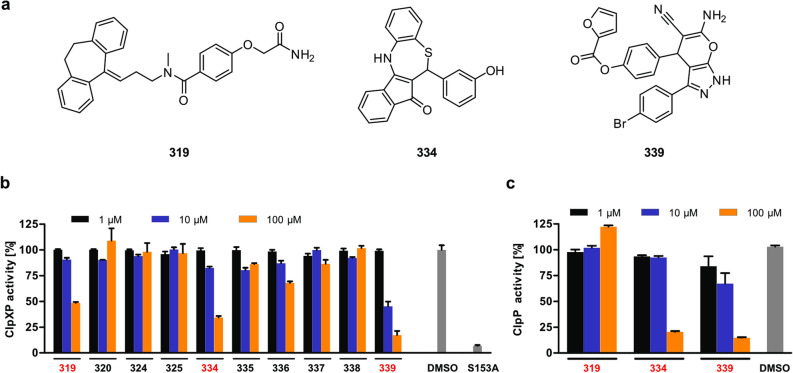
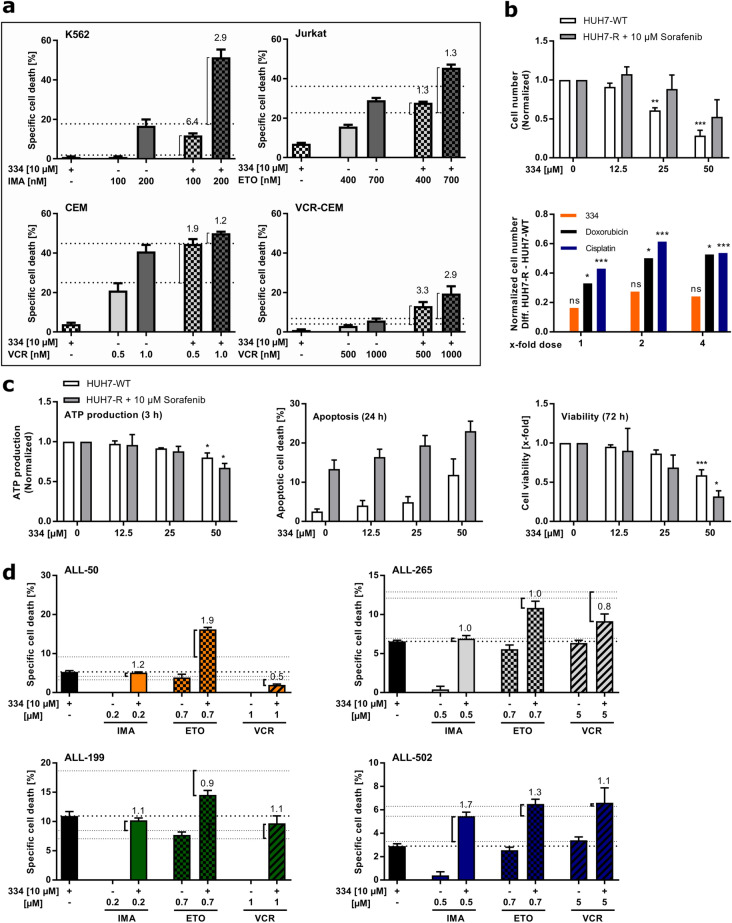
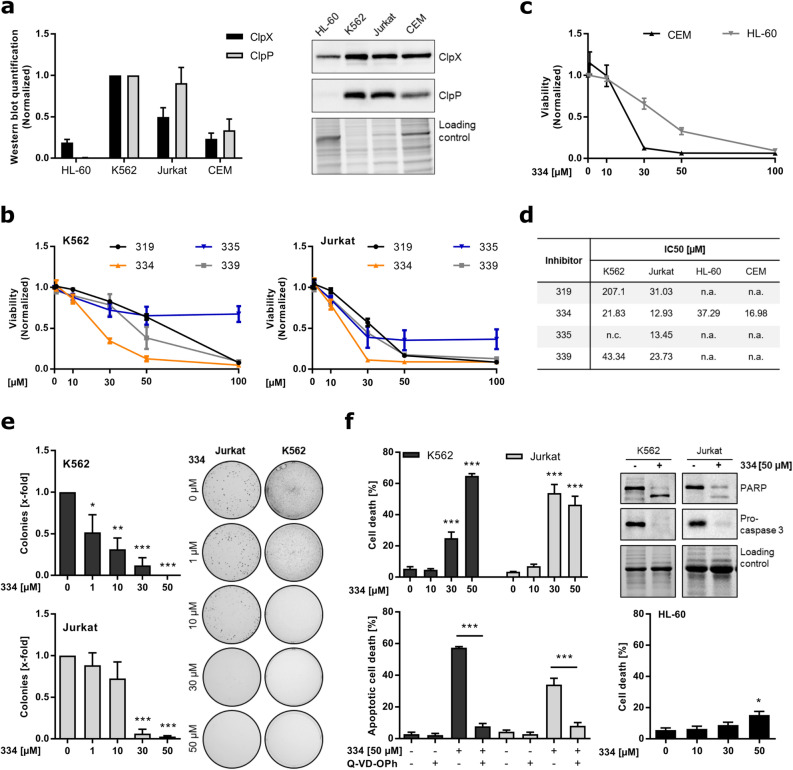
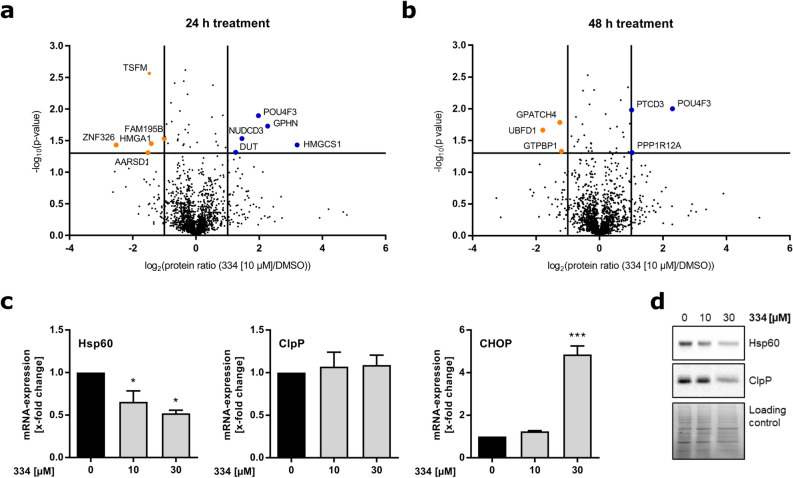
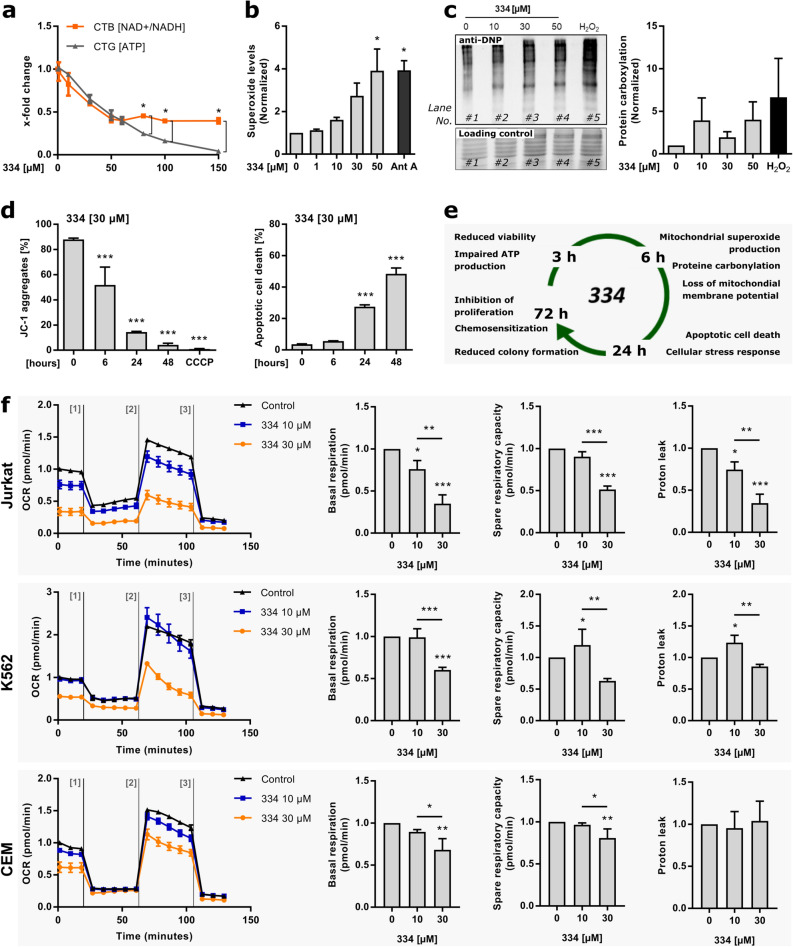
The human mitochondrial ClpXP protease complex (HsClpXP) has recently attracted major attention as a target for novel anti-cancer therapies. Despite its important role in disease progression, the cellular role of HsClpXP is poorly characterized and only few small molecule inhibitors have been reported. Herein, we screened previously established S. aureus ClpXP inhibitors against the related human protease complex and identified potent small molecules against human ClpXP. The hit compounds showed anti-cancer activity in a panoply of leukemia, liver and breast cancer cell lines. We found that the bacterial ClpXP inhibitor 334 impairs the electron transport chain (ETC), enhances the production of mitochondrial reactive oxygen species (mtROS) and thereby promotes protein carbonylation, aberrant proteostasis and apoptosis. In addition, 334 induces cell death in re-isolated patient-derived xenograft (PDX) leukemia cells, potentiates the effect of DNA-damaging cytostatics and re-sensitizes resistant cancers to chemotherapy in non-apoptotic doses.
人类线粒体 ClpXP 蛋白酶复合物(HsClpXP)最近作为新型抗癌疗法的靶点引起了广泛关注。尽管它在疾病进展中起着重要作用,但 HsClpXP 的细胞作用尚未得到充分描述,并且仅报道了少数几种小分子抑制剂。在此,我们针对相关的人类蛋白酶复合物筛选了先前建立的金黄色葡萄球菌 ClpXP 抑制剂,并鉴定出针对人 ClpXP 的有效小分子。这些命中化合物在各种白血病、肝癌和乳腺癌细胞系中均表现出抗癌活性。我们发现细菌 ClpXP 抑制剂 334 会损害电子传递链 (ETC),增加线粒体活性氧 (mtROS) 的产生,从而促进蛋白质羰基化、异常的蛋白质稳态和细胞凋亡。此外,334 可诱导重新分离的患者来源异种移植(PDX)白血病细胞死亡,增强 DNA 损伤细胞毒药物的作用,并以非凋亡剂量重新使耐药癌症对化疗敏感。