Guangdong Key Laboratory of New Drug Design and Evaluation, School of Pharmaceutical Sciences, Sun Yat-Sen University, Guangzhou, 510006, China.
Guangdong Key Laboratory of Chiral Molecule and Drug Discovery, School of Pharmaceutical Sciences, Sun Yat-Sen University, Guangzhou, 510006, China.
Theranostics. 2021 Jan 1;11(2):824-840. doi: 10.7150/thno.49600. eCollection 2021.
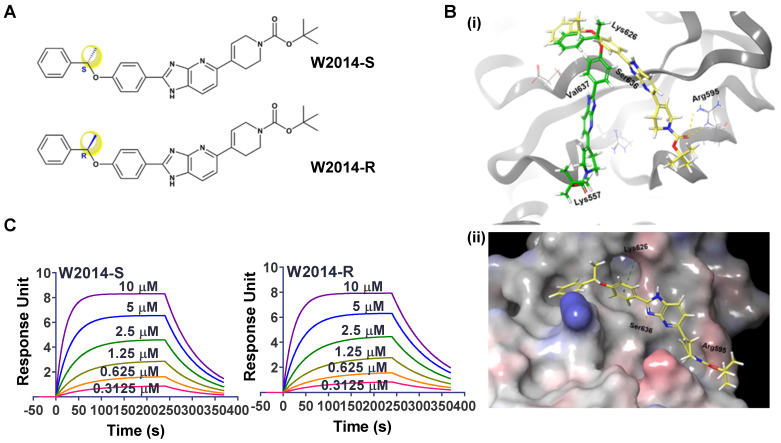
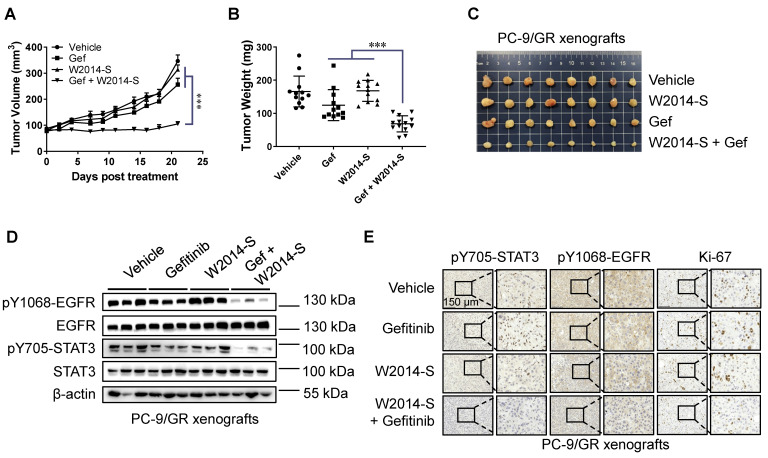
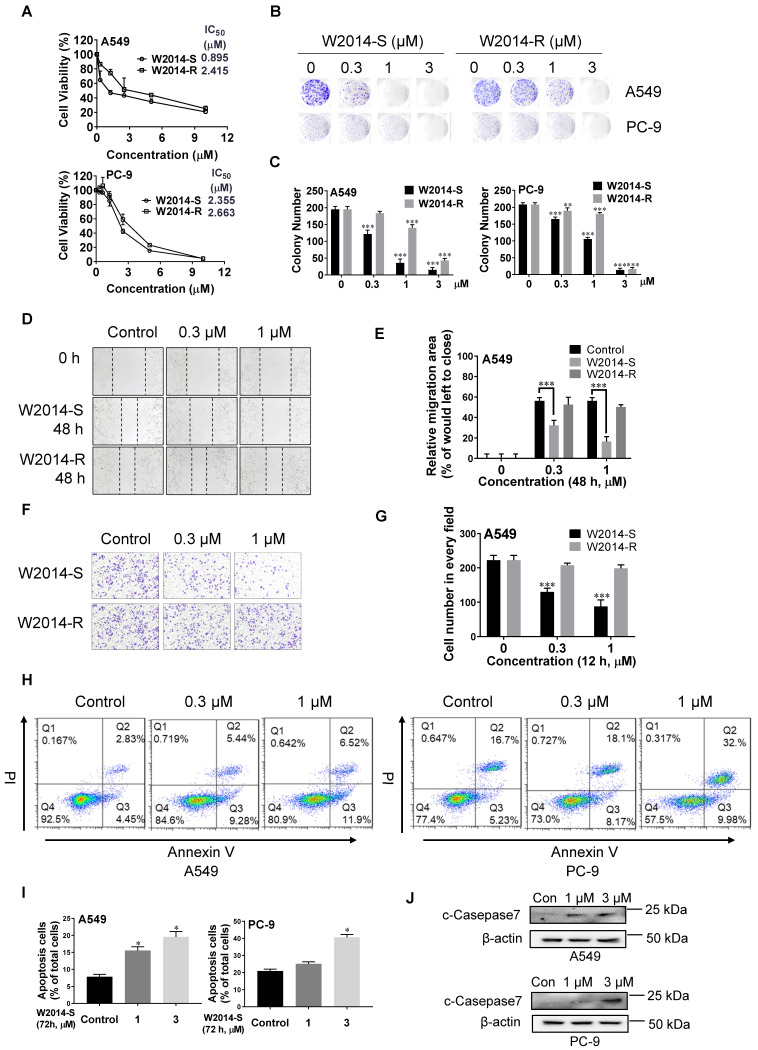
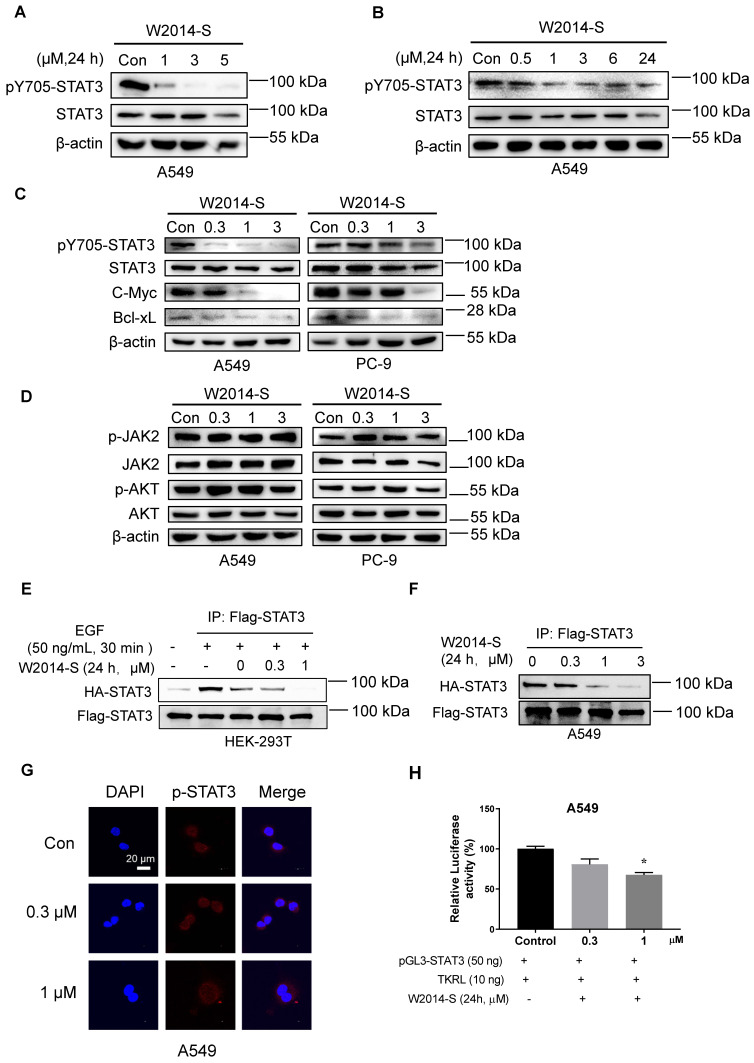
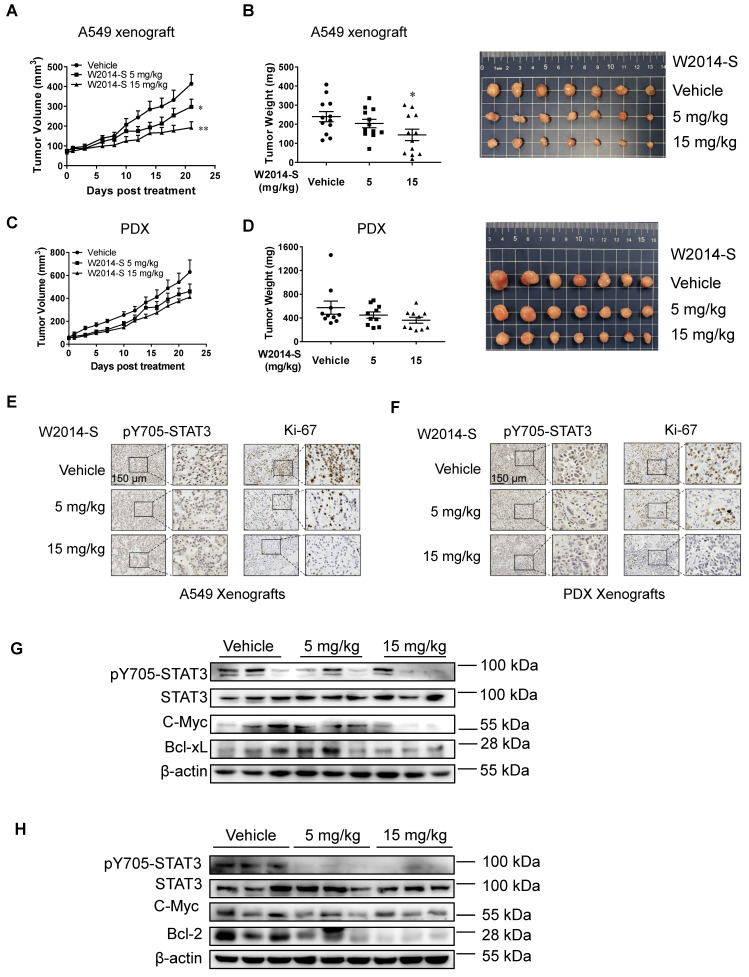
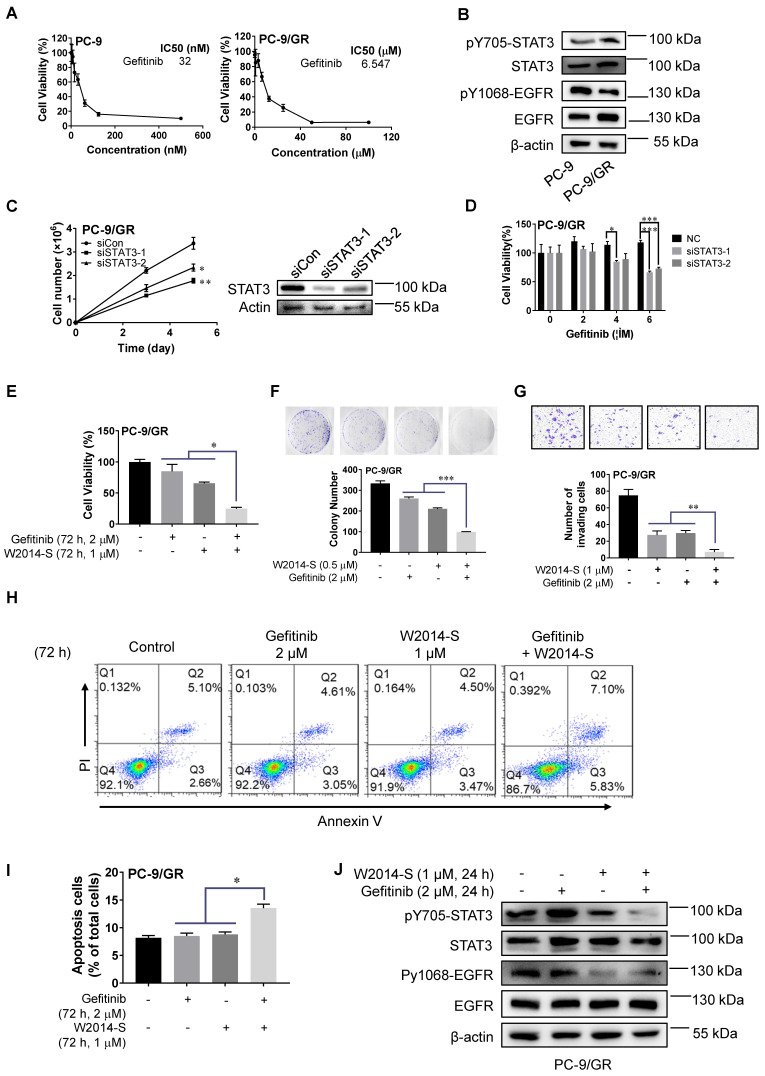
Constitutive activation of signal transducer and activator of transcription 3 (STAT3) is a common feature in human non-small cell lung cancer (NSCLC). STAT3 plays an important role in cancer progression as a driver oncogene and acquired resistance of targeted therapies as an alternatively activated pathway. W2014-S with pharmacophore structure of imidazopyridine, which was firstly reported to be utilized in STAT3 inhibitor discovery, was screened out as a potent STAT3 inhibitor from a library of small molecules. The aim of this study is to investigate the antitumor activities and mechanisms of W2014-S in NSCLC and effect on epidermal growth factor receptor-tyrosine kinase inhibitors (EGFR-TKIs) resistance and . SPR analysis, Co-immunoprecipitation, confocal microscope imaging, and luciferase report gene assays were utilized to determine the mechanisms. Cell viability, colonial survival, wound healing, cell invasion assay, human cancer cell xenografts and PDX tumor xenografts were used to determine antitumor activities. W2014-S disrupted STAT3 dimerization and selectively inhibited aberrant STAT3 signaling in NSCLC cell line. W2014-S strongly suppressed proliferation, survival, migration and invasion of lung cancer cells with aberrant STAT3 activation and inhibited the growth of human NSCLC cell xenografts and PDX tumor xenografts in mouse model. Furthermore, W2014-S significantly sensitized resistant NSCLC cell line to gefitinib and erlotinib and enhances the anti-tumor effect of gefitinib in TKI-resistant lung cancer xenografts . Our study has provided a novel STAT3 inhibitor with significant anti-tumor activities in NSCLC and suggests that combination of STAT3 inhibitor such as W2014-S with gefitinib could serve as a promising strategy to overcome EGFR-TKIs acquired resistance in NSCLC patients.
信号转导子和转录激活子 3(STAT3)的组成性激活是人类非小细胞肺癌(NSCLC)的一个常见特征。STAT3 作为驱动癌基因和靶向治疗获得性耐药的替代激活途径,在癌症进展中发挥重要作用。W2014-S 具有咪唑并吡啶的药效团结构,首次被报道用于 STAT3 抑制剂的发现,它是从小分子文库中筛选出的一种有效的 STAT3 抑制剂。本研究旨在研究 W2014-S 在 NSCLC 中的抗肿瘤活性和机制,以及对表皮生长因子受体酪氨酸激酶抑制剂(EGFR-TKIs)耐药性的影响。SPR 分析、共免疫沉淀、共聚焦显微镜成像和荧光素酶报告基因检测用于确定机制。细胞活力、集落存活、划痕愈合、细胞侵袭测定、人源癌细胞异种移植和 PDX 肿瘤异种移植用于确定抗肿瘤活性。W2014-S 破坏了 STAT3 二聚化,并选择性地抑制了 NSCLC 细胞系中异常的 STAT3 信号。W2014-S 强烈抑制了具有异常 STAT3 激活的肺癌细胞的增殖、存活、迁移和侵袭,并抑制了人 NSCLC 细胞异种移植和 PDX 肿瘤异种移植在小鼠模型中的生长。此外,W2014-S 显著增强了耐药 NSCLC 细胞系对吉非替尼和厄洛替尼的敏感性,并增强了 TKI 耐药肺癌异种移植中吉非替尼的抗肿瘤作用。我们的研究提供了一种新型的 STAT3 抑制剂,在 NSCLC 中具有显著的抗肿瘤活性,并表明将 STAT3 抑制剂(如 W2014-S)与吉非替尼联合使用可能是克服 NSCLC 患者 EGFR-TKIs 获得性耐药的一种有前途的策略。