Rosen Cherise, Tufano Michele, Humpston Clara S, Chase Kayla A, Jones Nev, Abramowitz Amy C, Franco Chakkalakal Ann, Sharma Rajiv P
Department of Psychiatry, University of Illinois at Chicago, Chicago, IL, United States.
School of Psychology, Institute for Mental Health, University of Birmingham, Birmingham, United Kingdom.
Front Psychiatry. 2021 May 10;12:649808. doi: 10.3389/fpsyt.2021.649808. eCollection 2021.
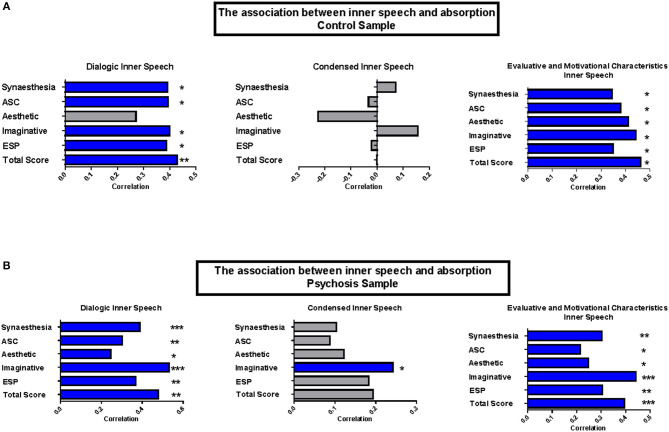
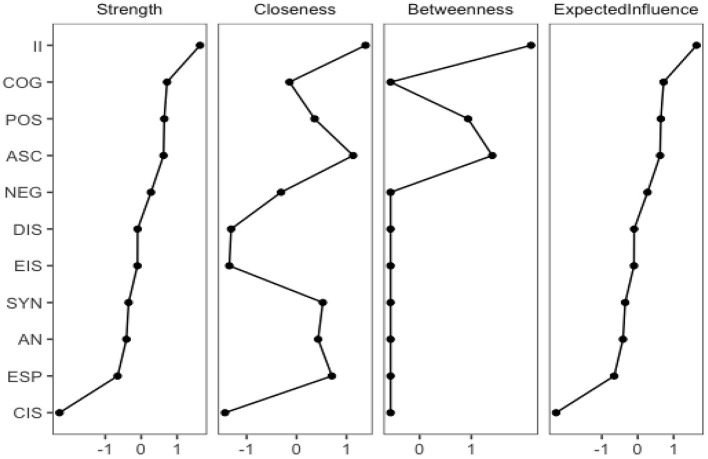
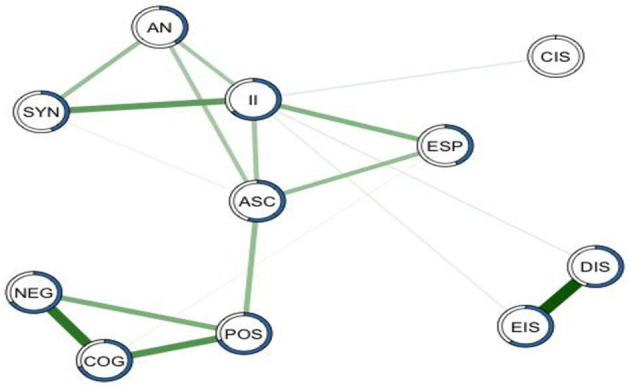
This study examines the interconnectedness between absorption, inner speech, self, and psychopathology. Absorption involves an intense focus and immersion in mental imagery, sensory/perceptual stimuli, or vivid imagination that involves decreased self-awareness and alterations in consciousness. In psychosis, the dissolution and permeability in the demarcation between self and one's sensory experiences and perceptions, and also between self-other and/or inter-object boundaries alter one's sense of self. Thus, as the individual integrates these changes new "meaning making" or understanding evolves as part of an ongoing inner dialogue and dialogue with others. This study consisted of 117 participants: 81 participants with psychosis and 36 controls. We first conducted a bivariate correlation to elucidate the relationship between absorption and inner speech. We next conducted hierarchical multiple regressions to examine the effect of absorption and inner speech to predict psychopathology. Lastly, we conducted a network analysis and applied extended Bayesian Information Criterion to select the best model. We showed that in both the control and psychosis group dialogic and emotional/motivational types of inner speech were strongly associated with absorption subscales, apart from the aesthetic subscale in the control group which was not significant, while in psychosis, condensed inner speech was uniquely associated with increased imaginative involvement. In psychosis, we also demonstrated that altered consciousness, dialogic, and emotional/motivational inner speech all predicted positive symptoms. In terms of network associations, imaginative involvement was the most central, influential, and most highly predictive node in the model from which all other nodes related to inner speech and psychopathology are connected. This study shows a strong interrelatedness between absorption, inner speech and psychosis thus identifying potentially fertile ground for future research and directions, particularly in the exploration into the underlying construct of imaginative involvement in psychotic symptoms.
本研究考察了吸收、内心言语、自我和精神病理学之间的相互联系。吸收涉及对心理意象、感觉/知觉刺激或生动想象的强烈专注和沉浸,这会导致自我意识下降和意识改变。在精神病状态下,自我与个人的感觉体验和感知之间,以及自我与他人和/或客体间界限的消解和渗透性改变了个体的自我感。因此,随着个体整合这些变化,新的“意义构建”或理解作为持续的内心对话以及与他人对话的一部分而演变。本研究包括117名参与者:81名患有精神病的参与者和36名对照组。我们首先进行了双变量相关分析以阐明吸收与内心言语之间的关系。接下来,我们进行了分层多元回归分析,以检验吸收和内心言语对精神病理学的预测作用。最后,我们进行了网络分析并应用扩展贝叶斯信息准则来选择最佳模型。我们发现,在对照组和精神病组中,对话性和情感/动机性的内心言语类型都与吸收分量表密切相关,但对照组中的审美分量表不显著;而在精神病组中,浓缩的内心言语与想象力参与度增加具有独特关联。在精神病组中,我们还证明意识改变、对话性以及情感/动机性内心言语均能预测阳性症状。在网络关联方面,想象力参与是模型中最核心、最具影响力且预测性最高的节点,所有其他与内心言语和精神病理学相关的节点均与之相连。本研究表明吸收、内心言语和精神病之间存在很强的相互关联性,从而为未来的研究和方向确定了潜在的丰富领域,特别是在探索想象力参与精神病症状的潜在结构方面。