Department of Obstetrics and Gynaecology, Li Ka Shing (LKS) Faculty of Medicine, The University of Hong Kong, Hong Kong, Hong Kong.
The University of Hong Kong Shenzhen Key Laboratory of Fertility Regulation, The University of Hong Kong-Shenzhen Hospital, Shenzhen, China.
Front Immunol. 2021 May 11;12:671093. doi: 10.3389/fimmu.2021.671093. eCollection 2021.
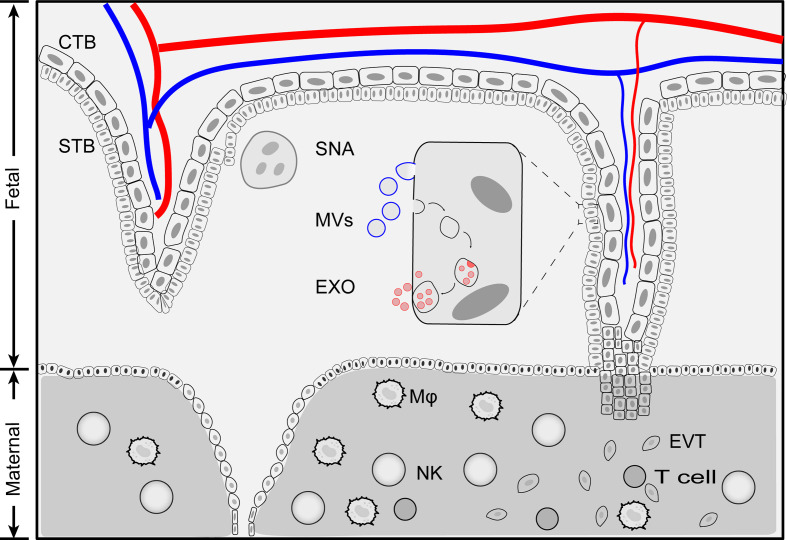
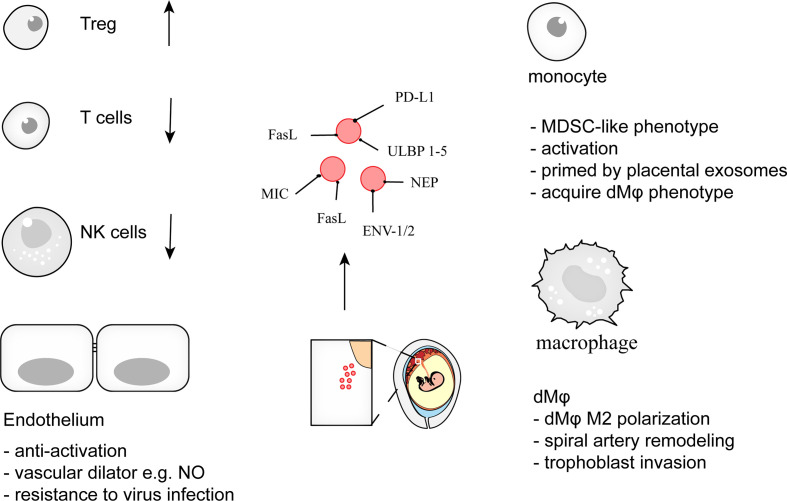
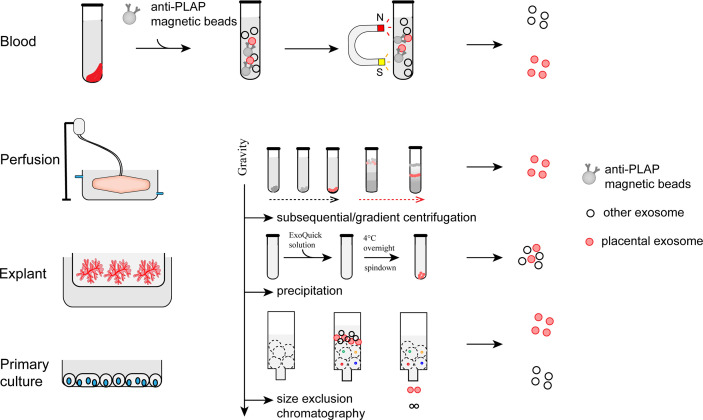
Exosomes are a subset of extracellular vesicles with an average diameter of ~100nm. Exosomes are released by all cells through an endosome-dependent pathway and carry nucleic acids, proteins, lipids, cytokines and metabolites, mirroring the state of the originating cells. The function of exosomes has been implicated in various reproduction processes, such as embryo development, implantation, decidualization and placentation. Placenta-derived exosomes (pEXO) can be detected in the maternal blood as early as 6 weeks after conception and their levels increase with gestational age. Importantly, alternations in the molecular signatures of pEXO are observed in pregnancy-related complications. Thus, these differentially expressed molecules could be the potential biomarkers for diagnosis of the pregnancy-associated diseases. Recent studies have demonstrated that pEXO play a key role in the establishment of maternal immune tolerance, which is critical for a successful pregnancy. To gain a better understanding of the underlying mechanism, we highlighted the advanced studies of pEXO on immune cells in pregnancy.
外泌体是一类细胞外囊泡,平均直径约为 100nm。外泌体通过内体依赖途径由所有细胞释放,并携带核酸、蛋白质、脂质、细胞因子和代谢物,反映了来源细胞的状态。外泌体的功能已被涉及到各种生殖过程中,如胚胎发育、着床、蜕膜化和胎盘形成。胎盘来源的外泌体(pEXO)早在受孕后 6 周就可以在母体血液中检测到,并且其水平随着孕龄的增加而增加。重要的是,在与妊娠相关的并发症中观察到 pEXO 的分子特征发生改变。因此,这些差异表达的分子可能是妊娠相关疾病诊断的潜在生物标志物。最近的研究表明,pEXO 在母体免疫耐受的建立中发挥关键作用,这对于成功妊娠至关重要。为了更好地理解潜在的机制,我们强调了 pEXO 对妊娠免疫细胞的深入研究。