Liang Yi, Liang Bo, Wu Xin-Rui, Chen Wen, Zhao Li-Zhi
Southwest Medical University, Luzhou, China.
Nanjing University of Chinese Medicine, Nanjing, China.
Evid Based Complement Alternat Med. 2021 May 8;2021:5535480. doi: 10.1155/2021/5535480. eCollection 2021.
Dingji Fumai Decoction (DFD), a traditional herbal mixture, has been widely used to ventricular arrhythmia (VA) in clinical practice in China. However, research on the bioactive components and underlying mechanisms of DFD in VA is still scarce.
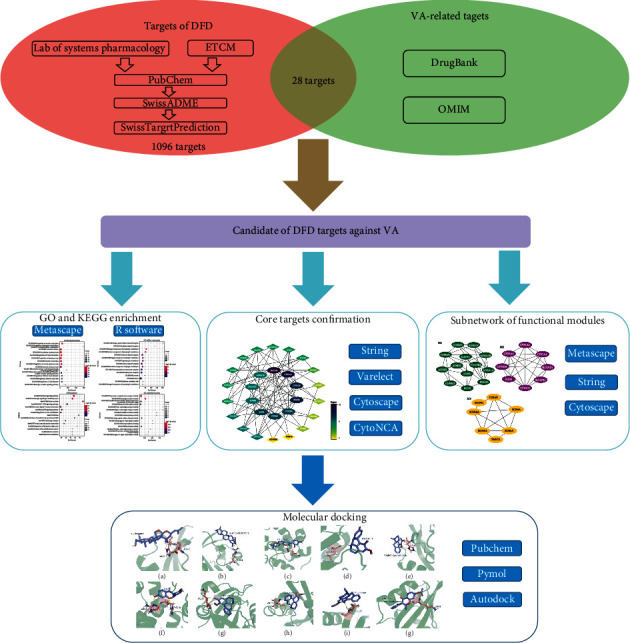
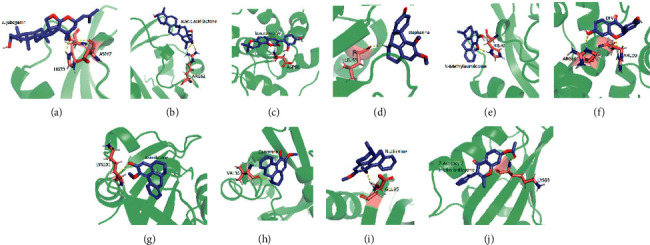
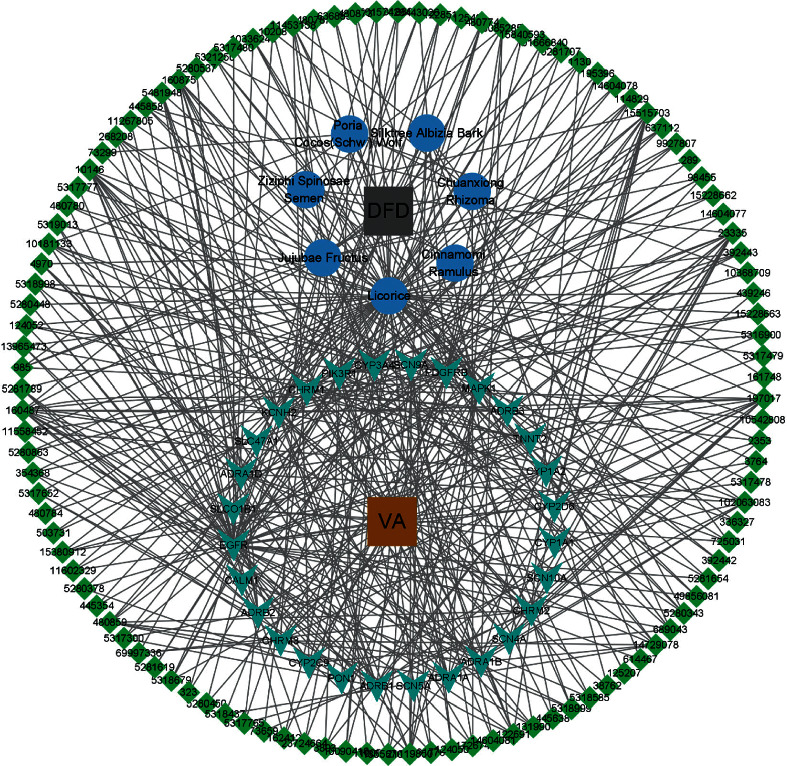
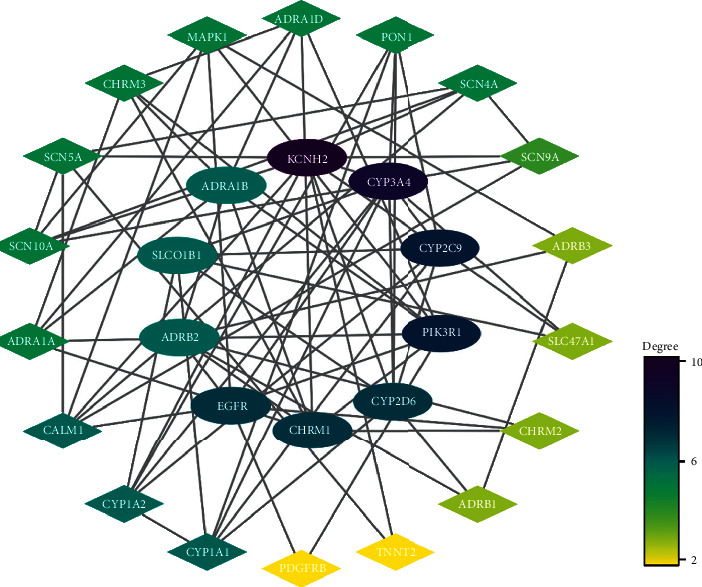
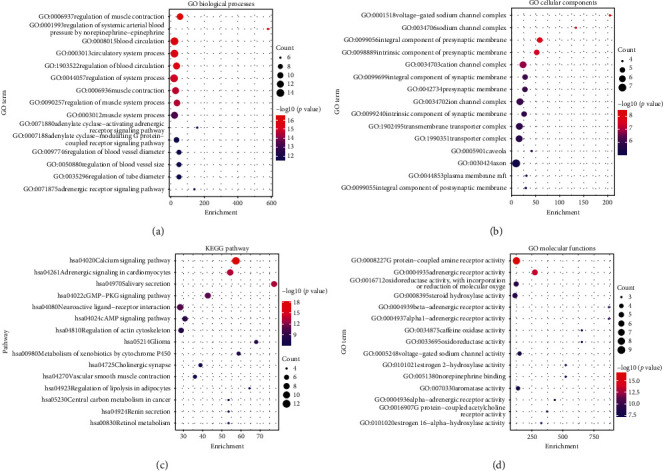
Components of DFD were collected from TCMSP, ETCM, and literature. The chemical structures of each component were obtained from PubChem. Next, SwissADME and SwissTargetPrediction were applied for compounds screening and targets prediction of DFD; meanwhile, targets of VA were collected from DrugBank and Online Mendelian Inheritance in Man (OMIM). Then, the H-C-T-D network and the protein-protein interaction (PPI) network were constructed based on the data obtained above. CytoNCA was utilized to filter hub genes and VarElect was used to analyze the relationship between genes and diseases. At last, Metascape was employed for systematic analysis on the potential targets of herbals against VA, and AutoDock was applied for molecular docking to verify the results.
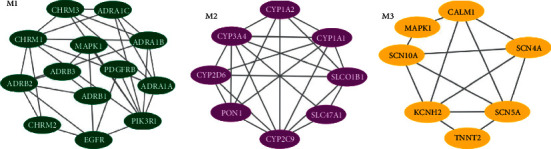
A total of 434 components were collected, 168 of which were qualified, and there were 28 shared targets between DFD and VA. Three function modules of DFD were found from the PPI network. Further systematic analysis of shared genes and function modules explained the potential mechanism of DFD in the treatment of VA; molecular docking has verified the interactions.
DFD could be employed for VA through mechanisms, including complex interactions between related components and targets, as predicted by network pharmacology and molecular docking. This work confirmed that DFD could apply to the treatment of VA and promoted the explanation of DFD for VA in the molecular mechanisms.
丁济复脉汤(DFD)是一种传统草药合剂,在中国临床实践中已被广泛用于治疗室性心律失常(VA)。然而,关于DFD治疗VA的生物活性成分及潜在机制的研究仍然匮乏。
从中药系统药理学数据库(TCMSP)、中医方剂数据库(ETCM)及文献中收集DFD的成分。各成分的化学结构从美国国立医学图书馆的化学物质数据库(PubChem)获取。接下来,应用瑞士药物相似性评估工具(SwissADME)和瑞士药物靶点预测工具(SwissTargetPrediction)对DFD进行化合物筛选和靶点预测;同时,从药物银行(DrugBank)和人类孟德尔遗传在线数据库(OMIM)收集VA的靶点。然后,基于上述获得的数据构建“草药-成分-靶点-疾病”(H-C-T-D)网络和蛋白质-蛋白质相互作用(PPI)网络。利用细胞网络中心性分析工具(CytoNCA)筛选枢纽基因,并使用变异电子分析工具(VarElect)分析基因与疾病之间的关系。最后,采用Metascape对草药治疗VA的潜在靶点进行系统分析,并应用自动对接软件(AutoDock)进行分子对接以验证结果。
共收集到434种成分,其中168种合格,DFD与VA之间有28个共同靶点。从PPI网络中发现了DFD的三个功能模块。对共同基因和功能模块的进一步系统分析解释了DFD治疗VA的潜在机制;分子对接验证了相互作用。
正如网络药理学和分子对接所预测的,DFD可能通过相关成分与靶点之间的复杂相互作用机制用于治疗VA。这项工作证实了DFD可用于治疗VA,并促进了对DFD治疗VA分子机制的阐释。